Tanypteryx hageni
Black Petaltail
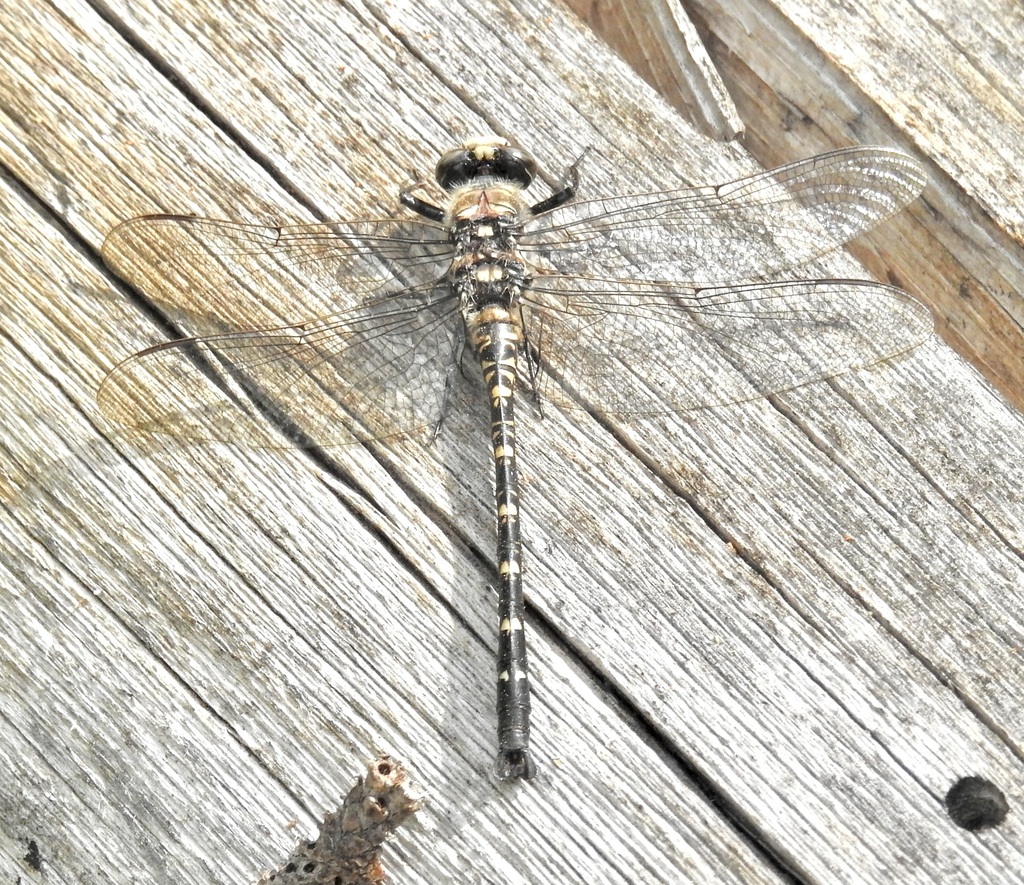
(c) Laura Gaudette, some rights reserved (CC BY) · licence
Family: Petaluridae · Class: Insecta · Order: Odonata
Tanypteryx hageni (Black Petaltail) is a California animal in the Petaluridae family.
The Black Petaltail (Tanypteryx hageni) is a large dragonfly in the family Petaluridae, one of the most primitive dragonfly families. Adults are robust insects with dark coloration and distinctive petal-shaped appendages at the tip of the abdomen that give the family its common name. Black Petaltails are among the largest North American dragonflies, with wingspans reaching approximately 100-110 mm (3.9-4.3 inches). The thorax and abdomen are primarily black to dark brown, often with yellowish markings. Wings are clear with dark veins and may show a slight amber tinge. Black Petaltails occur in western North America, ranging from British Columbia south through Washington, Oregon, and California. In California, the species is found primarily in the northern mountain ranges, including the Cascade Range, Sierra Nevada, and northern Coast Ranges. Populations extend south to approximately Fresno County in the Sierra Nevada. The species typically occurs at elevations from 300 to 2,400 meters (980 to 7,870 feet). This species inhabits seepage areas and bogs, both flat terrain and hillsides, often associated with streams and springs (NatureServe). Black Petaltails are typically found in areas not under dense forest canopy in wet mountain regions. Adults are commonly observed near slow-moving water sources, including marshy areas, wet meadows, and the margins of mountain streams. The species requires clean, well-oxygenated water for larval development. Larvae burrow in saturated soil and organic matter adjacent to water sources. Adult Black Petaltails are strong fliers but spend considerable time perched on vegetation or rocks near water. Males establish territories along water sources and patrol for females. The flight period extends from late spring through early fall, typically May through September, depending on elevation and local climate conditions. Adults are predators, capturing flying insects including flies, mosquitoes, and smaller dragonflies. Larvae are also predaceous, feeding on small invertebrates in the substrate where they develop. The larval stage can extend several years before emergence. Black Petaltails do not currently have federal or state listing status, though populations face potential threats from habitat degradation and water diversion. Climate change may affect montane wetland habitats critical for reproduction and larval development. Water quality degradation from agricultural runoff, mining activities, or development near montane watersheds could impact local populations. The species' dependence on clean seepage areas and bogs makes it vulnerable to hydrological changes. Conservation efforts focus on protecting montane wetland ecosystems and maintaining water quality in mountain watersheds. Population monitoring is limited, and current population trends are not well documented for most of the species' range.
Classification
Class: Insecta · Order: Odonata · Family: Petaluridae
Frequently asked questions
How is Tanypteryx hageni classified?
Tanypteryx hageni belongs to class Insecta, order Odonata, family Petaluridae.
What family does Tanypteryx hageni belong to?
Tanypteryx hageni is in the Petaluridae family.
What is Tanypteryx hageni?
The Black Petaltail (Tanypteryx hageni) is a large dragonfly in the family Petaluridae, one of the most primitive dragonfly families.
Is Tanypteryx hageni found in California?
Yes. Tanypteryx hageni is recorded in California in The California Species Project's catalogue.
More California species
This species has no close relatives in our California data — here are other species to explore.
Data from The California Species Project — 14,000+ California species with verified data from CNPS, CDFW, USFWS, and more.