Tanystoma maculicolle
Tule Beetle
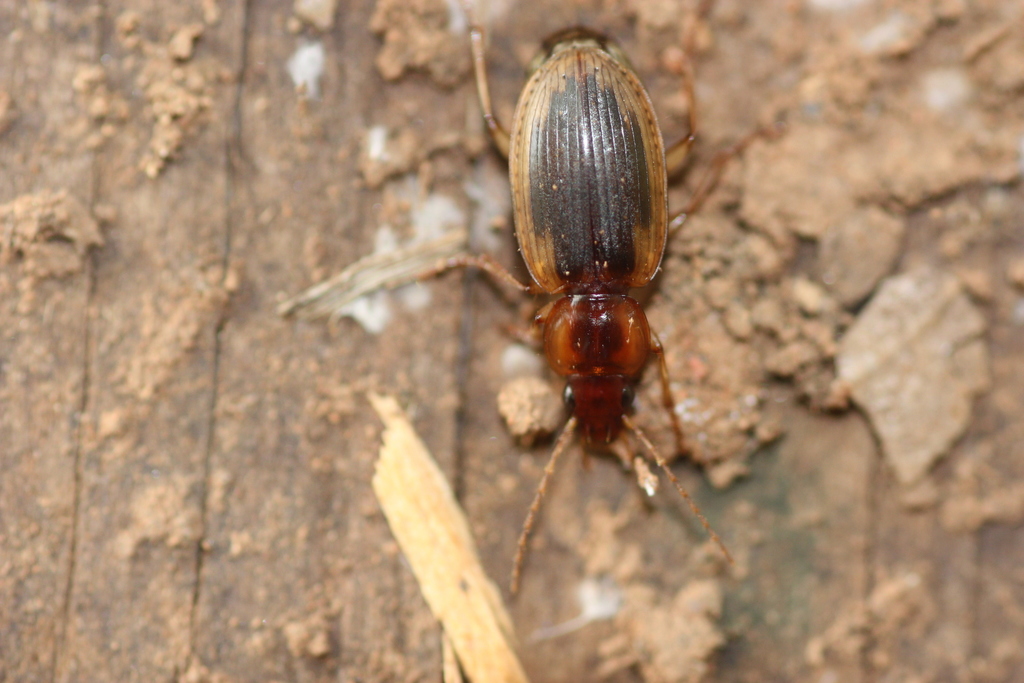
(c) Andrew Meeds, some rights reserved (CC BY) · licence
Family: Carabidae · Class: Insecta · Order: Coleoptera
Tanystoma maculicolle (Tule Beetle) is a California animal in the Carabidae family.
The Tule beetle is a medium-sized ground beetle measuring 8 to 10 millimeters (0.31 to 0.39 inches) in length (BugGuide). As a member of the family Carabidae, this species exhibits the characteristic body plan of ground beetles with elongated elytra and well-developed legs adapted for terrestrial locomotion. The species displays wing dimorphism, with some individuals possessing functional flight capabilities while others remain flightless. Tanystoma maculicolle occurs throughout much of California and extends north into southern Oregon (BugGuide). Within California, the species has been documented from various counties including Los Angeles County, where specimens have been collected in areas such as Arcadia. The distribution encompasses both coastal and inland regions where suitable wetland habitats exist. This beetle is strongly associated with tule and bulrush marshes, particularly those dominated by Scirpus species along rivers and waterways (BugGuide). The species typically inhabits the interface between aquatic and terrestrial environments, where it can exploit both moisture gradients and prey resources. These marsh ecosystems provide the specific microhabitat conditions required for the beetle's reproduction and development, including appropriate substrate for egg-laying and shelter during various life stages. As a member of the predatory Carabidae family, the Tule beetle likely feeds on small invertebrates found within its marsh habitat. Ground beetles are typically nocturnal hunters, becoming active at dusk to search for prey items such as small arthropods, annelids, and other soft-bodied invertebrates. The species' association with tule marshes suggests it may specialize on prey species that are abundant in these wetland environments. Reproductive biology follows the general carabid pattern, with females depositing eggs in suitable substrate within the marsh environment. The conservation status of Tanystoma maculicolle has not been formally evaluated at federal or state levels as of December 2025. However, the species' dependence on tule and bulrush marsh habitats raises potential conservation concerns given the widespread loss and degradation of wetland ecosystems throughout California. Historical wetland loss in the state has exceeded 95% in some regions, particularly in the Central Valley and coastal areas where urban development has eliminated many marsh systems. Climate change poses additional threats through altered precipitation patterns and increased drought frequency, which can reduce water availability in marsh habitats. Water diversions for agricultural and municipal use further stress these ecosystems by reducing inflows and altering natural hydrological cycles. The species' apparently limited dispersal capabilities, evidenced by its wing dimorphism, may reduce its ability to colonize new habitats or recolonize areas following local extinctions. Continued monitoring of Tule beetle populations and protection of remaining marsh habitats will be essential for maintaining viable populations of this wetland-dependent species throughout its California range.
Classification
Class: Insecta · Order: Coleoptera · Family: Carabidae
Frequently asked questions
How is Tanystoma maculicolle classified?
Tanystoma maculicolle belongs to class Insecta, order Coleoptera, family Carabidae.
What family does Tanystoma maculicolle belong to?
Tanystoma maculicolle is in the Carabidae family.
What is Tanystoma maculicolle?
The Tule beetle is a medium-sized ground beetle measuring 8 to 10 millimeters (0.31 to 0.39 inches) in length (BugGuide).
Is Tanystoma maculicolle found in California?
Yes. Tanystoma maculicolle is recorded in California in The California Species Project's catalogue.
Related species
Other California species in the same genus, family, or bioregion.
Data from The California Species Project — 14,000+ California species with verified data from CNPS, CDFW, USFWS, and more.