Tapinoma sessile
Odorous House Ant
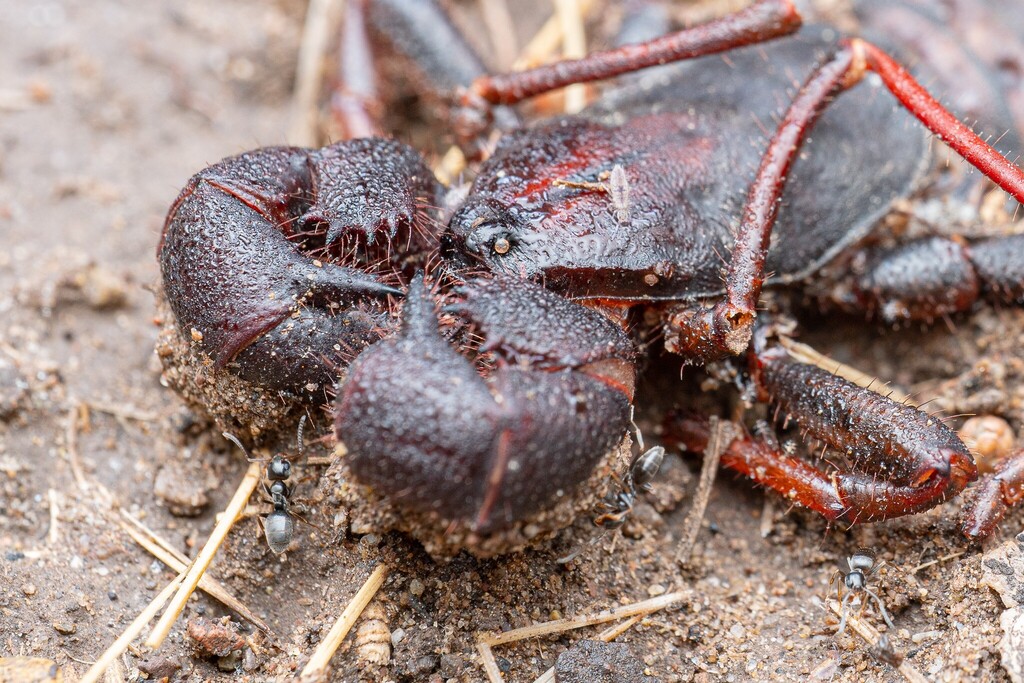
(c) Jake Nitta, some rights reserved (CC BY) · licence
Family: Formicidae · Class: Insecta · Order: Hymenoptera
Tapinoma sessile (Odorous House Ant) is a California animal in the Formicidae family.
The odorous house ant is a small native North American ant species belonging to the subfamily Dolichoderinae. Workers measure 2.5 to 3.5 mm (0.1 to 0.14 inches) in length and are dark brown to black in coloration. The species derives its common name from the distinctive coconut-like or rotten coconut odor emitted when crushed. The body lacks a petiolar node, distinguishing it from many other ant species, and the antennae have 12 segments. Recent research suggests this species may represent a complex of four or more cryptic species that are morphologically similar but genetically distinct (BugGuide.Net). Tapinoma sessile occurs throughout much of North America, ranging from southern Canada to Mexico. In California, the species is widely distributed across diverse elevations and habitat types, from coastal areas to inland valleys and foothills. The species has adapted well to both natural and human-modified environments, making it one of the most commonly encountered ants in the state. This adaptable species inhabits a broad range of habitat types including grasslands, chaparral, oak woodlands, riparian areas, and urban environments. Nests are typically constructed in soil under rocks, logs, or debris, though colonies may also establish in wall voids, under flooring, or in other sheltered locations in buildings. The species shows particular affinity for areas with moderate moisture levels and readily available food sources. Odorous house ants are omnivorous foragers that feed on a variety of food sources including honeydew from aphids and scale insects, dead insects, seeds, and various plant materials. Workers are highly social and form trails to food sources using chemical pheromones. Colony size varies considerably, ranging from a few hundred to several thousand individuals. Multiple queens may be present in a single colony, and colonies can split to form satellite nests through budding. Reproductive flights typically occur during warm months, with mated queens establishing new colonies. The species plays an ecological role as both predator and scavenger, helping to control populations of other insects while also dispersing seeds and aerating soil through nest construction activities. Research has documented the species' involvement in mutualistic relationships with various butterfly larvae, including Icaricia acmon, where ants tend the larvae in exchange for nutritious secretions (Peterson 1993). Tapinoma sessile workers have been observed tending third and fourth instar butterfly larvae, though they may abandon larvae when disturbed. Tapinoma sessile is not listed under federal or state conservation legislation and maintains stable populations throughout its range. The species' adaptability to human-modified environments has likely contributed to its continued success, though it can become a household pest when colonies establish indoors. Climate change and continued urbanization may affect local population dynamics, but the species' broad ecological tolerance suggests it will remain common across California. No specific conservation measures are needed for this widespread native species.
Classification
Class: Insecta · Order: Hymenoptera · Family: Formicidae
Frequently asked questions
How is Tapinoma sessile classified?
Tapinoma sessile belongs to class Insecta, order Hymenoptera, family Formicidae.
What family does Tapinoma sessile belong to?
Tapinoma sessile is in the Formicidae family.
What is Tapinoma sessile?
The odorous house ant is a small native North American ant species belonging to the subfamily Dolichoderinae.
Is Tapinoma sessile found in California?
Yes. Tapinoma sessile is recorded in California in The California Species Project's catalogue.
Related species
Other California species in the same genus, family, or bioregion.
Data from The California Species Project — 14,000+ California species with verified data from CNPS, CDFW, USFWS, and more.