Tegula funebralis
Black Tegula
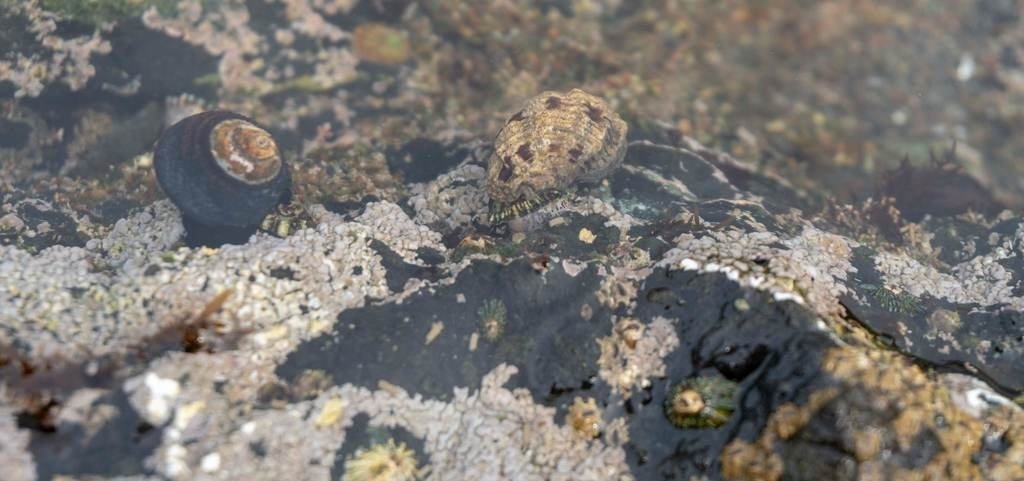
no rights reserved · CC0
Family: Tegulidae · Class: Gastropoda · Order: Trochida
Tegula funebralis (Black Tegula) is a California animal in the Tegulidae family.
The black tegula (Tegula funebralis) is a marine gastropod mollusk in the family Tegulidae, commonly found along the rocky intertidal zones of the Pacific Coast. This conical snail measures 20 to 30 mm (0.8 to 1.2 inches) in height, with a thick, solid shell characterized by a dark brown to black coloration that gives the species its common name. The shell displays a distinctive turbinate shape with pronounced spiral ridges and a smooth, iridescent interior surface. Black tegula occur along the Pacific Coast from British Columbia, Canada, south to Baja California, Mexico. In California, the species is distributed continuously along the coastline, inhabiting rocky shores from Humboldt County to San Diego County. The species is particularly abundant in central California's rocky intertidal zones, including areas within marine protected areas such as the Cambria State Marine Conservation Area and White Rock State Marine Conservation Area (CDFW). This species inhabits the upper to mid intertidal zone of exposed rocky shores, typically found on hard substrates including granite, sandstone, and volcanic rock formations. Black tegula prefer areas with moderate to high wave exposure, where they attach firmly to rock surfaces using their muscular foot. They occupy elevations from mean low tide to approximately 2 meters above mean low tide, often aggregating in crevices and under overhangs during low tide periods. Black tegula are herbivorous grazers that feed primarily on microalgae, diatoms, and small macroalgae scraped from rock surfaces using their radula, a rasping feeding organ. The species exhibits synchronized spawning behavior, typically occurring during spring and early summer months when water temperatures increase. Females release eggs into the water column where external fertilization occurs. Larvae undergo a planktonic stage lasting several weeks before settling and metamorphosing into juvenile snails. Adults demonstrate strong homing behavior, returning to specific microhabitat locations after foraging. The species plays an important ecological role as both a primary consumer of algae and as prey for various predators, including sea stars, crabs, and shorebirds. Black tegula serve as indicators of rocky intertidal ecosystem health and are commonly used in marine monitoring protocols throughout California (Multi-Agency Rocky Intertidal Network). The species contributes to kelp forest ecosystems by grazing on epiphytic algae that grows on kelp surfaces (CDFW Kelp Status Report). Currently, black tegula hold no special conservation status at federal or state levels. However, like many intertidal species, they face potential threats from coastal development, ocean acidification, and climate change impacts including sea level rise and increased storm intensity. The species' presence in multiple marine protected areas along the California coast provides some protection for local populations. Population monitoring continues through standardized rocky intertidal surveys conducted by various research institutions and agencies as of December 2025.
Classification
Class: Gastropoda · Order: Trochida · Family: Tegulidae
Frequently asked questions
How is Tegula funebralis classified?
Tegula funebralis belongs to class Gastropoda, order Trochida, family Tegulidae.
What family does Tegula funebralis belong to?
Tegula funebralis is in the Tegulidae family.
What is Tegula funebralis?
The black tegula (Tegula funebralis) is a marine gastropod mollusk in the family Tegulidae, commonly found along the rocky intertidal zones of the Pacific Coast.
Is Tegula funebralis found in California?
Yes. Tegula funebralis is recorded in California in The California Species Project's catalogue.
Related species
Other California species in the same genus, family, or bioregion.
Data from The California Species Project — 14,000+ California species with verified data from CNPS, CDFW, USFWS, and more.