Tenodera sinensis
Chinese Mantis
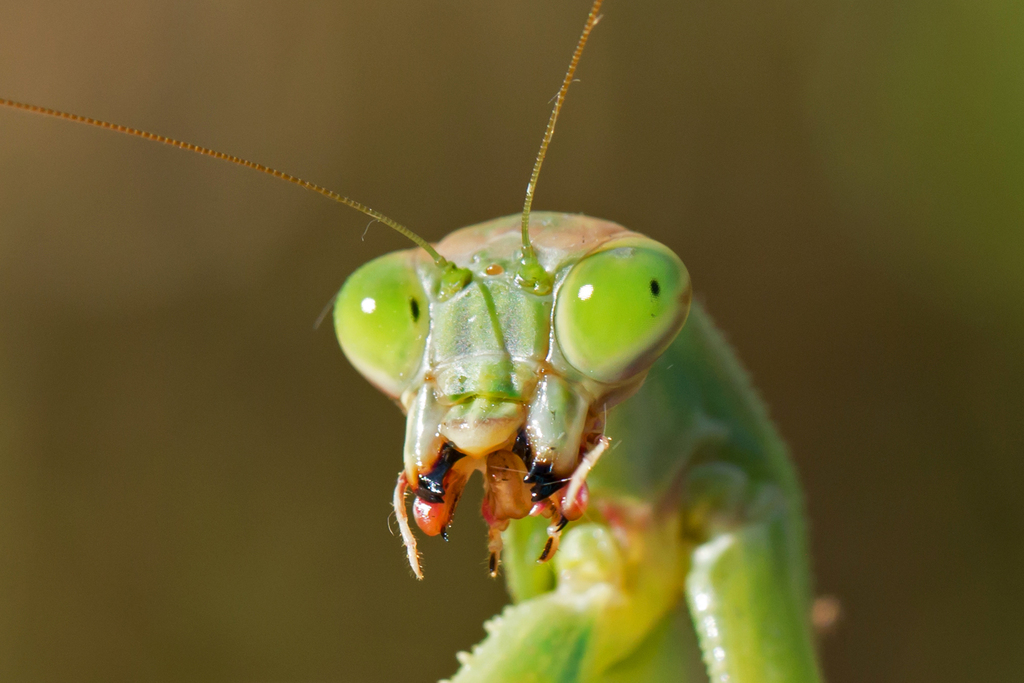
(c) Bill Keim, some rights reserved (CC BY) · licence
Family: Mantidae · Class: Insecta · Order: Mantodea
Tenodera sinensis (Chinese Mantis) is a California animal in the Mantidae family.
The Chinese mantis is a large predatory insect native to Asia that has become established across much of the United States. Adults reach 76-102 mm (3.0-4.0 inches) in length, making them one of the largest mantids in North America. The body is typically green or brown, with females being noticeably larger and more robust than males. Adults possess well-developed wings, with males capable of flight while females are typically too heavy for sustained flight. The characteristic triangular head bears large compound eyes and prominent raptorial forelegs adapted for grasping prey. This introduced species has established populations across much of the continental United States, with documented occurrences from the northeastern states westward to the Great Plains and Pacific Coast. In California, Chinese mantis populations have been reported in various regions, though comprehensive distribution mapping remains incomplete. The species appears to be expanding its range westward, with limited occurrence data from western states documented on citizen science platforms (BugGuide). Chinese mantis inhabits meadows, gardens, agricultural areas, and suburban landscapes, typically found on tall herbs, flower clusters, and shrubs (BugGuide). The species demonstrates considerable habitat flexibility, establishing in both natural and human-modified environments. Adults are commonly observed on flowering plants where they hunt prey attracted to nectar sources. As ambush predators, Chinese mantis are carnivorous generalists that consume a wide variety of insects including both pest and beneficial species. They are capable of taking prey considerably larger than themselves, including small vertebrates such as frogs, lizards, and occasionally hummingbirds, though such predation events are infrequent and do not significantly impact vertebrate populations (BugGuide). The species overwinters as egg masses (oothecae) attached to tree stems and other vertical surfaces above the snow line. Nymphs hatch in late spring and disperse via wind currents before establishing territories. The nymphs are wingless and resemble miniature adults, undergoing six to seven molts before reaching maturity. Adults are most active during summer and fall months, with mating typically occurring in September. The Chinese mantis is not protected under state or federal legislation and carries no special conservation status. As an introduced species, it is sometimes considered problematic for native ecosystems due to its predation on beneficial insects. Research has documented Chinese mantis feeding on monarch butterfly larvae, raising concerns about impacts on native Lepidoptera populations (Rafter et al. 2013). The species' establishment across North America has been facilitated by commercial availability of egg cases for biological pest control, despite limited evidence of effective pest suppression. In some states, the Chinese mantis has been included on Species of Greatest Conservation Need lists, though this designation typically reflects data deficiency rather than conservation concern for the species itself.
Classification
Class: Insecta · Order: Mantodea · Family: Mantidae
Frequently asked questions
How is Tenodera sinensis classified?
Tenodera sinensis belongs to class Insecta, order Mantodea, family Mantidae.
What family does Tenodera sinensis belong to?
Tenodera sinensis is in the Mantidae family.
What is Tenodera sinensis?
The Chinese mantis is a large predatory insect native to Asia that has become established across much of the United States.
Is Tenodera sinensis found in California?
Yes. Tenodera sinensis is recorded in California in The California Species Project's catalogue.
Related species
Other California species in the same genus, family, or bioregion.
Data from The California Species Project — 14,000+ California species with verified data from CNPS, CDFW, USFWS, and more.