Terellia fuscicornis
Artichoke Fly
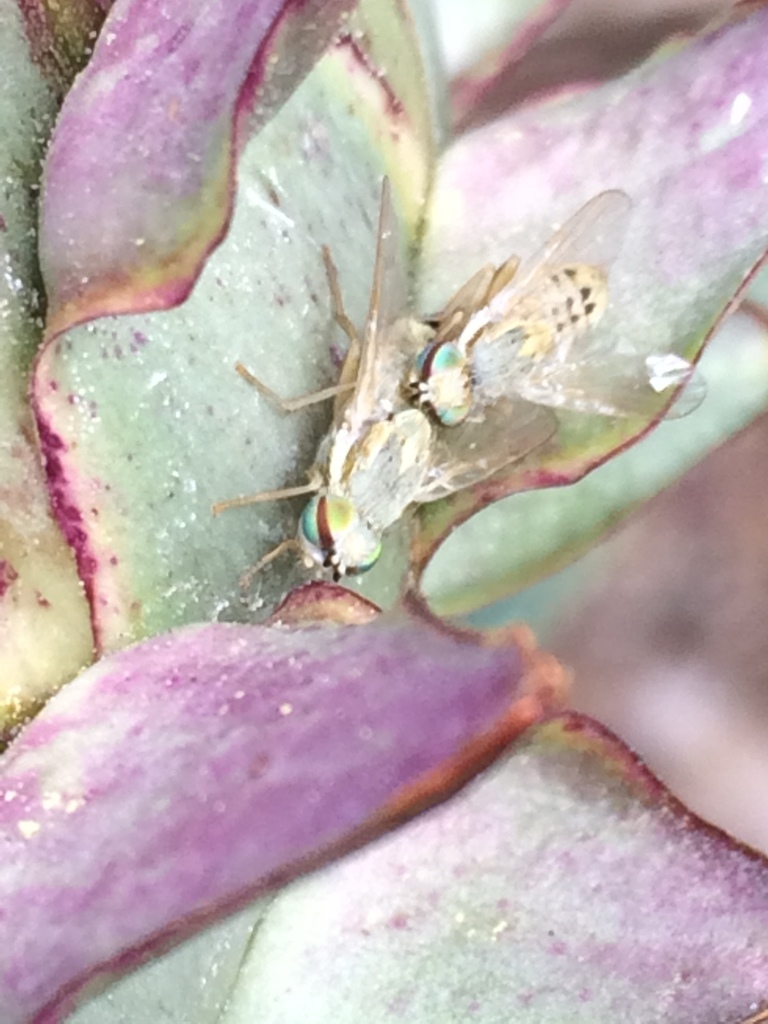
(c) Darin J McGuire, some rights reserved (CC BY) · licence
Family: Tephritidae · Class: Insecta · Order: Diptera
Terellia fuscicornis (Artichoke Fly) is a California animal in the Tephritidae family.
Terellia fuscicornis, commonly known as the artichoke fly, is a small fruit fly in the family Tephritidae that was intentionally introduced to North America as a biological control agent. This species is native to the Palearctic Region and is now established in California (BugGuide.Net). The fly displays typical tephritid characteristics with patterned wings and a compact body structure, though specific morphometric data for this species remains limited in the available literature. The artichoke fly's North American range is currently restricted to California, where it was introduced as part of biological control programs targeting invasive thistles (BugGuide.Net). The species has established populations in areas where its host plants are present, though comprehensive distribution mapping within California has not been extensively documented. As an adventive species from the Palearctic, its current range represents a significant geographic expansion from its native European and Asian distribution. This species inhabits areas where artichokes and related plants in the family Asteraceae are present. The fly's habitat requirements are closely tied to the distribution of its host plants, particularly cultivated artichokes and various thistle species. In California, this includes both agricultural areas where artichokes are grown commercially and naturalized areas where thistles have become established. The species appears to have adapted well to Mediterranean-climate conditions similar to portions of its native range. Terellia fuscicornis exhibits typical tephritid behavior, with larvae developing within the flower heads and stems of its host plants. Adults feed on plant materials and mate near host plants where females deposit eggs directly into plant tissues. The fly's life cycle is closely synchronized with the growth patterns of its host plants, particularly artichokes and thistles. As a fruit fly species, adults likely engage in courtship displays involving wing movements and pheromone release, though specific behavioral studies for this species are limited. The fly's role as a biological control agent relies on its larvae causing damage to thistle reproductive structures, thereby reducing seed production in target weed species. The artichoke fly has no formal conservation status listings at federal or state levels. As an intentionally introduced species, it is not considered a conservation concern but rather serves a beneficial ecological role in integrated pest management programs. The species' establishment in California represents a successful biological control introduction, contributing to the management of invasive thistle species that can displace native vegetation. However, like many introduced biocontrol agents, ongoing monitoring is important to ensure the species remains within its intended ecological role and does not develop negative impacts on non-target native plants in the Asteraceae family. Current population trends and long-term establishment success of this introduction have not been comprehensively assessed in recent literature.
Classification
Class: Insecta · Order: Diptera · Family: Tephritidae
Frequently asked questions
How is Terellia fuscicornis classified?
Terellia fuscicornis belongs to class Insecta, order Diptera, family Tephritidae.
What family does Terellia fuscicornis belong to?
Terellia fuscicornis is in the Tephritidae family.
What is Terellia fuscicornis?
Terellia fuscicornis, commonly known as the artichoke fly, is a small fruit fly in the family Tephritidae that was intentionally introduced to North America as a biological control agent.
Is Terellia fuscicornis found in California?
Yes. Terellia fuscicornis is recorded in California in The California Species Project's catalogue.
Related species
Other California species in the same genus, family, or bioregion.
Data from The California Species Project — 14,000+ California species with verified data from CNPS, CDFW, USFWS, and more.