Tesagrotis piscipellis
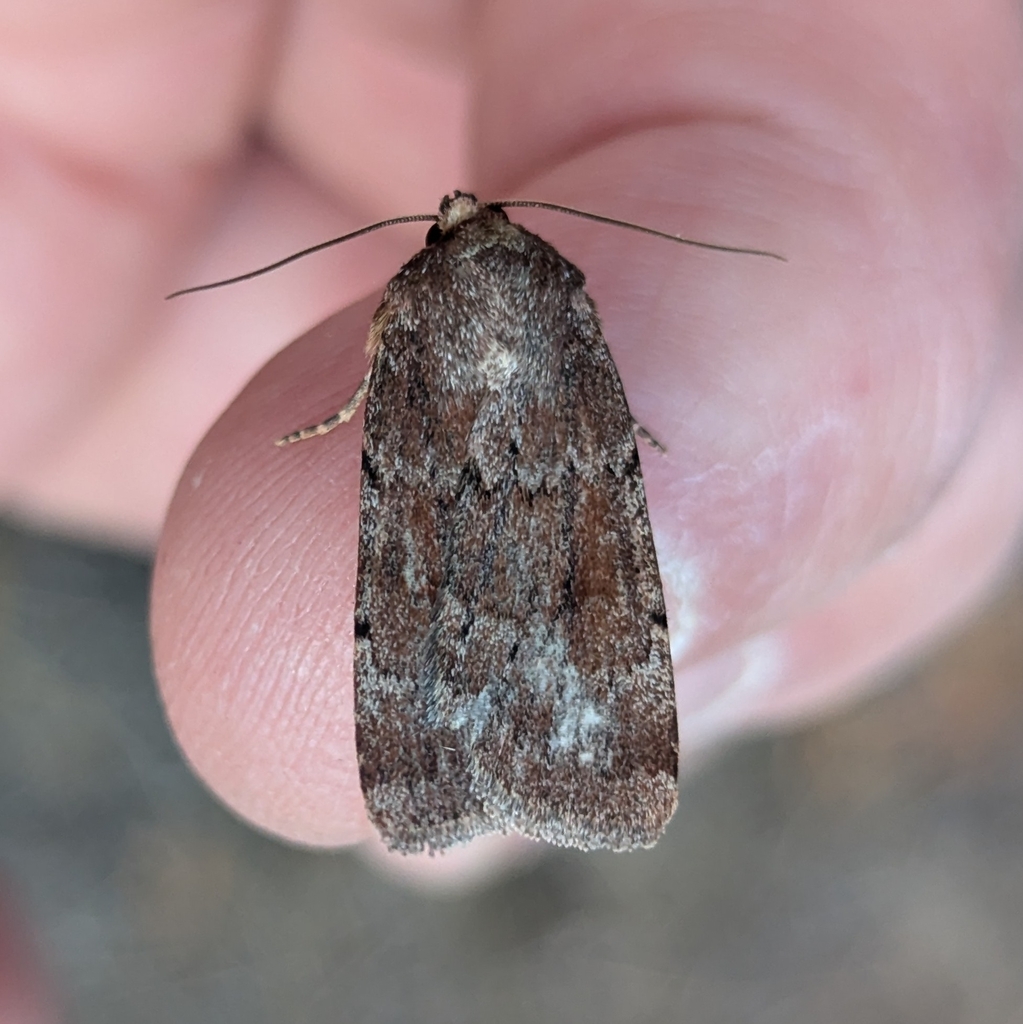
no rights reserved · CC0
Family: Noctuidae · Class: Insecta · Order: Lepidoptera
Tesagrotis piscipellis is a California animal in the Noctuidae family.
Tesagrotis piscipellis is a moth species in the family Noctuidae, commonly known as owlet moths or cutworm moths. This nocturnal lepidopteran belongs to a diverse family containing over 11,000 described species worldwide. The species epithet 'piscipellis' derives from Latin, meaning 'fish-skinned,' likely referring to characteristics of the wing scales or coloration pattern. As a member of the Noctuidae family, T. piscipellis likely exhibits the typical moth body plan with a robust thorax, thread-like or feathery antennae, and four wings covered in microscopic scales. Adult noctuid moths typically measure 15 to 40 millimeters (0.6 to 1.6 inches) in wingspan, though specific measurements for this species require further documentation. The forewings are generally narrow and elongated, while the hindwings are broader and often lighter in coloration. The geographic distribution and habitat preferences of Tesagrotis piscipellis remain poorly documented in available literature. Many Noctuidae species demonstrate restricted ranges, particularly those adapted to specific host plants or microhabitats. California hosts numerous endemic noctuid species, many of which occupy specialized niches in the state's diverse ecosystems ranging from coastal scrublands to montane forests. Noctuidae moths typically inhabit areas where their larval host plants occur. Adult moths are primarily nocturnal, becoming active after sunset to mate and feed. Many species are attracted to artificial lights and can be found near urban areas, though others remain restricted to undisturbed natural habitats. Flight periods vary among species but commonly occur during warmer months when host plants are actively growing. Larval ecology plays a crucial role in noctuid life cycles. Caterpillars often feed on herbaceous plants, shrubs, or tree foliage, with many species demonstrating host plant specificity. Some noctuid larvae are agricultural pests, while others occupy specialized ecological niches. Pupation typically occurs in soil chambers or leaf litter, with adults emerging after several weeks to months depending on environmental conditions and species-specific development rates. The conservation status of Tesagrotis piscipellis has not been formally assessed by state or federal agencies. Many moth species remain understudied compared to butterflies and other more conspicuous insects, creating knowledge gaps in population trends and distribution patterns. Habitat loss, light pollution, and pesticide use represent potential threats to nocturnal lepidopterans throughout California. Climate change may also affect moth populations through altered precipitation patterns, temperature regimes, and host plant phenology. Taxonomic research continues to reveal new moth species, particularly in diverse regions like California. Molecular techniques increasingly supplement traditional morphological approaches, sometimes revealing cryptic species complexes within what were previously considered single species. Further field surveys and taxonomic work are needed to fully understand the distribution, ecology, and conservation needs of T. piscipellis and related species.
Classification
Class: Insecta · Order: Lepidoptera · Family: Noctuidae
Frequently asked questions
How is Tesagrotis piscipellis classified?
Tesagrotis piscipellis belongs to class Insecta, order Lepidoptera, family Noctuidae.
What family does Tesagrotis piscipellis belong to?
Tesagrotis piscipellis is in the Noctuidae family.
What is Tesagrotis piscipellis?
Tesagrotis piscipellis is a moth species in the family Noctuidae, commonly known as owlet moths or cutworm moths.
Is Tesagrotis piscipellis found in California?
Yes. Tesagrotis piscipellis is recorded in California in The California Species Project's catalogue.
Related species
Other California species in the same genus, family, or bioregion.
Data from The California Species Project — 14,000+ California species with verified data from CNPS, CDFW, USFWS, and more.