Tetanolita palligera
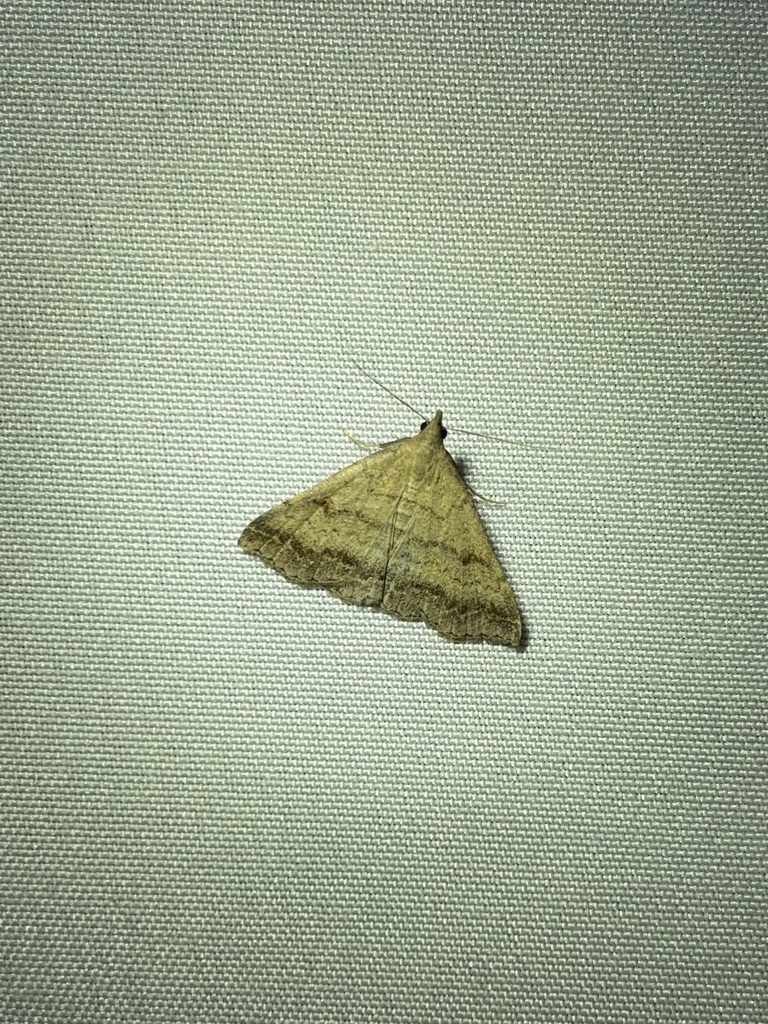
(c) Amelia Tauber, some rights reserved (CC BY) · licence
Family: Erebidae · Class: Insecta · Order: Lepidoptera
Tetanolita palligera is a California animal in the Erebidae family.
Tetanolita palligera is a moth species in the family Erebidae, subfamily Herminiinae. This small to medium-sized moth has a wingspan typically ranging from 20 to 25 millimeters (0.8 to 1.0 inches). The forewings are pale gray to brownish-gray with subtle darker markings, including indistinct transverse lines and small discal spots. The hindwings are lighter, often pale gray to whitish. The species exhibits the characteristic features of the genus Tetanolita, including relatively narrow forewings and a slender body typical of herminiine moths. The distribution of Tetanolita palligera appears to be limited within North America, though specific range data for California populations requires further documentation. The species has been recorded from scattered localities, suggesting a potentially fragmented or localized distribution pattern. Historical records indicate presence in western North American regions, but comprehensive surveys to establish current range boundaries have been limited. Habitat preferences for Tetanolita palligera remain poorly documented in the scientific literature. Like other members of the Herminiinae subfamily, this species likely inhabits areas with suitable host vegetation and appropriate microclimate conditions. The moths may be associated with woodland edges, riparian corridors, or areas with mixed vegetation communities that support larval development. The life history and ecology of Tetanolita palligera are incompletely understood. Adult moths are presumably nocturnal, as is typical for the subfamily Herminiinae. Flight periods and seasonal activity patterns have not been well documented for this species. Larval host plants remain unknown, though many herminiine moths feed on herbaceous plants, shrubs, or decomposing organic matter. The species likely completes one or two generations per year, depending on local climate conditions and resource availability. Tetanolita palligera does not appear on federal or California state endangered species lists, and no formal conservation status has been assigned by major conservation organizations. The species' conservation needs are difficult to assess due to limited biological and ecological information. Like many lesser-known moth species, Tetanolita palligera may face threats from habitat loss, urbanization, and changes in vegetation communities. Light pollution may also impact nocturnal activity patterns and reproduction. The lack of comprehensive survey data makes it challenging to determine population trends or identify specific conservation priorities for this species. Further research is needed to establish baseline population data, habitat requirements, and potential threats to guide future conservation planning efforts.
Classification
Class: Insecta · Order: Lepidoptera · Family: Erebidae
Frequently asked questions
How is Tetanolita palligera classified?
Tetanolita palligera belongs to class Insecta, order Lepidoptera, family Erebidae.
What family does Tetanolita palligera belong to?
Tetanolita palligera is in the Erebidae family.
What is Tetanolita palligera?
Tetanolita palligera is a moth species in the family Erebidae, subfamily Herminiinae.
Is Tetanolita palligera found in California?
Yes. Tetanolita palligera is recorded in California in The California Species Project's catalogue.
Related species
Other California species in the same genus, family, or bioregion.
Data from The California Species Project — 14,000+ California species with verified data from CNPS, CDFW, USFWS, and more.