Tetracis australis
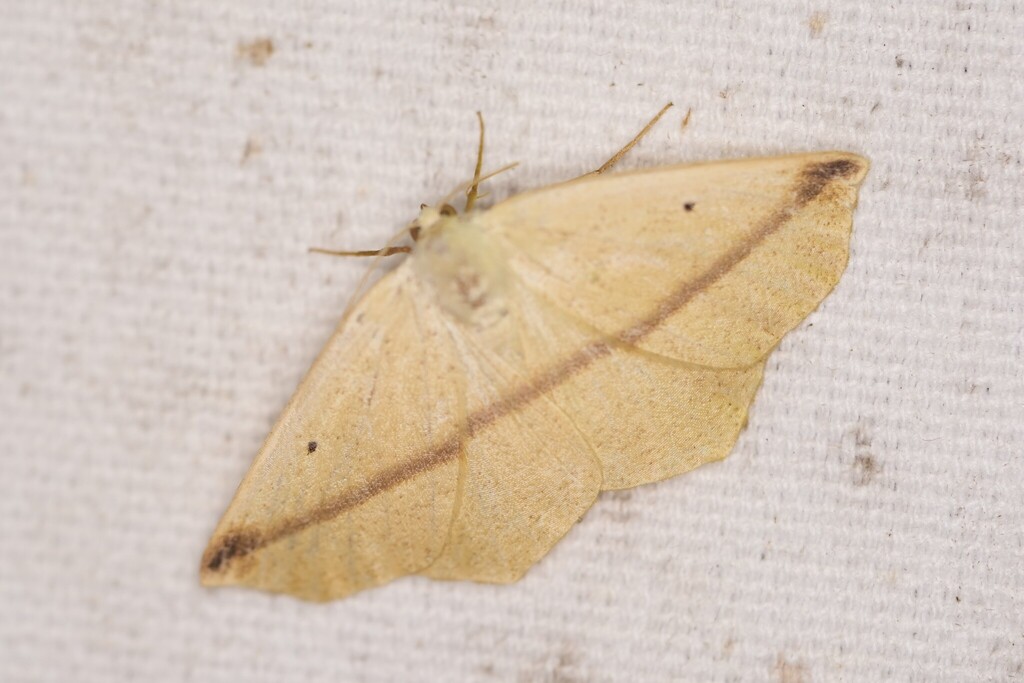
(c) Brandon Johnson, some rights reserved (CC BY) · licence
Family: Geometridae · Class: Insecta · Order: Lepidoptera
Tetracis australis is a California animal in the Geometridae family.
Tetracis australis is a moth species in the family Geometridae, commonly known as geometrids or inchworm moths. This species belongs to a genus of moths found in North America, though specific morphological details for T. australis are limited in the literature. Like other members of the Geometridae family, adults likely possess the characteristic slender body and broad, delicate wings typical of geometrid moths. Wing coloration and patterns in this genus typically provide camouflage against bark and lichen substrates where the moths rest during daylight hours. The geographic distribution of Tetracis australis appears to be poorly documented in current taxonomic databases. The species name 'australis' suggests a southern distribution, though specific range information within California or other western states requires further taxonomic verification. Many Tetracis species occur in mountainous regions of western North America, inhabiting areas with suitable host plant communities. Habitat preferences for T. australis are not well-established in the current literature. Other Tetracis species typically inhabit forested environments, particularly areas with oak woodlands, mixed coniferous forests, and chaparral communities. These moths generally prefer areas with established tree canopies that provide both larval host plants and adult roosting sites. Elevation ranges for the genus vary considerably, with some species occurring from sea level to montane zones above 2,000 meters. The life cycle of T. australis likely follows the typical geometrid pattern, with eggs laid on or near host plants, followed by several larval instars that feed on foliage. Geometridae larvae are characterized by their distinctive looping locomotion, lacking middle prolegs and moving by extending the front of their body forward, then drawing the rear forward to meet it. This creates the characteristic 'inching' movement that gives the family its common name. Adult flight periods and voltinism (number of generations per year) for this species are not documented in accessible literature. The conservation status of Tetracis australis is unclear due to limited taxonomic and ecological information available in current databases. The species does not appear on federal or state threatened and endangered species lists as of December 2025. However, the lack of recent collection records or ecological studies makes it difficult to assess population trends or conservation needs. Many geometrid moths face threats from habitat loss, light pollution, and climate change, particularly species with restricted distributions or specialized host plant requirements. Further taxonomic verification and field surveys would be necessary to establish definitive identification characteristics, distribution patterns, host plant associations, and conservation status for Tetracis australis. The limited information available highlights the need for continued lepidopteran inventory work in California to better understand the state's moth diversity and conservation requirements.
Classification
Class: Insecta · Order: Lepidoptera · Family: Geometridae
Frequently asked questions
How is Tetracis australis classified?
Tetracis australis belongs to class Insecta, order Lepidoptera, family Geometridae.
What family does Tetracis australis belong to?
Tetracis australis is in the Geometridae family.
What is Tetracis australis?
Tetracis australis is a moth species in the family Geometridae, commonly known as geometrids or inchworm moths.
Is Tetracis australis found in California?
Yes. Tetracis australis is recorded in California in The California Species Project's catalogue.
Related species
Other California species in the same genus, family, or bioregion.
Data from The California Species Project — 14,000+ California species with verified data from CNPS, CDFW, USFWS, and more.