Tetracis cervinaria
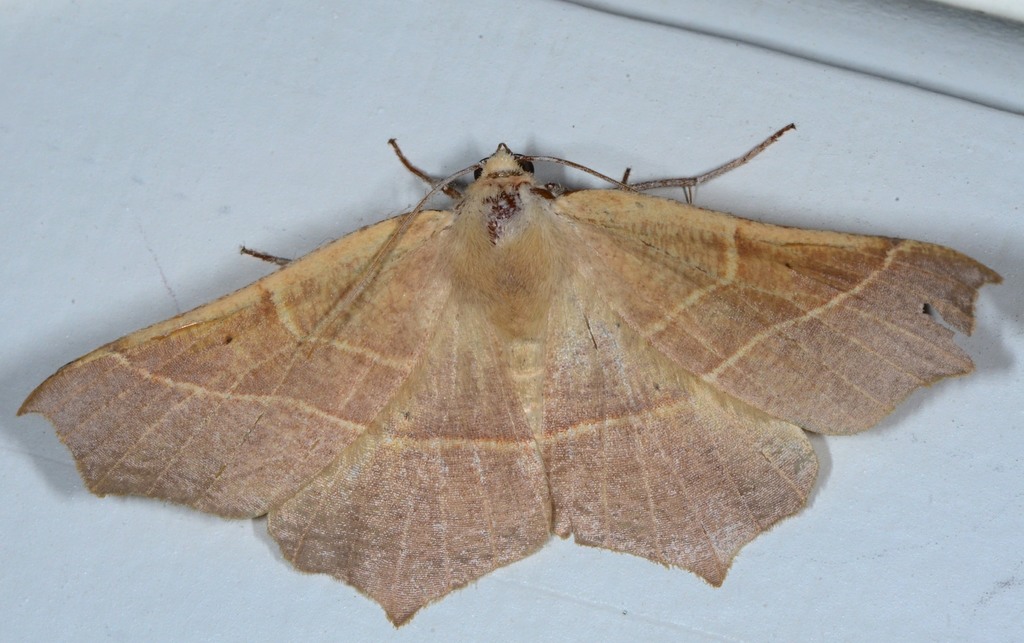
(c) Don Loarie, some rights reserved (CC BY) · licence
Family: Geometridae · Class: Insecta · Order: Lepidoptera
Tetracis cervinaria is a California animal in the Geometridae family.
Tetracis cervinaria is a moth species in the family Geometridae, commonly known as geometrid moths or inchworms. This species belongs to the subfamily Ennominae, which includes many medium to large-sized moths with relatively broad wings and cryptic coloration patterns that provide camouflage against bark and other natural surfaces. The physical characteristics of T. cervinaria follow typical geometrid patterns, with males and females often displaying sexual dimorphism in wing size and antennae structure. Males typically possess more feathery or pectinate antennae compared to females, which aids in detecting female pheromones during mating. The wingspan generally ranges from 25 to 35 millimeters (1.0 to 1.4 inches), though exact measurements for this species require verification from taxonomic literature. The forewings are typically earth-toned with cryptic patterns that blend with tree bark and dead vegetation. The distribution of Tetracis cervinaria appears to be concentrated in western North America, particularly California, though comprehensive range data is limited in current databases. Many geometrid species in this genus show restricted distributions tied to specific host plant communities and elevation ranges. The species likely occurs in foothill and montane regions where suitable host vegetation is present. Habitat preferences for T. cervinaria remain poorly documented, but related Tetracis species typically inhabit oak woodlands, mixed coniferous forests, and chaparral communities. These moths are generally associated with areas containing their larval host plants, which for many geometrid species include native shrubs and trees. Elevation ranges and specific microhabitat requirements need further research to establish precise parameters. The life cycle follows the typical geometrid pattern with four distinct stages: egg, larva, pupa, and adult. Larvae are likely caterpillars that feed on foliage of specific host plants, moving in the characteristic looping motion that gives geometrid larvae their "inchworm" common name. Adults are primarily nocturnal and are attracted to artificial lights during their flight period. The timing of adult emergence and breeding activity varies among geometrid species but often coincides with optimal host plant phenology and favorable weather conditions. Ecologically, geometrid larvae serve as important herbivores in forest and woodland ecosystems, while adults function as pollinators for night-blooming plants and provide food resources for nocturnal predators including bats and spiders. Population trends and conservation status for T. cervinaria are not well-established due to limited survey data and taxonomic uncertainty within the genus. The conservation status of Tetracis cervinaria is not currently tracked by federal or state wildlife agencies, reflecting the general lack of comprehensive data for many invertebrate species. Like many moths, this species may face threats from habitat loss, light pollution, and climate change impacts on host plant communities. Further taxonomic research and systematic surveys are needed to assess population status and conservation needs for this species and other understudied geometrid moths in California.
Classification
Class: Insecta · Order: Lepidoptera · Family: Geometridae
Frequently asked questions
How is Tetracis cervinaria classified?
Tetracis cervinaria belongs to class Insecta, order Lepidoptera, family Geometridae.
What family does Tetracis cervinaria belong to?
Tetracis cervinaria is in the Geometridae family.
What is Tetracis cervinaria?
Tetracis cervinaria is a moth species in the family Geometridae, commonly known as geometrid moths or inchworms.
Is Tetracis cervinaria found in California?
Yes. Tetracis cervinaria is recorded in California in The California Species Project's catalogue.
Related species
Other California species in the same genus, family, or bioregion.
Data from The California Species Project — 14,000+ California species with verified data from CNPS, CDFW, USFWS, and more.