Tetracis hirsutaria
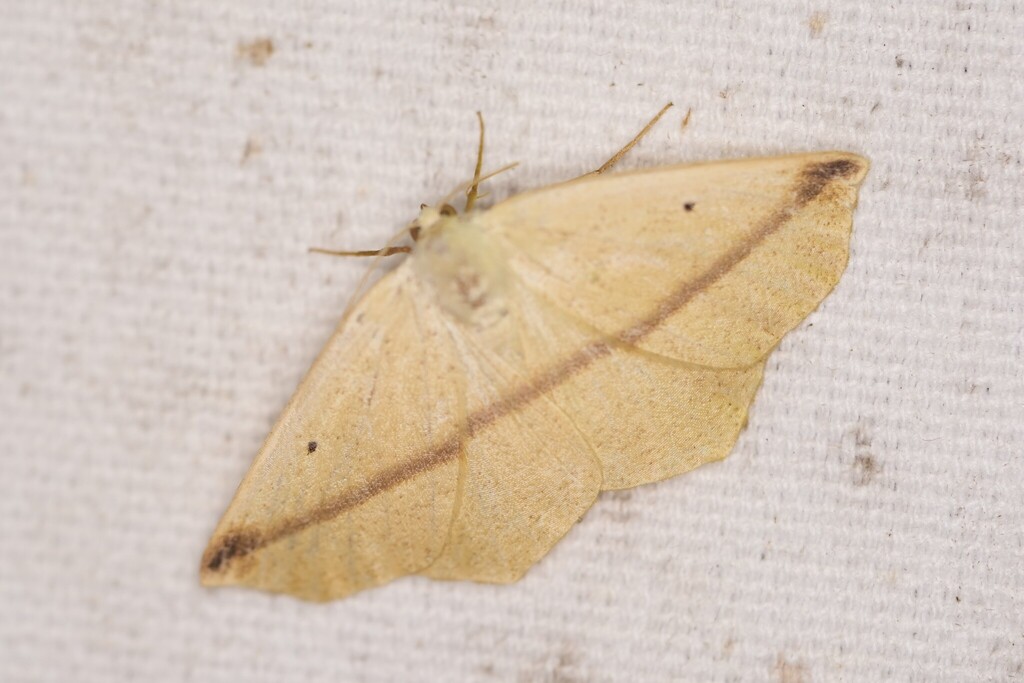
(c) Brandon Johnson, some rights reserved (CC BY) · licence
Family: Geometridae · Class: Insecta · Order: Lepidoptera
Tetracis hirsutaria is a California animal in the Geometridae family.
Tetracis hirsutaria is a moth species in the family Geometridae, commonly known as geometrid moths or inchworm moths. This species belongs to the subfamily Ennominae and is characterized by the typical geometrid wing structure and body form. Adult moths display muted earth-tone coloration patterns that provide effective camouflage against tree bark and rocky surfaces. The wings feature irregular crosslines and patterns in shades of brown, gray, and tan, with forewings typically measuring 15 to 20 millimeters in length. Males possess feathered antennae, while females have simple, thread-like antennae. The species name 'hirsutaria' refers to the hairy or bristly characteristics of certain body parts. Tetracis hirsutaria occurs in California and southern Nevada, with its range extending from near sea level to approximately 5,100 feet in elevation. In California, the species is found in foothill and montane regions, particularly in areas that support its host plant communities. The Nevada populations represent the eastern extent of the species' range, occurring in similar elevation zones and habitat types. This species inhabits chaparral, oak woodland, and mixed coniferous forest ecosystems where its larval host plants are abundant. The elevation range from near sea level to 5,100 feet encompasses diverse plant communities, from coastal scrub and foothill chaparral to mid-elevation mixed forests. Adults are typically found in areas with Ceanothus (California lilac), Cercocarpus (mountain mahogany), Prunus (cherry and plum species), and Ribes (currant and gooseberry) shrubs and trees. Larvae of Tetracis hirsutaria are polyphagous, feeding on multiple plant genera including Ceanothus, Cercocarpus, Prunus, and Ribes. This broad host plant range allows the species to exploit various shrubland and woodland habitats throughout its range. Caterpillars are typical geometrid larvae, moving in the characteristic looping motion that gives inchworms their common name. They possess cryptic coloration and often remain motionless during daylight hours, resembling twigs or bark. Adult moths are nocturnal and are attracted to artificial lights. Flight periods vary with elevation and local climate conditions, but adults typically emerge during spring and early summer months. Mating occurs shortly after emergence, with females depositing eggs on or near host plant foliage. Currently, Tetracis hirsutaria has no federal or state conservation listing status. The species appears to maintain stable populations throughout its range, benefiting from the widespread distribution of its host plants across California's diverse shrubland and woodland ecosystems. However, like many native moth species, it may face localized pressures from habitat conversion, urban development, and altered fire regimes that affect chaparral and woodland plant communities. Climate change impacts on host plant distribution and phenology could potentially affect future population stability, particularly at the species' elevational and geographic range limits.
Classification
Class: Insecta · Order: Lepidoptera · Family: Geometridae
Frequently asked questions
How is Tetracis hirsutaria classified?
Tetracis hirsutaria belongs to class Insecta, order Lepidoptera, family Geometridae.
What family does Tetracis hirsutaria belong to?
Tetracis hirsutaria is in the Geometridae family.
What is Tetracis hirsutaria?
Tetracis hirsutaria is a moth species in the family Geometridae, commonly known as geometrid moths or inchworm moths.
Is Tetracis hirsutaria found in California?
Yes. Tetracis hirsutaria is recorded in California in The California Species Project's catalogue.
Related species
Other California species in the same genus, family, or bioregion.
Data from The California Species Project — 14,000+ California species with verified data from CNPS, CDFW, USFWS, and more.