Tetracis jubararia
October Thorn
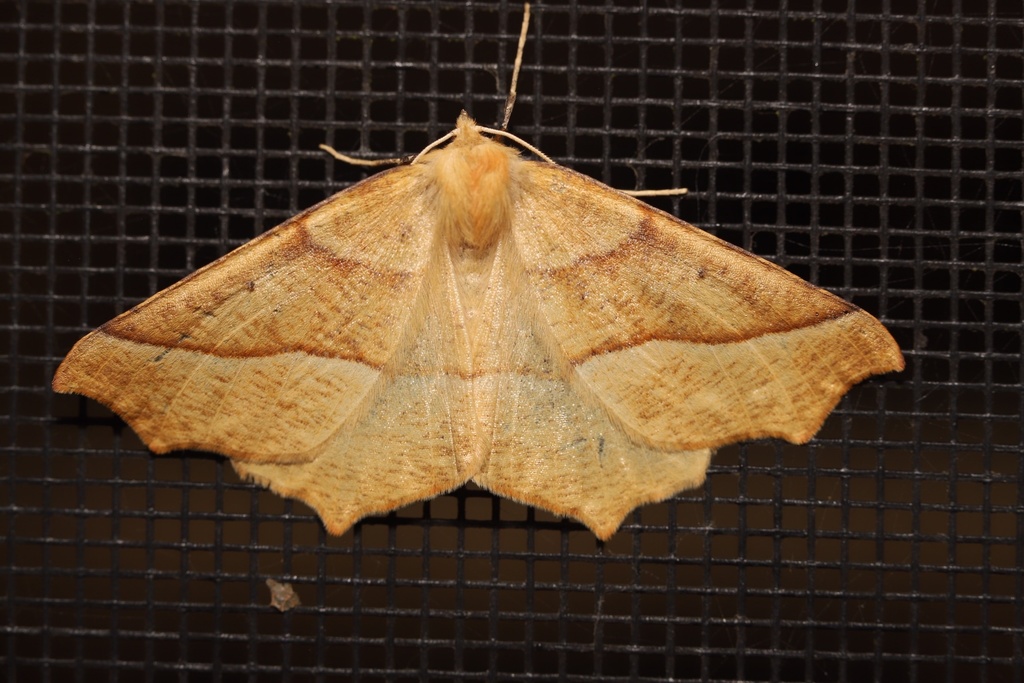
no rights reserved · CC0
Family: Geometridae · Class: Insecta · Order: Lepidoptera
Tetracis jubararia (October Thorn) is a California animal in the Geometridae family.
The October Thorn is a medium-sized geometrid moth belonging to the subfamily Ennominae and tribe Ourapterygini. Adults typically measure 16 to 26 mm in forewing length, displaying the characteristic angular wing shape that gives this species group its common name. The forewings are generally brown to gray with intricate cross-lines and markings that provide effective camouflage against tree bark and dead foliage. Tetracis jubararia occurs across western North America, with documented populations from British Columbia south through the western United States. In California, the species has been recorded from various counties, though specific distributional data remains limited in the scientific literature. The species includes multiple subspecies, including T. j. jubararia and T. j. sericeata, which show geographic variation in morphology and potentially ecological preferences. October Thorn moths inhabit forested environments, particularly areas with mixed coniferous and deciduous vegetation. The species shows a preference for woodland edges and clearings where host plants are abundant. Based on the genus name and seasonal activity patterns, adults are most commonly encountered during autumn months, typically from September through October when they emerge for mating. Like other geometrid moths, October Thorn caterpillars are "inchworms" that move by extending and contracting their bodies in a characteristic looping motion. The larvae likely feed on various deciduous trees and shrubs, though specific host plant relationships for this species have not been thoroughly documented in the available literature. Adult moths are nocturnal and are attracted to artificial lights, making them occasionally observable at porch lights and moth traps during their flight season. Adult October Thorns emerge in fall, with peak activity occurring in October as their common name suggests. Males likely use chemical pheromones to locate females for mating. After copulation, females deposit eggs that overwinter, with larvae emerging the following spring to feed on fresh foliage. The species appears to be univoltine, producing one generation per year. Tetracis jubararia does not appear on federal or state endangered species lists and is not currently considered a conservation concern. However, like many forest-associated lepidopterans, the species may face pressure from habitat modification, urbanization, and climate change effects on forest ecosystems. The October Thorn's reliance on specific woodland habitats makes it potentially vulnerable to large-scale forest management practices and land conversion. Detailed ecological studies of this species remain limited. The information presented here synthesizes available data from taxonomic databases and field guides. Scientific documentation of host plants, specific habitat requirements, and population dynamics would benefit from additional research. The species represents part of the diverse geometrid fauna that plays important roles in forest ecosystem food webs as both herbivores and prey for insectivorous predators.
Classification
Class: Insecta · Order: Lepidoptera · Family: Geometridae
Frequently asked questions
How is Tetracis jubararia classified?
Tetracis jubararia belongs to class Insecta, order Lepidoptera, family Geometridae.
What family does Tetracis jubararia belong to?
Tetracis jubararia is in the Geometridae family.
What is Tetracis jubararia?
The October Thorn is a medium-sized geometrid moth belonging to the subfamily Ennominae and tribe Ourapterygini.
Is Tetracis jubararia found in California?
Yes. Tetracis jubararia is recorded in California in The California Species Project's catalogue.
Related species
Other California species in the same genus, family, or bioregion.
Data from The California Species Project — 14,000+ California species with verified data from CNPS, CDFW, USFWS, and more.