Tetragnatha laboriosa
Silver Long-jawed Orbweaver
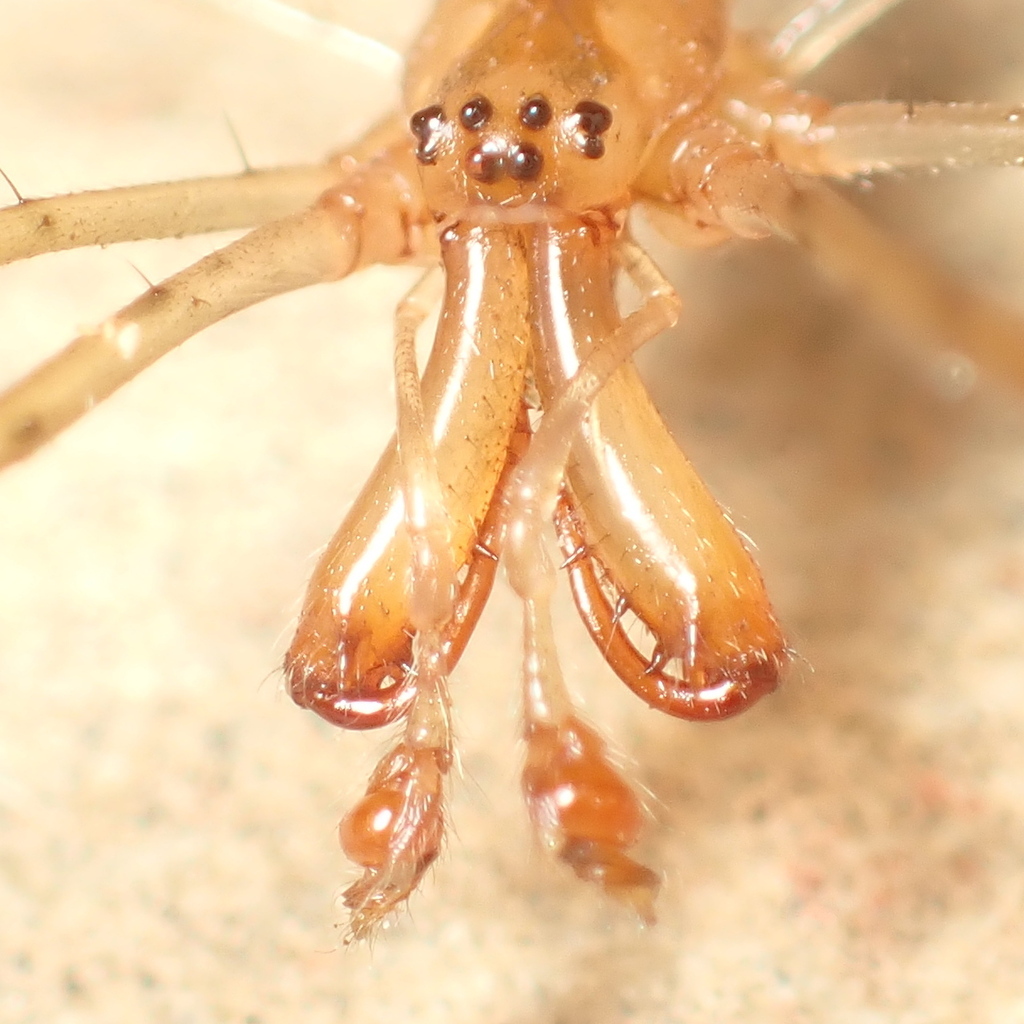
(c) dhasdf, some rights reserved (CC BY) · licence
Family: Tetragnathidae · Class: Arachnida · Order: Araneae
Tetragnatha laboriosa (Silver Long-jawed Orbweaver) is a California animal in the Tetragnathidae family.
The Silver Long-jawed Orbweaver is a medium-sized spider in the family Tetragnathidae, characterized by its elongated chelicerae (jaw-like structures) and silvery metallic appearance. Adult females typically measure 5-7 mm in body length, while males are slightly smaller at 4-5 mm. The cephalothorax and abdomen display a distinctive silver or pale yellow coloration with darker lateral stripes. The long, prominent chelicerae extending forward from the head region are a defining feature of the genus Tetragnatha, giving these spiders their common name of "long-jawed" orbweavers. Tetragnatha laboriosa occurs across much of North America, with documented populations from Canada south through the United States into Mexico. In California, the species has been recorded throughout much of the state, though specific county-level distribution data remains limited. According to Levi's comprehensive 1981 revision of North American Tetragnatha, this species shows considerable geographic variation across its range (Levi 1981). This species typically inhabits areas near water bodies, including streams, ponds, lakes, and marshy environments. Silver Long-jawed Orbweavers construct their orb webs in vegetation along shorelines and in riparian corridors, often positioning webs horizontally or at slight angles rather than vertically. They show a preference for areas with dense herbaceous vegetation and shrubs that provide suitable anchor points for web construction. The species is commonly found from sea level to moderate elevations, though specific elevational limits have not been well documented. Like other orbweavers, T. laboriosa constructs circular webs to capture flying prey, primarily small flying insects including midges, mosquitoes, and other dipterans. The species exhibits typical orbweaver behavior, remaining at the web center or retreating to nearby vegetation when disturbed. Mating occurs during warmer months, with males approaching females on their webs in a characteristic courtship sequence. Females produce egg sacs that are typically attached to vegetation near the web site. Adults are most commonly observed from late spring through early fall, with peak activity during summer months. Tetragnatha laboriosa currently holds no federal or state conservation listing status and appears to maintain stable populations across its range. The species benefits from its adaptability to various aquatic and semi-aquatic habitats, though like many riparian species, it may face localized pressures from habitat modification, water management practices, and urban development near waterways. Climate change impacts on aquatic ecosystems could potentially affect prey availability and suitable habitat, but specific population trends for this species have not been systematically monitored. The species' widespread distribution and apparent habitat flexibility suggest it faces no immediate conservation concerns as of December 2025.
Classification
Class: Arachnida · Order: Araneae · Family: Tetragnathidae
Frequently asked questions
How is Tetragnatha laboriosa classified?
Tetragnatha laboriosa belongs to class Arachnida, order Araneae, family Tetragnathidae.
What family does Tetragnatha laboriosa belong to?
Tetragnatha laboriosa is in the Tetragnathidae family.
What is Tetragnatha laboriosa?
The Silver Long-jawed Orbweaver is a medium-sized spider in the family Tetragnathidae, characterized by its elongated chelicerae (jaw-like structures) and silvery metallic appearance.
Is Tetragnatha laboriosa found in California?
Yes. Tetragnatha laboriosa is recorded in California in The California Species Project's catalogue.
Related species
Other California species in the same genus, family, or bioregion.
Data from The California Species Project — 14,000+ California species with verified data from CNPS, CDFW, USFWS, and more.