Tetragnatha versicolor
Versicolor Long-jawed Orbweaver
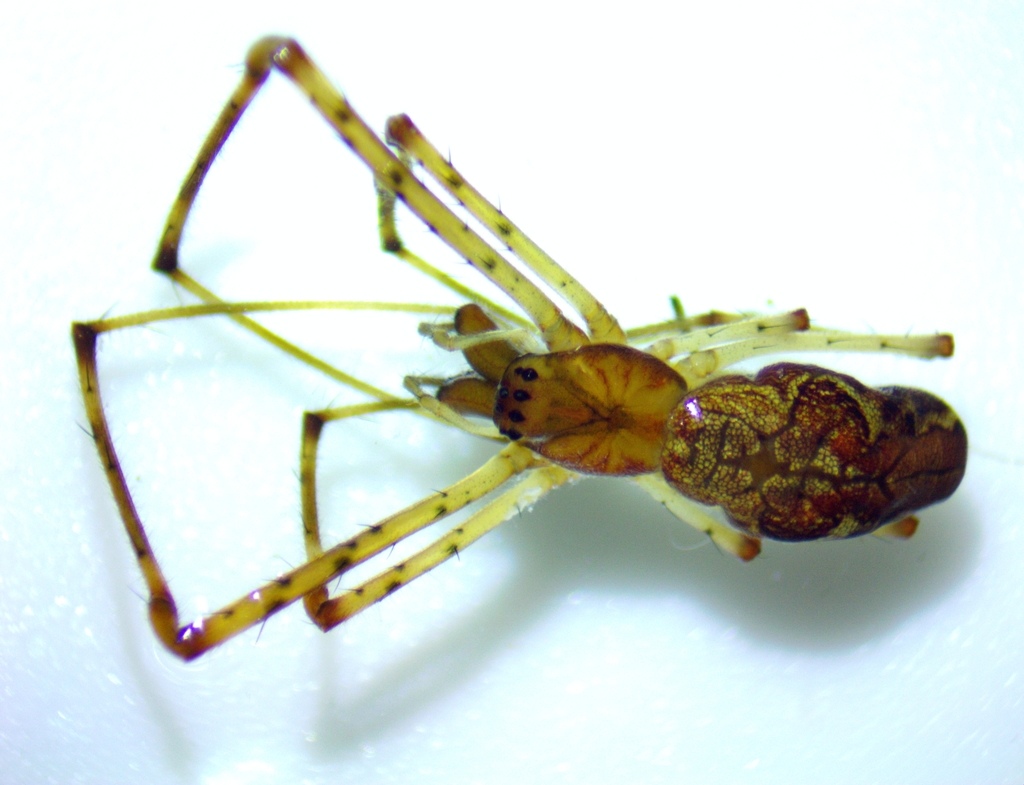
(c) Chris LaRosee, some rights reserved (CC BY) · licence
Family: Tetragnathidae · Class: Arachnida · Order: Araneae
Tetragnatha versicolor (Versicolor Long-jawed Orbweaver) is a California animal in the Tetragnathidae family.
The Versicolor Long-jawed Orbweaver (Tetragnatha versicolor) is a spider species in the family Tetragnathidae, characterized by its elongated body and distinctive chelicerae (jaws). Adults typically measure approximately 1 cm in body length excluding legs, with females generally larger than males (BugGuide). The species displays variable coloration patterns, contributing to its "versicolor" designation, with specimens ranging from pale brown to darker hues. Males possess elongated chelicerae with multiple teeth, a key identifying feature for this genus, though chelicerae length in T. versicolor is generally shorter than the closely related T. elongata (BugGuide). Tetragnatha versicolor has a broad distribution across the United States and Canada (BugGuide). The species occurs throughout much of North America, with documented populations extending from coastal regions to inland areas. In the Pacific Northwest, the species has been recorded in Washington State, including observations from the mouth of the Elwha River in Clallam County (BugGuide). The species' wide distribution suggests adaptability to various climatic conditions across temperate North America. This orbweaver inhabits diverse environments but shows preference for areas near water sources. Like other larger Tetragnatha species, T. versicolor is often found along shores of rivers and streams, where humidity levels support web construction and prey availability (BugGuide). The species also occurs in riparian vegetation, marshes, and wetland edges. Adults construct orb webs, typically positioned horizontally or at slight angles over water or moist ground, taking advantage of insects attracted to aquatic environments. Tetragnatha versicolor exhibits typical orbweaver behavior, constructing geometric webs to capture flying insects. The species is primarily nocturnal, building webs during evening hours and remaining active throughout the night. Males can be distinguished from females not only by size but also by their proportionally longer chelicerae, which play important roles in courtship and mating behaviors. Reproduction likely follows seasonal patterns common to temperate orbweavers, with mating occurring during warmer months and egg sac production in late summer or early fall. The species overwinters as juveniles or eggs, depending on local climate conditions. Tetragnatha versicolor currently holds no special conservation status at federal or state levels. The species appears to maintain stable populations across its range, benefiting from its adaptability to various wetland and riparian habitats. However, like many aquatic-associated species, T. versicolor may face localized pressures from habitat modification, water quality degradation, and wetland loss. Climate change impacts on precipitation patterns and water availability could affect suitable habitat distribution. The species' broad geographic range and habitat flexibility likely provide some resilience against environmental changes, though monitoring of population trends would be valuable given increasing pressures on freshwater ecosystems across North America.
Classification
Class: Arachnida · Order: Araneae · Family: Tetragnathidae
Frequently asked questions
How is Tetragnatha versicolor classified?
Tetragnatha versicolor belongs to class Arachnida, order Araneae, family Tetragnathidae.
What family does Tetragnatha versicolor belong to?
Tetragnatha versicolor is in the Tetragnathidae family.
What is Tetragnatha versicolor?
The Versicolor Long-jawed Orbweaver (Tetragnatha versicolor) is a spider species in the family Tetragnathidae, characterized by its elongated body and distinctive chelicerae (jaws).
Is Tetragnatha versicolor found in California?
Yes. Tetragnatha versicolor is recorded in California in The California Species Project's catalogue.
Related species
Other California species in the same genus, family, or bioregion.
Data from The California Species Project — 14,000+ California species with verified data from CNPS, CDFW, USFWS, and more.