Tetraopes basalis
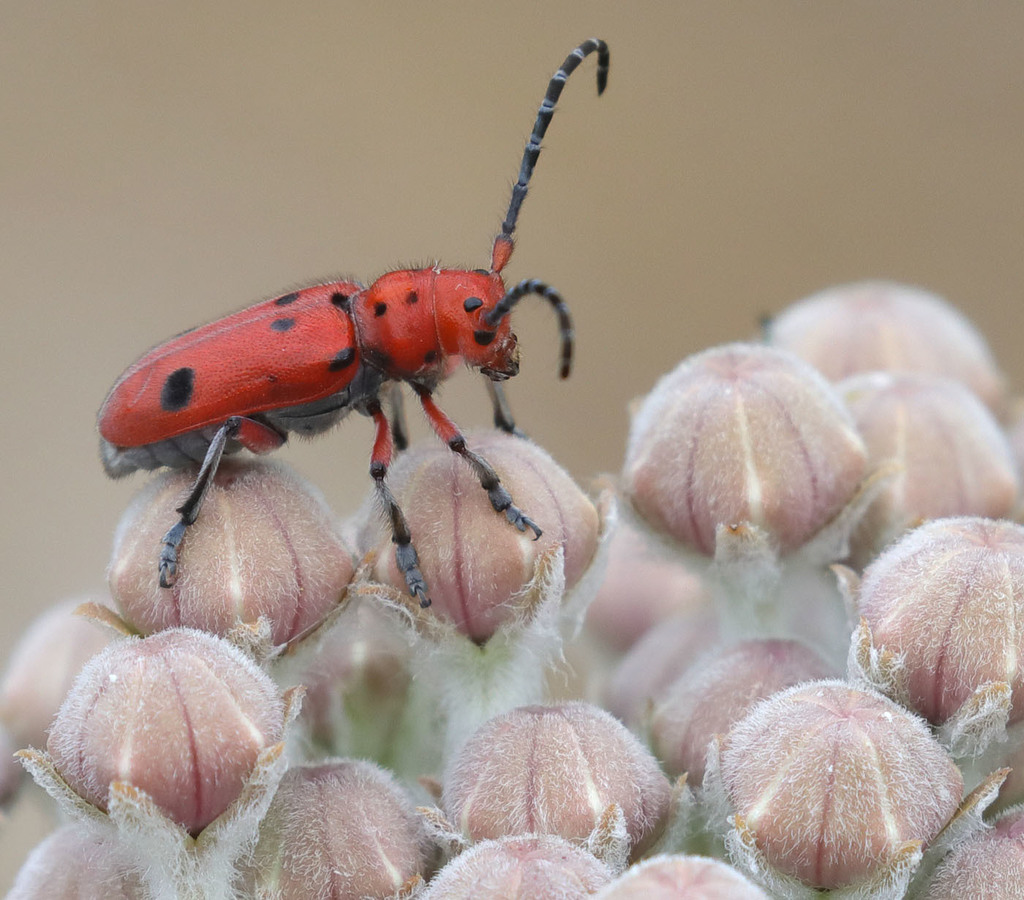
(c) Pinnacles National Park, some rights reserved (CC BY) · licence
Family: Cerambycidae · Class: Insecta · Order: Coleoptera
Tetraopes basalis is a California animal in the Cerambycidae family.
Tetraopes basalis is a longhorn beetle in the family Cerambycidae, tribe Tetraopini. This species belongs to a genus commonly known as milkweed beetles, characterized by their association with plants in the milkweed family (Asclepiadaceae). Adult T. basalis typically measure 8-15 mm in length and display the characteristic cylindrical body form of longhorn beetles, with antennae extending well beyond the head length. The elytra (wing covers) are often reddish-brown to dark brown with variable patterns of lighter markings, though specific coloration details for this species require further documentation. The range and distribution of Tetraopes basalis within California remains poorly documented in available scientific literature. The genus Tetraopes is widely distributed across North America, with various species occupying different regional niches. According to the U.S. Fish and Wildlife Service taxonomic database, T. basalis is recognized as a valid species within the tribe Tetraopini, which contains 18 total species across 2 genera. However, specific locality records and county-level distribution data for California populations are not well established in current databases. Habitat requirements for T. basalis likely mirror those of other Tetraopes species, which are closely associated with milkweed plants (Asclepias spp.) and related genera in the family Apocynaceae. These beetles typically inhabit open areas where their host plants occur, including grasslands, meadows, roadsides, and disturbed sites. Elevation preferences and specific microhabitat requirements for T. basalis have not been well documented. The species likely occurs in areas with adequate populations of suitable host plants rather than being restricted by specific vegetation communities. Behavioral and ecological information for Tetraopes basalis is limited in published literature. Like other members of the genus, this species is presumed to be a specialist herbivore with larvae developing within the roots and stems of milkweed plants. Adults are likely active during warmer months, feeding on flowers and leaves of host plants. Mating typically occurs on host plants, with females depositing eggs in plant tissues. The complete life cycle duration and seasonal timing of emergence require further study. Adult beetles may exhibit aposematic coloration patterns that warn predators of chemical defenses acquired from toxic milkweed compounds. The conservation status of Tetraopes basalis has not been formally assessed by state or federal agencies. The species does not appear on current lists of threatened or endangered insects in California. However, like many specialized herbivorous insects, populations may be vulnerable to habitat loss and degradation of native milkweed communities. Agricultural conversion, urbanization, and widespread use of herbicides have reduced milkweed populations across much of the species' potential range. Climate change may also affect the distribution and phenology of both the beetle and its host plants. Scientific documentation for this species remains limited. The information presented here synthesizes available taxonomic data from federal databases. Detailed ecological studies, distribution surveys, and biological research are needed to better understand this species' requirements and conservation needs. We welcome contributions of verified scientific data, photographs, or field observations to enhance this species account.
Classification
Class: Insecta · Order: Coleoptera · Family: Cerambycidae
Frequently asked questions
How is Tetraopes basalis classified?
Tetraopes basalis belongs to class Insecta, order Coleoptera, family Cerambycidae.
What family does Tetraopes basalis belong to?
Tetraopes basalis is in the Cerambycidae family.
What is Tetraopes basalis?
Tetraopes basalis is a longhorn beetle in the family Cerambycidae, tribe Tetraopini.
Is Tetraopes basalis found in California?
Yes. Tetraopes basalis is recorded in California in The California Species Project's catalogue.
Related species
Other California species in the same genus, family, or bioregion.
Data from The California Species Project — 14,000+ California species with verified data from CNPS, CDFW, USFWS, and more.