Tetrix sierrana
Sierra Pygmy Grasshopper
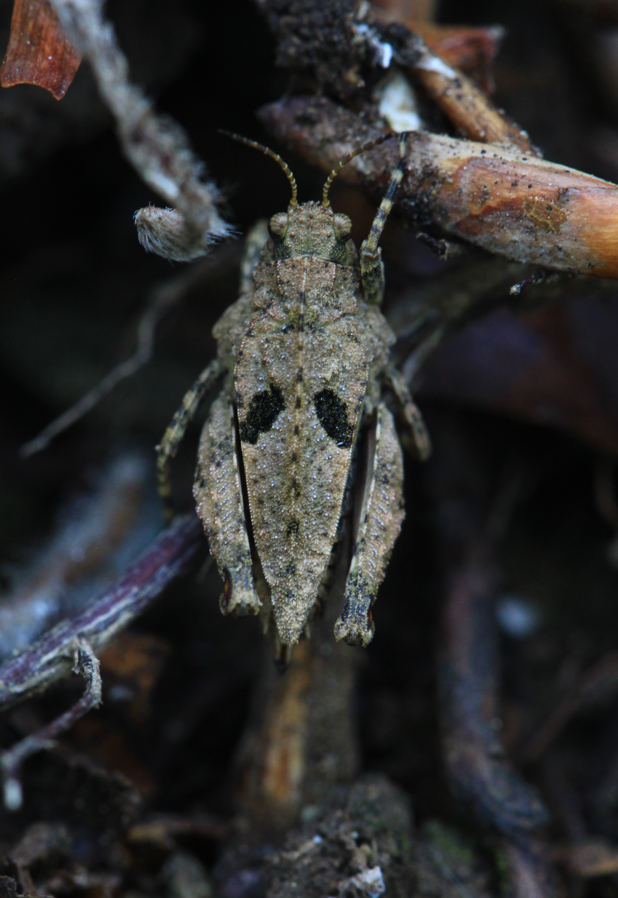
(c) Josip Skejo, some rights reserved (CC BY) · licence
Family: Tetrigidae · Class: Insecta · Order: Orthoptera
Conservation status: G1G2 S1
Tetrix sierrana (Sierra Pygmy Grasshopper) is a California animal in the Tetrigidae family.
The Sierra pygmy grasshopper (Tetrix sierrana) is a small orthopteran insect endemic to California's Sierra Nevada region. Like other members of the genus Tetrix, this species is characterized by a compact body form with a distinctive pronotal extension that covers much of the abdomen. Pygmy grasshoppers are generally 6-15 mm in length, with reduced forewings that do not extend beyond the pronotum and well-developed hindwings used for flight. Tetrix sierrana occurs exclusively in the Sierra Nevada mountain range of California. The species has an extremely restricted distribution, reflected in its Global/State conservation ranking of G1G2 S1, indicating it is critically imperiled to imperiled globally and critically imperiled within California. According to the U.S. Fish and Wildlife Service, the species is found in limited locations within this mountain range, though specific county distributions and elevation ranges have not been thoroughly documented in available literature. The specific habitat requirements of T. sierrana remain poorly characterized in scientific literature. Members of the genus Tetrix typically inhabit moist environments including stream margins, pond edges, and areas with exposed soil or sand substrates. They are often associated with moss-covered rocks and fallen logs near water sources. Given the Sierra Nevada location, this species likely occupies montane riparian zones or meadow edges at moderate to high elevations, but precise habitat descriptions require further field study. Pygmy grasshoppers in the genus Tetrix are primarily detrivores, feeding on decaying organic matter, algae, and moss rather than living vegetation like most grasshoppers. They are typically active during warmer months and may overwinter as adults in protected microhabitats. Reproduction involves direct development without a distinct nymphal stage morphologically different from adults. Females deposit eggs in moist soil or organic substrates. The specific breeding biology, seasonal activity patterns, and ecological relationships of T. sierrana have not been well documented in peer-reviewed literature. The Sierra pygmy grasshopper's conservation status reflects significant concern about its long-term viability. The G1G2 S1 ranking indicates the species faces a high risk of extinction due to its extremely limited range and small population size. While not currently listed under the federal Endangered Species Act, the species appears on U.S. Fish and Wildlife Service species profiles, suggesting potential conservation concern. Primary threats likely include habitat degradation from recreational activities, water diversions affecting riparian areas, climate change impacts on montane ecosystems, and the species' naturally restricted range making it vulnerable to localized disturbances. Detailed ecological studies of this species are lacking, with limited information available from standard entomological databases and field guides. The above information synthesizes available data from federal wildlife databases and general knowledge of Tetrix biology. Enhanced survey work and ecological research are needed to better understand this species' distribution, habitat requirements, population status, and specific conservation needs within the Sierra Nevada ecosystem.
Classification
Class: Insecta · Order: Orthoptera · Family: Tetrigidae
Conservation status
G1G2 S1
Frequently asked questions
How is Tetrix sierrana classified?
Tetrix sierrana belongs to class Insecta, order Orthoptera, family Tetrigidae.
What family does Tetrix sierrana belong to?
Tetrix sierrana is in the Tetrigidae family.
Is Tetrix sierrana protected or of conservation concern?
Tetrix sierrana carries the following status: G1G2 S1.
What is Tetrix sierrana?
The Sierra pygmy grasshopper (Tetrix sierrana) is a small orthopteran insect endemic to California's Sierra Nevada region.
Is Tetrix sierrana found in California?
Yes. Tetrix sierrana is recorded in California in The California Species Project's catalogue.
Related species
Other California species in the same genus, family, or bioregion.
Data from The California Species Project — 14,000+ California species with verified data from CNPS, CDFW, USFWS, and more.