Texella kokoweef
Kokoweef Crystal Cave Harvestman
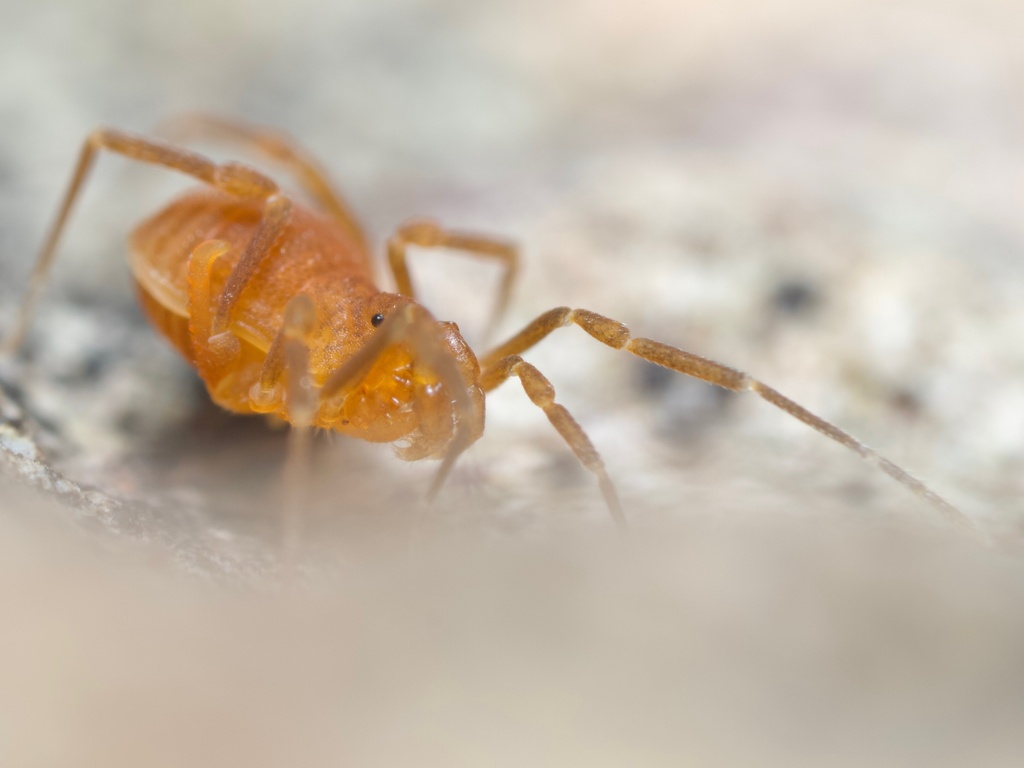
(c) Turner Brockman, some rights reserved (CC BY-SA) · licence
Family: Phalangodidae · Class: Arachnida · Order: Opiliones
Conservation status: G1 S1
Texella kokoweef (Kokoweef Crystal Cave Harvestman) is a California animal in the Phalangodidae family.
The Kokoweef Crystal Cave harvestman is an arachnid endemic to a single cave system in the Mojave Desert of California. Members of the family Phalangodidae, harvestmen are superficially similar to spiders but belong to the order Opiliones. These cave-dwelling arachnids typically possess elongated legs relative to their body size and lack the silk-producing spinnerets found in true spiders. Specific morphological details for T. kokoweef have not been well documented in the accessible literature. This species is known only from Kokoweef Crystal Cave in San Bernardino County, California (Ubick and Briggs 1992). The cave system is located in the eastern Mojave Desert region. The species' distribution represents one of the most restricted ranges of any North American harvestman, being confined to this single underground habitat. No populations have been documented outside of this cave system. Kokoweef Crystal Cave provides the specialized limestone cave environment required by this harvestman. Cave-dwelling harvestmen typically inhabit areas with high humidity, stable temperatures, and minimal light penetration. The cave maintains relatively constant environmental conditions year-round, which is critical for obligate cave species that have evolved specific adaptations to subterranean life. The limestone formations provide crevices and surfaces where these arachnids can shelter and potentially establish territories. Like other cave-adapted harvestmen, T. kokoweef likely exhibits behavioral and physiological adaptations to its underground environment. Cave harvestmen are generally predatory, feeding on small invertebrates present in the cave ecosystem including springtails, mites, and other small arthropods. These species typically show reduced or absent eyes and pigmentation, with enhanced tactile capabilities through elongated appendages. Reproductive behavior and life cycle details for this species remain largely undocumented. Most temperate harvestmen reproduce annually, with females depositing eggs in protected locations within their habitat. The species carries a conservation ranking of G1 S1, indicating it is globally and state critically imperiled with five or fewer occurrences. This ranking reflects both its extremely limited distribution and potential vulnerability to habitat disturbance. As a single-site endemic, T. kokoweef faces inherent risks associated with catastrophic events or changes to its cave habitat. Threats to cave ecosystems can include groundwater contamination, mining activities, recreational cave disturbance, and climate-related changes to local hydrology. The protection of Kokoweef Crystal Cave is essential for the species' continued survival. Scientific study of this harvestman has been limited, likely due to the specialized nature of its habitat and restricted access to the cave system. The species was described by taxonomic specialists but detailed ecological studies have not been published. As of December 2025, T. kokoweef does not appear on federal or state endangered species lists, despite its extremely limited range. Additional research would be valuable to better understand the species' population status, ecological requirements, and conservation needs within its unique cave habitat.
Classification
Class: Arachnida · Order: Opiliones · Family: Phalangodidae
Conservation status
G1 S1
Frequently asked questions
How is Texella kokoweef classified?
Texella kokoweef belongs to class Arachnida, order Opiliones, family Phalangodidae.
What family does Texella kokoweef belong to?
Texella kokoweef is in the Phalangodidae family.
Is Texella kokoweef protected or of conservation concern?
Texella kokoweef carries the following status: G1 S1.
What is Texella kokoweef?
The Kokoweef Crystal Cave harvestman is an arachnid endemic to a single cave system in the Mojave Desert of California.
Is Texella kokoweef found in California?
Yes. Texella kokoweef is recorded in California in The California Species Project's catalogue.
Related species
Other California species in the same genus, family, or bioregion.
Data from The California Species Project — 14,000+ California species with verified data from CNPS, CDFW, USFWS, and more.