Texella shoshone
Shoshone Cave Harvestman
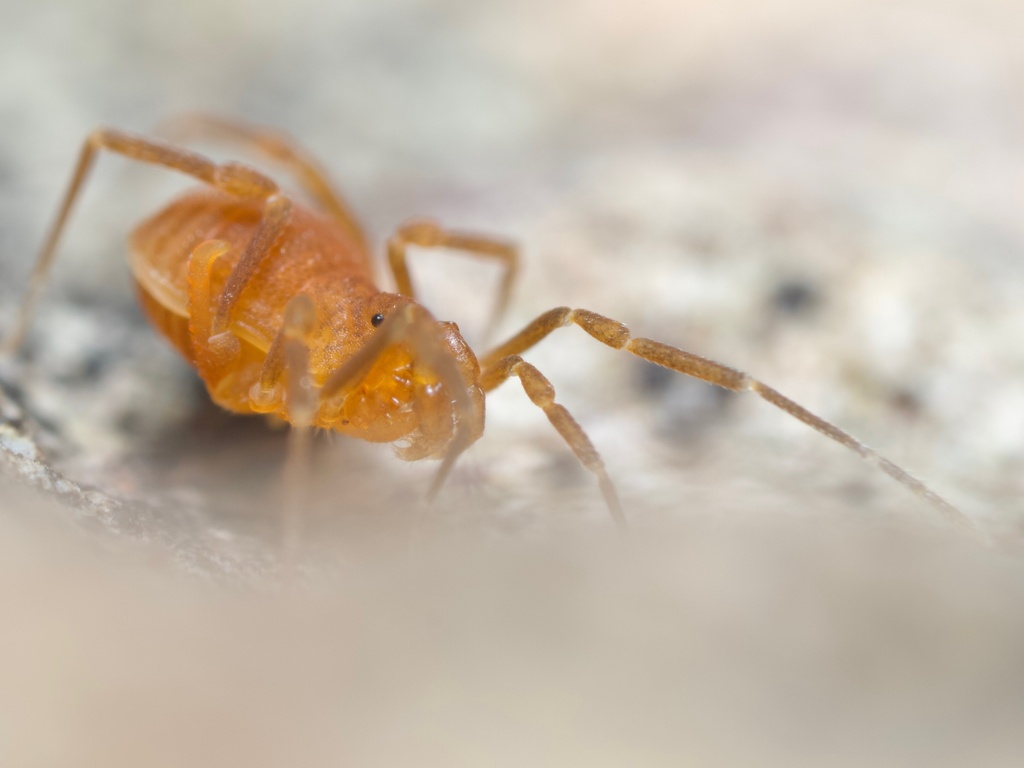
(c) Turner Brockman, some rights reserved (CC BY-SA) · licence
Family: Phalangodidae · Class: Arachnida · Order: Opiliones
Conservation status: G1 S1
Texella shoshone (Shoshone Cave Harvestman) is a California animal in the Phalangodidae family.
The Shoshone cave harvestman is a small arachnid endemic to a single cave system in California. As a member of the order Opiliones, this species belongs to the family Phalangodidae within the suborder Laniatores. Like other harvestmen, it possesses a compact body with long, thin legs and differs from true spiders by lacking venom glands and silk production capabilities. Cave-adapted harvestmen typically exhibit elongated appendages and reduced pigmentation compared to their surface-dwelling relatives. Texella shoshone is known only from Shoshone Cave in Inyo County, California (NatureServe Explorer). This extremely restricted distribution makes it one of the most geographically limited arachnids in North America. The species occurs in the eastern Sierra Nevada region, where the cave system provides the specific subterranean environment required for its survival. The species inhabits the dark zone of Shoshone Cave, where light never penetrates and environmental conditions remain stable year-round. Cave environments typically maintain constant temperatures and high humidity levels, creating specialized microhabitats that support unique fauna. Like other cave-obligate harvestmen, T. shoshone likely depends on organic matter that enters the cave system from the surface, including decaying plant material, organic debris, and nutrients transported by water infiltration. As a cave-adapted predator, the Shoshone cave harvestman likely feeds on small invertebrates found within the cave ecosystem, including springtails, mites, and other arthropods. Cave harvestmen typically use their sensitive legs to detect vibrations and locate prey in the absence of light. Reproduction in cave harvestmen generally involves direct development, with females depositing eggs in suitable microhabitats within the cave. The stable cave environment allows for extended developmental periods compared to surface species. Texella shoshone holds a Global Rank of G1, indicating it is critically imperiled due to extreme rarity and vulnerability to extinction. This ranking reflects the species' highly restricted range and dependence on a single cave system. The species faces potential threats from cave disturbance, groundwater changes, pollution, and climate change effects on the cave's hydrological system. Any alteration to the cave environment or its surrounding watershed could impact the delicate ecosystem supporting this endemic species. While the species appears in U.S. Fish and Wildlife Service taxonomic databases, it does not currently hold federal listing status under the Endangered Species Act as of December 2025. This species is included on the California Department of Fish and Wildlife's Special Animals List. The extremely limited distribution and specialized habitat requirements make this species particularly vulnerable to environmental changes. Conservation efforts for cave-obligate species typically focus on protecting cave systems from human disturbance and maintaining the integrity of surrounding watersheds that influence cave hydrology. The discovery and study of such highly endemic cave fauna contributes to understanding of subterranean biodiversity and evolution in isolated environments.
Classification
Class: Arachnida · Order: Opiliones · Family: Phalangodidae
Conservation status
G1 S1
Frequently asked questions
How is Texella shoshone classified?
Texella shoshone belongs to class Arachnida, order Opiliones, family Phalangodidae.
What family does Texella shoshone belong to?
Texella shoshone is in the Phalangodidae family.
Is Texella shoshone protected or of conservation concern?
Texella shoshone carries the following status: G1 S1.
What is Texella shoshone?
The Shoshone cave harvestman is a small arachnid endemic to a single cave system in California.
Is Texella shoshone found in California?
Yes. Texella shoshone is recorded in California in The California Species Project's catalogue.
Related species
Other California species in the same genus, family, or bioregion.
Data from The California Species Project — 14,000+ California species with verified data from CNPS, CDFW, USFWS, and more.