Thalassarche cauta
Shy Albatross
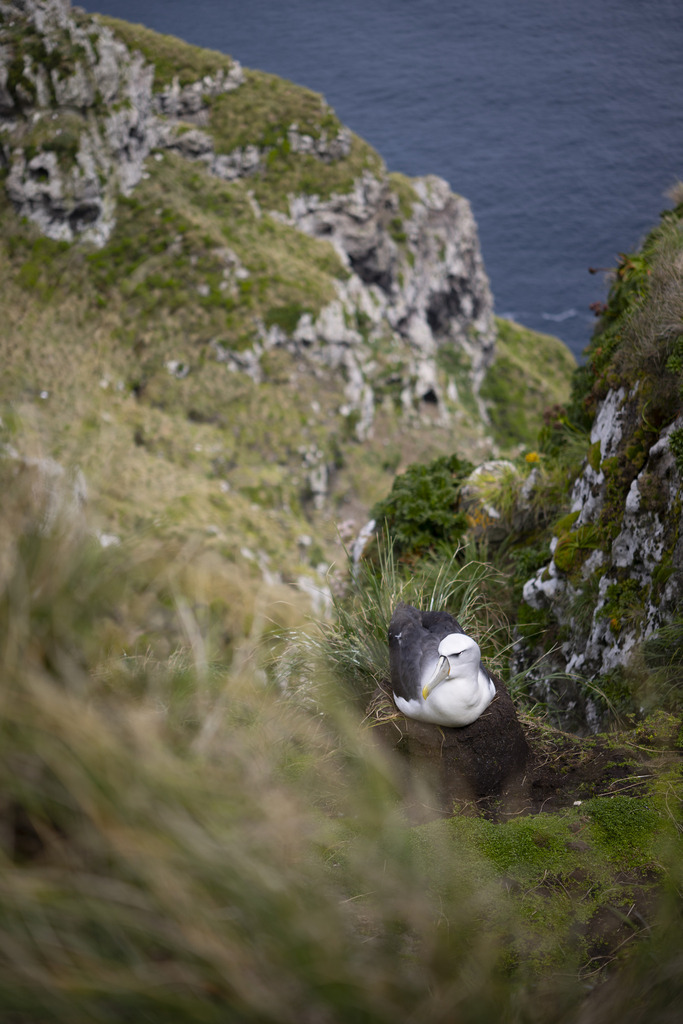
(c) Saryu Mae 前 朝琉, some rights reserved (CC BY) · licence
Family: Diomedeidae · Class: Aves · Order: Procellariiformes
Thalassarche cauta (Shy Albatross) is a California animal in the Diomedeidae family.
The Shy Albatross is a large seabird with a wingspan reaching 2.6 meters (8.5 feet) and body length of 90-99 cm (35-39 inches). Adults weigh between 3.7-4.9 kg (8-11 pounds). The species displays a distinctive white head and body with dark gray to black upperwings and back. The underwings show characteristic black margins and tips against white flight feathers. A prominent orange-yellow bill with a dark tip distinguishes adults, while the head may show a grayish wash during breeding season. Juveniles exhibit more extensive gray coloring on the head and neck that gradually whitens with age. The Shy Albatross breeds exclusively on three small islands around Tasmania: Albatross Island in Bass Strait, Pedra Branca, and Mewstone. Outside breeding season, the species ranges widely across the Southern Ocean, with regular occurrences in California waters during non-breeding months from April through September. In California, Shy Albatross are observed primarily in offshore pelagic waters, typically beyond the continental shelf edge at depths exceeding 200 meters. This species inhabits open ocean environments, favoring areas with strong wind currents that facilitate their dynamic soaring flight pattern. During breeding, they nest on exposed clifftops and grassy slopes of their island breeding grounds. In California waters, they associate with upwelling zones and areas of high marine productivity, often following fishing vessels and congregating where prey concentrations are highest. Shy Albatross are opportunistic marine predators, feeding primarily on squid, fish, and crustaceans obtained through surface seizing and shallow diving. They demonstrate efficient flight capabilities, using dynamic soaring to cover vast distances with minimal energy expenditure. Breeding occurs biennially, with pairs producing a single egg in September-October. The incubation period extends 68-72 days, with both parents alternating duties. Chicks fledge after approximately 140 days but may not return to breed until 8-12 years of age. The species exhibits strong site fidelity, with pairs often returning to the same nesting territory. The Shy Albatross is not federally listed in the United States, as it is not a resident species. However, the species faces conservation challenges throughout its range. The global population is estimated at approximately 15,000 breeding pairs concentrated on the three Tasmanian islands. Primary threats include longline fishing mortality, where birds are caught on baited hooks while attempting to feed. Plastic pollution poses an increasing concern, as albatross frequently mistake plastic debris for food, leading to ingestion and potential harm to adults and chicks. Climate change may affect prey distribution and breeding success. Commercial fishing operations continue to impact populations through both direct mortality and competition for prey resources. Conservation efforts focus on implementing bird-safe fishing practices and monitoring breeding colonies.
Classification
Class: Aves · Order: Procellariiformes · Family: Diomedeidae
Frequently asked questions
How is Thalassarche cauta classified?
Thalassarche cauta belongs to class Aves, order Procellariiformes, family Diomedeidae.
What family does Thalassarche cauta belong to?
Thalassarche cauta is in the Diomedeidae family.
What is Thalassarche cauta?
The Shy Albatross is a large seabird with a wingspan reaching 2.6 meters (8.5 feet) and body length of 90-99 cm (35-39 inches).
Is Thalassarche cauta found in California?
Yes. Thalassarche cauta is recorded in California in The California Species Project's catalogue.
Related species
Other California species in the same genus, family, or bioregion.
Data from The California Species Project — 14,000+ California species with verified data from CNPS, CDFW, USFWS, and more.