Thalasseus sandvicensis
Sandwich Tern
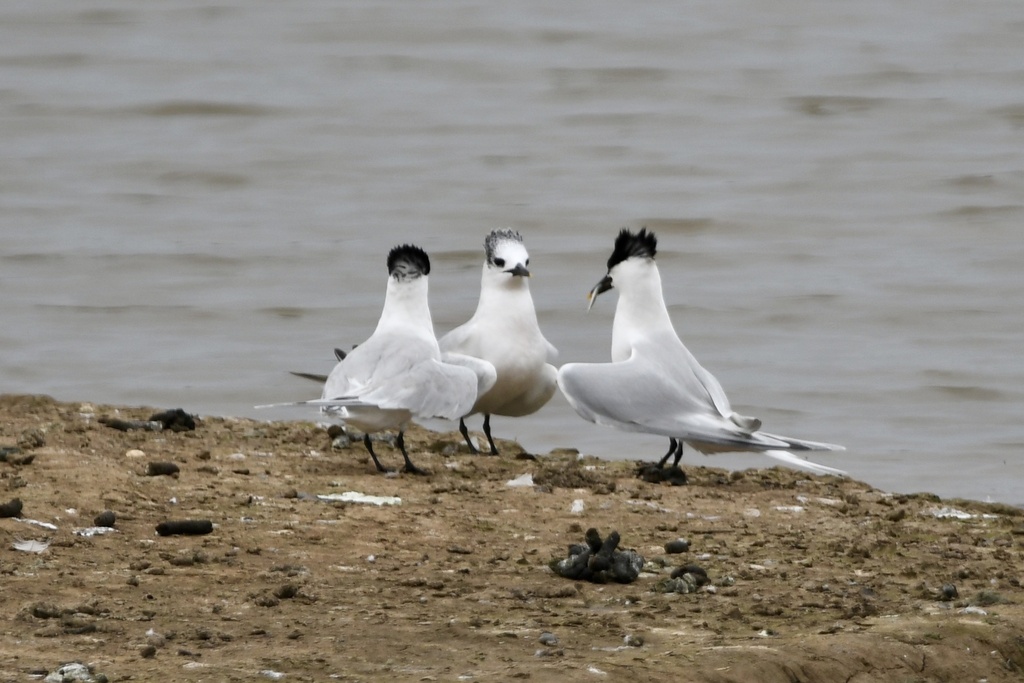
(c) Stanley Davis, some rights reserved (CC BY) · licence
Family: Laridae · Class: Aves · Order: Charadriiformes
Thalasseus sandvicensis (Sandwich Tern) is a California animal in the Laridae family.
The Sandwich Tern is a medium-sized seabird measuring 37-43 cm (14.5-17 inches) in length with a wingspan of 95-105 cm (37-41 inches). Adults weigh approximately 180-300 grams (6.3-10.6 ounces). The species displays a distinctive appearance with a pale gray back and wings, white underparts, and a deeply forked tail. During breeding season, adults develop a prominent black cap extending from the bill to the nape, while non-breeding adults show a white forehead with black streaking on the crown. The bill is long, slender, and black with a distinctive yellow tip, distinguishing it from similar tern species. Legs are black, and the species exhibits sexual monomorphism with males and females appearing identical. Historically, Sandwich Terns nested along the California coast from San Francisco Bay south to San Diego County. The species was documented breeding at several coastal locations including the Farallon Islands and various salt ponds in the San Francisco Bay area during the early to mid-20th century. However, breeding populations in California have been extirpated, with the last confirmed nesting occurring in the 1980s. Currently, the species occurs in California only as a vagrant or non-breeding visitor, primarily along the central and southern coast during migration periods and winter months. Sandwich Terns inhabit coastal marine environments including beaches, estuaries, salt marshes, and nearshore waters. The species requires sandy or rocky islands for nesting, typically selecting sites with minimal vegetation and protection from terrestrial predators. Foraging occurs in shallow coastal waters, lagoons, and bays where small fish are abundant. The species demonstrates a preference for areas with clear water and depths less than 10 meters (33 feet). Sandwich Terns are piscivorous, feeding primarily on small marine fish including anchovies, sardines, and smelt. Foraging occurs through aerial diving, with birds plunging from heights of 3-10 meters (10-33 feet) to capture prey near the surface. The species is highly colonial during breeding, forming dense aggregations that may include hundreds to thousands of pairs. Breeding occurs from April through August, with females laying 1-2 eggs in shallow scrapes on sand or gravel. Incubation lasts 21-29 days, and chicks fledge at approximately 28-35 days of age. The Sandwich Tern is not federally listed under the Endangered Species Act, and populations globally are considered stable with an IUCN Red List status of Least Concern. However, the species' breeding range in California has been completely lost, representing a significant regional conservation concern. Primary historical threats included human disturbance at nesting colonies, habitat modification of coastal breeding sites, and introduced predators. Climate change and sea level rise pose ongoing threats to coastal nesting habitats throughout the species' range. Current conservation efforts focus on protecting existing breeding colonies and restoring suitable nesting habitat.
Classification
Class: Aves · Order: Charadriiformes · Family: Laridae
Frequently asked questions
How is Thalasseus sandvicensis classified?
Thalasseus sandvicensis belongs to class Aves, order Charadriiformes, family Laridae.
What family does Thalasseus sandvicensis belong to?
Thalasseus sandvicensis is in the Laridae family.
What is Thalasseus sandvicensis?
The Sandwich Tern is a medium-sized seabird measuring 37-43 cm (14.5-17 inches) in length with a wingspan of 95-105 cm (37-41 inches).
Is Thalasseus sandvicensis found in California?
Yes. Thalasseus sandvicensis is recorded in California in The California Species Project's catalogue.
Related species
Other California species in the same genus, family, or bioregion.
Data from The California Species Project — 14,000+ California species with verified data from CNPS, CDFW, USFWS, and more.