Thaleichthys pacificus
Eulachon
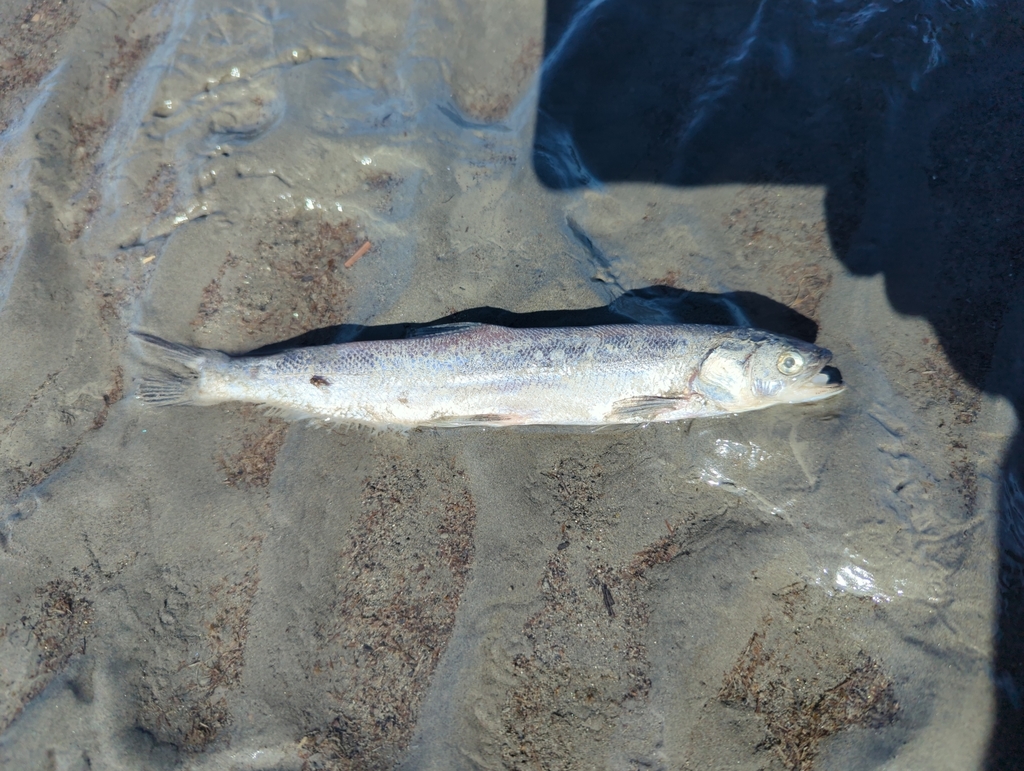
(c) Matt Muir, some rights reserved (CC BY) · licence
Family: Osmeridae · Class: Actinopterygii · Order: Osmeriformes
Conservation status: Threatened · G5 S3
Thaleichthys pacificus (Eulachon) is a California animal in the Osmeridae family.
The eulachon (Thaleichthys pacificus) is an anadromous smelt in the family Osmeridae found throughout the northeastern Pacific Ocean. The binomial species name derives from Greek roots: thaleia meaning rich, ichthys meaning fish, and pacificus meaning of the Pacific. Adult eulachon typically measure 160-250 mm (6-10 inches) in length and weigh approximately 2.5 ounces. The species is distinguished from other osmerids by having 4-6 gill rakers on the upper half of the gill arch, compared to 8-14 in other species, and distinct concentric striations on the operculum and suboperculum. Eulachon exhibit strong countershading with blue coloration above and silver below, and possess a prominent adipose fin. Small, pointed teeth occur on both jaws and tongue, though these are usually resorbed in spawning specimens. The full species range extends from northern California to southwest Alaska, including the Bering Sea and Aleutian Islands to Monterey Bay, California. However, the Southern Distinct Population Segment (DPS), which ranges from the Mad River in northern California to the Nass River in British Columbia, is federally listed as threatened under the Endangered Species Act. This DPS experienced an abrupt decline in abundance throughout its range beginning in the mid-1990s. Eulachon inhabit coastal waters and inlets, spending most of their life cycle in marine environments on the continental shelf at depths of 50-200 meters. They do not undergo diel vertical migrations from their preferred depths. The species is anadromous, returning to freshwater rivers and streams to spawn when water temperatures reach 0-10°C, typically occurring between December and June. Spawning sites extend throughout their range in accessible coastal rivers. Juvenile eulachon from 30-100 mm in length disperse to open marine waters within their first year. Postlarval and juvenile specimens (20-157 mm) consume various planktonic crustaceans, particularly adult copepods. Adult eulachon feed primarily on euphausiids (krill), along with cumaceans and copepods. Most eulachon are semelparous, dying after spawning at ages 2-5 years. The Southern DPS was listed as threatened in 2010 following severe population declines. According to NOAA Fisheries, monitored rivers showed improved eulachon abundance during 2013-2015 return years, but sharp declines occurred again in 2016-2018. The 2022 ESA five-year review concluded that the threatened designation remained appropriate. Primary threats include bycatch in offshore shrimp fisheries, long-term changes in ocean and freshwater conditions, and predation. Recent improvements in northern California Current ocean conditions beginning in 2020 suggest potential population recovery. Eulachon hold significant cultural importance for First Nations peoples, who traditionally called them "salvation fish" because their spawning runs provided crucial sustenance after harsh winters.
Classification
Class: Actinopterygii · Order: Osmeriformes · Family: Osmeridae
Conservation status
Threatened · G5 S3
Frequently asked questions
How is Thaleichthys pacificus classified?
Thaleichthys pacificus belongs to class Actinopterygii, order Osmeriformes, family Osmeridae.
What family does Thaleichthys pacificus belong to?
Thaleichthys pacificus is in the Osmeridae family.
Is Thaleichthys pacificus protected or of conservation concern?
Thaleichthys pacificus carries the following status: Threatened · G5 S3.
What is Thaleichthys pacificus?
The eulachon (Thaleichthys pacificus) is an anadromous smelt in the family Osmeridae found throughout the northeastern Pacific Ocean.
Is Thaleichthys pacificus found in California?
Yes. Thaleichthys pacificus is recorded in California in The California Species Project's catalogue.
Related species
Other California species in the same genus, family, or bioregion.
Data from The California Species Project — 14,000+ California species with verified data from CNPS, CDFW, USFWS, and more.