Thamnophis eques megalops
Northern Mexican gartersnake
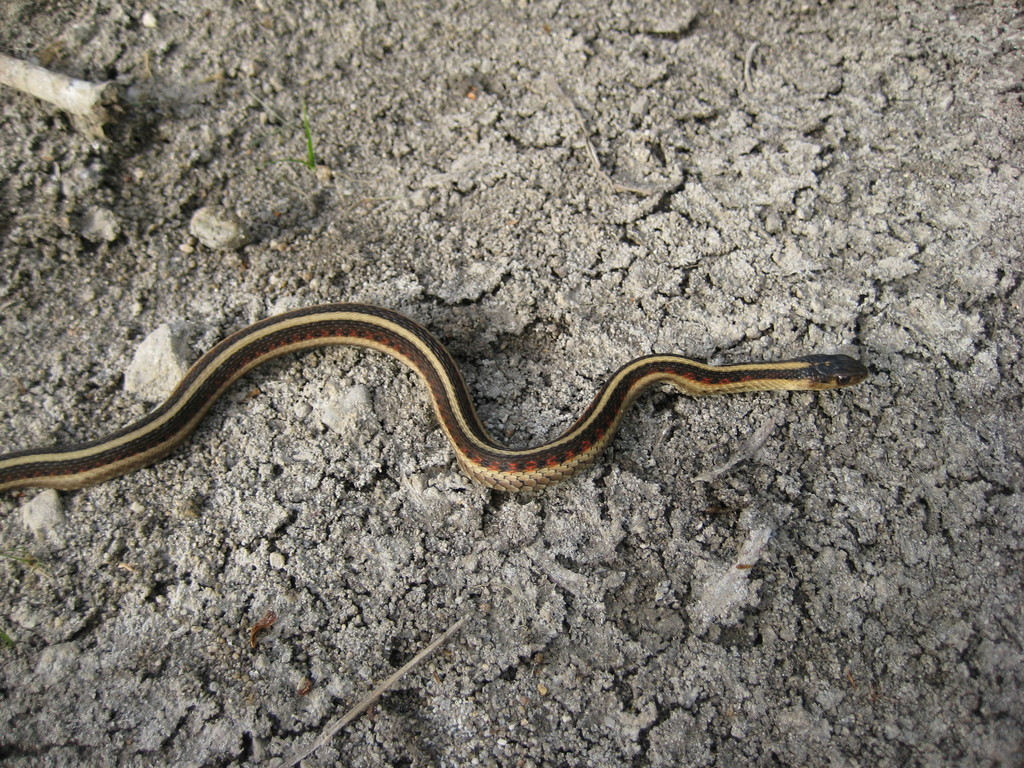
(c) kclarksdnhmorg, some rights reserved (CC BY) · licence
Family: Colubridae · Class: Reptilia · Order: Squamata
Conservation status: Threatened
Thamnophis eques megalops (Northern Mexican gartersnake) is a California animal in the Colubridae family.
The northern Mexican gartersnake is a moderately large semi-aquatic snake reaching a maximum known length of 44 inches (112 cm). The species displays an olive to olive-brown or olive-gray background coloration with three distinctive longitudinal stripes running the length of the body. The middle dorsal stripe is yellow and darkens toward the tail, while the pale yellow to light-tan lateral stripes distinguish this subspecies from other gartersnakes (USFWS 2014). The species belongs to the family Colubridae and subfamily Natricinae, comprising harmless live-bearing snakes. Historically, the northern Mexican gartersnake occurred throughout the Sierra Madre Occidental south to Guanajuato in Mexico, and eastward along the Transverse Volcanic Axis to west-central Veracruz, with an additional disjunct population in central Oaxaca. In the United States, the species currently occurs in central and southeastern Arizona and west-central New Mexico, representing the northernmost extent of its range. This subspecies is the only member of the Thamnophis eques complex found in the United States. The northern Mexican gartersnake inhabits riparian areas along permanent and semi-permanent waterways, including streams, rivers, ponds, and associated wetlands. The species requires aquatic environments with emergent vegetation for cover and foraging. In Arizona, populations occur in both montane riparian corridors and grassland landscapes, such as those found in the upper Santa Cruz River in the San Rafael Valley of southeastern Arizona. The species shows strong fidelity to riparian zones, rarely venturing far from water sources. As a semi-aquatic predator, the northern Mexican gartersnake feeds primarily on fish, frogs, tadpoles, and other aquatic prey. The species is ovoviviparous, giving birth to live young rather than laying eggs. Birth timing appears to coincide with the annual peak density of prey species, particularly annelids such as earthworms and leeches (Marcías-García and Drummond 1988). Preliminary evidence suggests births may also coincide with pronounced influxes of available prey, especially explosive breeders like toads, though more research is needed to confirm this relationship. The U.S. Fish and Wildlife Service listed the northern Mexican gartersnake as threatened under the Endangered Species Act on July 8, 2014. The species faces significant threats from habitat loss and degradation due to water diversions, dam construction, livestock grazing, and riparian vegetation removal. Non-native fish species compete with and prey upon native aquatic fauna that serve as the gartersnake's primary food base. Climate change exacerbates these threats through altered precipitation patterns and increased drought frequency in the southwestern United States. The species may occur alongside other native gartersnake species and can be difficult to identify without herpetological expertise. Critical habitat was designated to protect essential riparian corridors necessary for the species' survival and recovery.
Classification
Class: Reptilia · Order: Squamata · Family: Colubridae
Conservation status
Threatened
Frequently asked questions
How is Thamnophis eques megalops classified?
Thamnophis eques megalops belongs to class Reptilia, order Squamata, family Colubridae.
What family does Thamnophis eques megalops belong to?
Thamnophis eques megalops is in the Colubridae family.
Is Thamnophis eques megalops protected or of conservation concern?
Thamnophis eques megalops carries the following status: Threatened.
What is Thamnophis eques megalops?
The northern Mexican gartersnake is a moderately large semi-aquatic snake reaching a maximum known length of 44 inches (112 cm).
Is Thamnophis eques megalops found in California?
Yes. Thamnophis eques megalops is recorded in California in The California Species Project's catalogue.
Related species
Other California species in the same genus, family, or bioregion.
Data from The California Species Project — 14,000+ California species with verified data from CNPS, CDFW, USFWS, and more.