Thamnophis hammondii
Two-striped Garter Snake
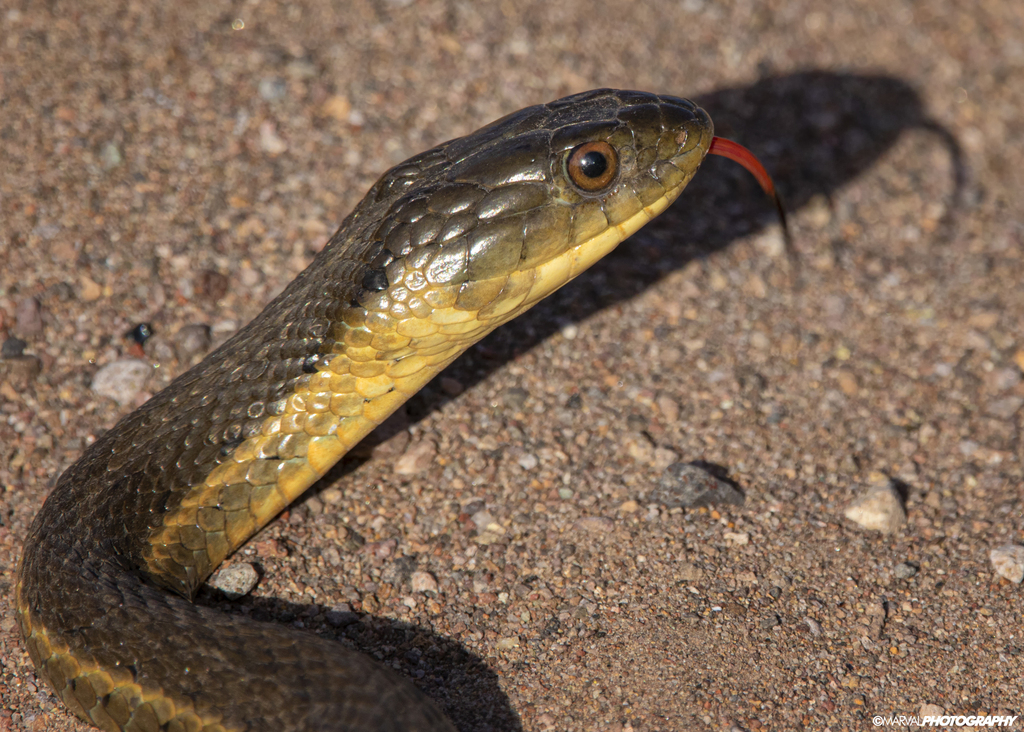
(c) MarvalPhotography19, some rights reserved (CC BY) · licence
Family: Colubridae · Class: Reptilia · Order: Squamata
Conservation status: G4 S3S4
Thamnophis hammondii (Two-striped Garter Snake) is a California animal in the Colubridae family.
The two-striped garter snake is a medium-sized, semi-aquatic serpent endemic to California. Adults typically measure 45 to 91 centimeters (18 to 36 inches) in total length, with females generally larger than males. The species displays two distinct dorsal stripes running the length of the body, typically cream, yellow, or pale orange in coloration, which give the snake its common name. The ground color varies from olive-brown to dark brown or black, with the ventral surface usually cream to pale yellow. The head is relatively small and distinct from the neck, with large eyes adapted for both terrestrial and aquatic hunting. Historically, the two-striped garter snake ranged throughout coastal and inland areas of California from approximately Salinas in Monterey County south to Baja California, Mexico. The species also occurred on several Channel Islands including Santa Catalina Island. Currently, populations persist primarily in southern California counties including Los Angeles, Orange, Riverside, San Bernardino, Ventura, Santa Barbara, and San Diego counties. The species has been extirpated from much of its northern range, with significant population declines documented throughout its distribution. Two-striped garter snakes inhabit a variety of aquatic and semi-aquatic habitats, typically below 2,286 meters (7,500 feet) in elevation. They are closely associated with permanent and seasonal water sources including streams, creeks, ponds, lakes, marshes, and coastal lagoons. The species utilizes both freshwater and brackish water environments, and can be found in riparian woodlands, grasslands, chaparral, and coastal sage scrub adjacent to water sources. They require nearby upland areas for thermoregulation, shelter, and overwintering sites, often utilizing rodent burrows, rock crevices, and dense vegetation. These snakes are primarily piscivorous, feeding on native fish species, tadpoles, and aquatic invertebrates, though they also consume small mammals, birds, and amphibians. According to recovery planning documents, two-striped garter snakes serve as predators of tidewater gobies in coastal lagoon systems. They are active during daylight hours and are excellent swimmers, often foraging in shallow water. Mating occurs in spring, typically March through May, with females giving birth to live young in late summer or early fall. Litter sizes range from 4 to 25 offspring, with larger females producing more young. The two-striped garter snake is designated as a California Species of Special Concern, reflecting significant conservation concerns. The species has experienced substantial population declines attributed to habitat loss from urban development, flood control projects, and agricultural conversion. Water diversions and channelization have eliminated or degraded riparian habitats throughout much of the species' range. Additional threats include predation by non-native species, livestock grazing impacts, drought effects, and loss of native prey species. Climate change poses emerging threats through altered precipitation patterns and increased fire frequency in remaining habitats.
Classification
Class: Reptilia · Order: Squamata · Family: Colubridae
Conservation status
G4 S3S4
Frequently asked questions
How is Thamnophis hammondii classified?
Thamnophis hammondii belongs to class Reptilia, order Squamata, family Colubridae.
What family does Thamnophis hammondii belong to?
Thamnophis hammondii is in the Colubridae family.
Is Thamnophis hammondii protected or of conservation concern?
Thamnophis hammondii carries the following status: G4 S3S4.
What is Thamnophis hammondii?
The two-striped garter snake is a medium-sized, semi-aquatic serpent endemic to California.
Is Thamnophis hammondii found in California?
Yes. Thamnophis hammondii is recorded in California in The California Species Project's catalogue.
Related species
Other California species in the same genus, family, or bioregion.
Data from The California Species Project — 14,000+ California species with verified data from CNPS, CDFW, USFWS, and more.