Thamnophis ordinoides
Northwestern Gartersnake
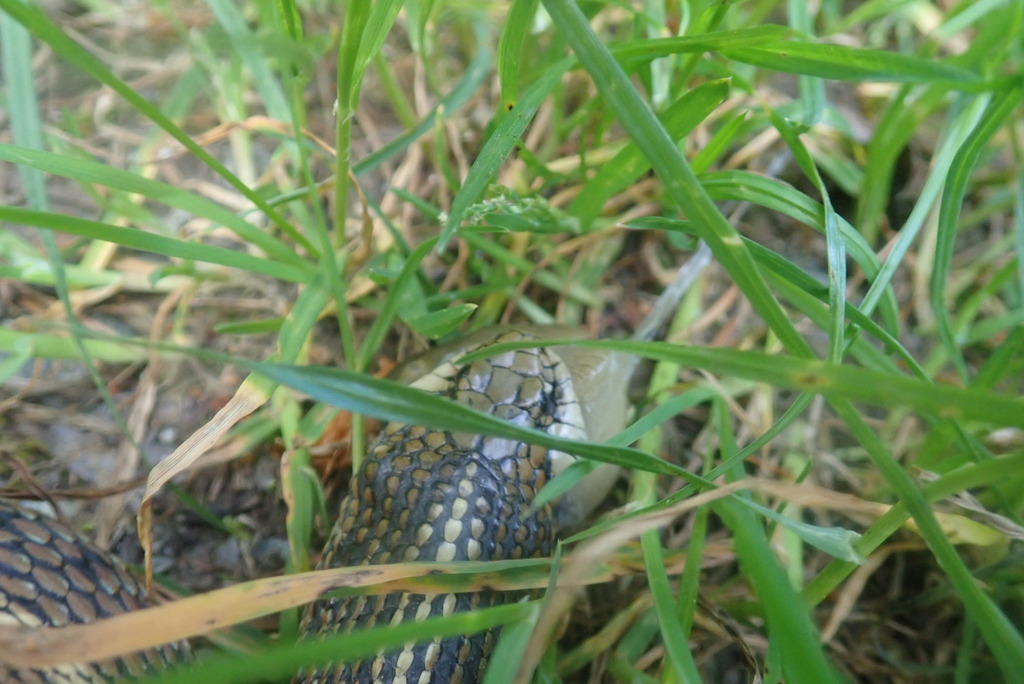
(c) Corvi Zeman, some rights reserved (CC BY) · licence
Family: Colubridae · Class: Reptilia · Order: Squamata
Thamnophis ordinoides (Northwestern Gartersnake) is a California animal in the Colubridae family.
The Northwestern Gartersnake is a small to medium-sized snake in the family Colubridae, subfamily Natricinae. Adults typically measure 36 to 61 cm (14 to 24 inches) in total length, with females generally larger than males. The species exhibits considerable color variation, ranging from dark brown to olive or black dorsally, with three distinct longitudinal stripes. The dorsal stripe is typically yellow, orange, or red, while the lateral stripes are usually lighter in color. The belly is pale yellow to greenish-white. Some individuals display a checkered pattern between the stripes, and the head is typically darker than the body with a distinct pale collar. Historically, the Northwestern Gartersnake ranged along the Pacific Coast from extreme northwestern California through western Oregon and Washington to southern British Columbia. In California, the species occurs only in Del Norte and northwestern Humboldt counties, representing the southernmost extent of its range. The species has experienced range contractions in some areas, particularly in urbanized regions and heavily modified landscapes. Unlike most other gartersnake species, the Northwestern Gartersnake is not typically associated with aquatic habitats. Instead, it inhabits a variety of terrestrial environments including coniferous forests, grasslands, prairies, and woodland edges. The species is commonly found in areas with dense ground cover, fallen logs, and rock piles that provide shelter and foraging opportunities. In California, it occurs primarily in coastal redwood forests and associated meadows, typically at elevations below 610 meters (2,000 feet). The species shows a preference for areas with moderate moisture levels and abundant cover. Northwestern Gartersnakes are primarily terrestrial and diurnal, though they may be active during warm evenings. Their diet consists mainly of earthworms, slugs, snails, and small amphibians, particularly salamanders. The species is known to prey on rough-skinned newts (Taricha granulosa), despite the newts' toxic skin secretions, though this predation may have sublethal effects on the snakes. Breeding occurs in spring, with females giving birth to live young in late summer. Litter sizes typically range from 3 to 12 offspring, with newborns measuring approximately 13 to 18 cm (5 to 7 inches) in length. Hibernation occurs from November through February, often in communal sites under logs, rocks, or in burrows. The Northwestern Gartersnake has no federal listing status but faces various conservation challenges. Primary threats include habitat loss due to urban development, logging practices that remove critical ground cover, and fragmentation of suitable habitat. Climate change may also impact the species through alterations to precipitation patterns and temperature regimes that affect prey availability and suitable microhabitats. The species' limited range in California makes it particularly vulnerable to local extirpations. Conservation efforts focus on maintaining forest understory habitat and preserving connectivity between suitable habitat patches.
Classification
Class: Reptilia · Order: Squamata · Family: Colubridae
Frequently asked questions
How is Thamnophis ordinoides classified?
Thamnophis ordinoides belongs to class Reptilia, order Squamata, family Colubridae.
What family does Thamnophis ordinoides belong to?
Thamnophis ordinoides is in the Colubridae family.
What is Thamnophis ordinoides?
The Northwestern Gartersnake is a small to medium-sized snake in the family Colubridae, subfamily Natricinae.
Is Thamnophis ordinoides found in California?
Yes. Thamnophis ordinoides is recorded in California in The California Species Project's catalogue.
Related species
Other California species in the same genus, family, or bioregion.
Data from The California Species Project — 14,000+ California species with verified data from CNPS, CDFW, USFWS, and more.