Thamnophis rufipunctatus
Narrow-headed gartersnake
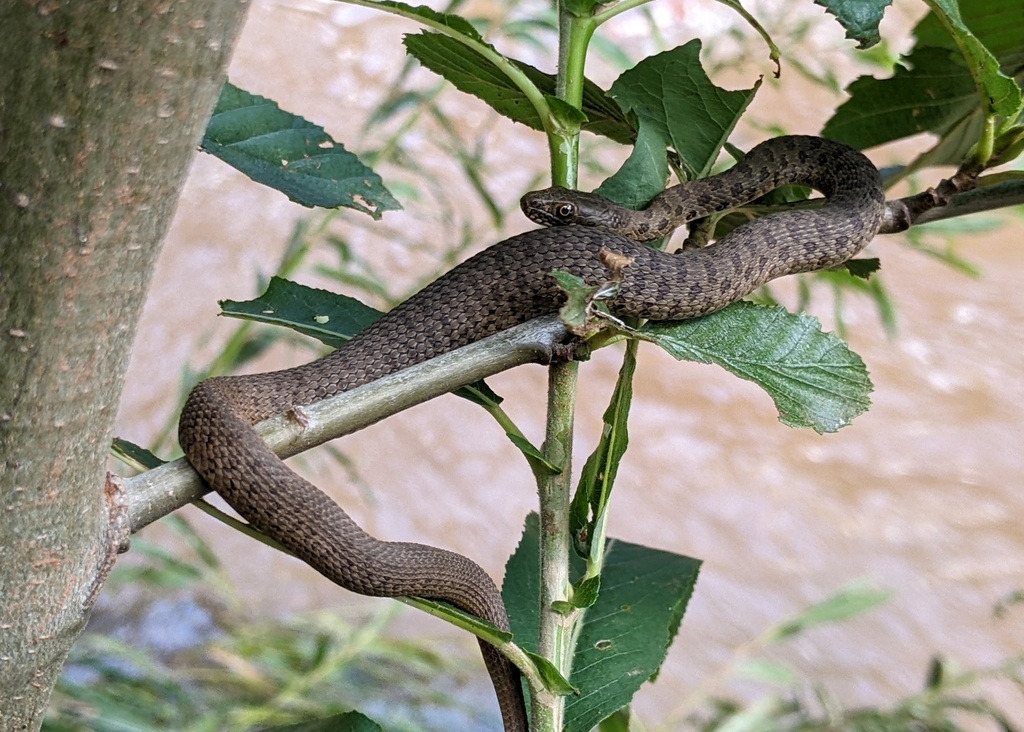
(c) PLAT Vincent, some rights reserved (CC BY) · licence
Family: Colubridae · Class: Reptilia · Order: Squamata
Conservation status: Threatened
Thamnophis rufipunctatus (Narrow-headed gartersnake) is a California animal in the Colubridae family.
The narrow-headed gartersnake is a medium-sized aquatic serpent endemic to the Mogollon Rim region of central Arizona and western New Mexico. Adults typically measure 460 to 570 mm (18 to 22 inches) in total length, with females generally larger than males. The species exhibits a distinctive narrow head relative to body width, which distinguishes it from other gartersnakes. The dorsal coloration is typically brown to olive-brown with red or orange spots arranged along the back and sides. The ventral surface is cream to pale yellow. The species lacks the prominent dorsal stripes characteristic of most other Thamnophis species. Historically, the narrow-headed gartersnake occurred throughout montane stream systems along the Mogollon Rim in Arizona and New Mexico. The species' range has contracted significantly from its historical distribution. Current populations are restricted to scattered locations in central Arizona and western New Mexico, primarily in the Gila River basin and its tributaries. Critical habitat was designated by the U.S. Fish and Wildlife Service on October 21, 2021, encompassing seven river units across the species' remaining range. The narrow-headed gartersnake inhabits perennial and intermittent rocky streams in montane environments, typically at elevations between 1,000 and 2,500 meters (3,300 to 8,200 feet). Essential habitat features include perennial pools, areas of higher velocity water between pools, and shallow water areas among vegetation or in eddies. The species requires streams with rocky substrates and adequate riparian vegetation. These snakes are closely associated with headwater streams, springs, and cienegas of smaller tributary systems. This species is primarily piscivorous, feeding almost exclusively on native fish species including speckled dace, desert sucker, and Gila chub. Unlike most gartersnakes that consume diverse prey, the narrow-headed gartersnake has specialized feeding habits adapted to aquatic environments. Reproduction occurs through live birth, typical of the genus Thamnophis. Recent population ecology studies indicate annual survival rates of approximately 0.72 for females and 0.58 for males. The species is largely aquatic, spending most of its time in or immediately adjacent to water. The narrow-headed gartersnake was listed as threatened under the Endangered Species Act in 2014. Population declines across the species' range have been attributed primarily to habitat loss and degradation, introduction of non-native aquatic species including predatory fish and bullfrogs, and altered stream flows. Non-native fish species compete for food resources and may prey upon juvenile snakes. Climate change poses additional threats through altered precipitation patterns and increased water temperatures. Recovery efforts focus on habitat restoration, non-native species management, and population monitoring. The species is classified as monotypic with no recognized subspecies. A recovery plan revision is currently underway to address ongoing conservation challenges.
Classification
Class: Reptilia · Order: Squamata · Family: Colubridae
Conservation status
Threatened
Frequently asked questions
How is Thamnophis rufipunctatus classified?
Thamnophis rufipunctatus belongs to class Reptilia, order Squamata, family Colubridae.
What family does Thamnophis rufipunctatus belong to?
Thamnophis rufipunctatus is in the Colubridae family.
Is Thamnophis rufipunctatus protected or of conservation concern?
Thamnophis rufipunctatus carries the following status: Threatened.
What is Thamnophis rufipunctatus?
The narrow-headed gartersnake is a medium-sized aquatic serpent endemic to the Mogollon Rim region of central Arizona and western New Mexico.
Is Thamnophis rufipunctatus found in California?
Yes. Thamnophis rufipunctatus is recorded in California in The California Species Project's catalogue.
Related species
Other California species in the same genus, family, or bioregion.
Data from The California Species Project — 14,000+ California species with verified data from CNPS, CDFW, USFWS, and more.