Thamnophis sirtalis
Common Gartersnake
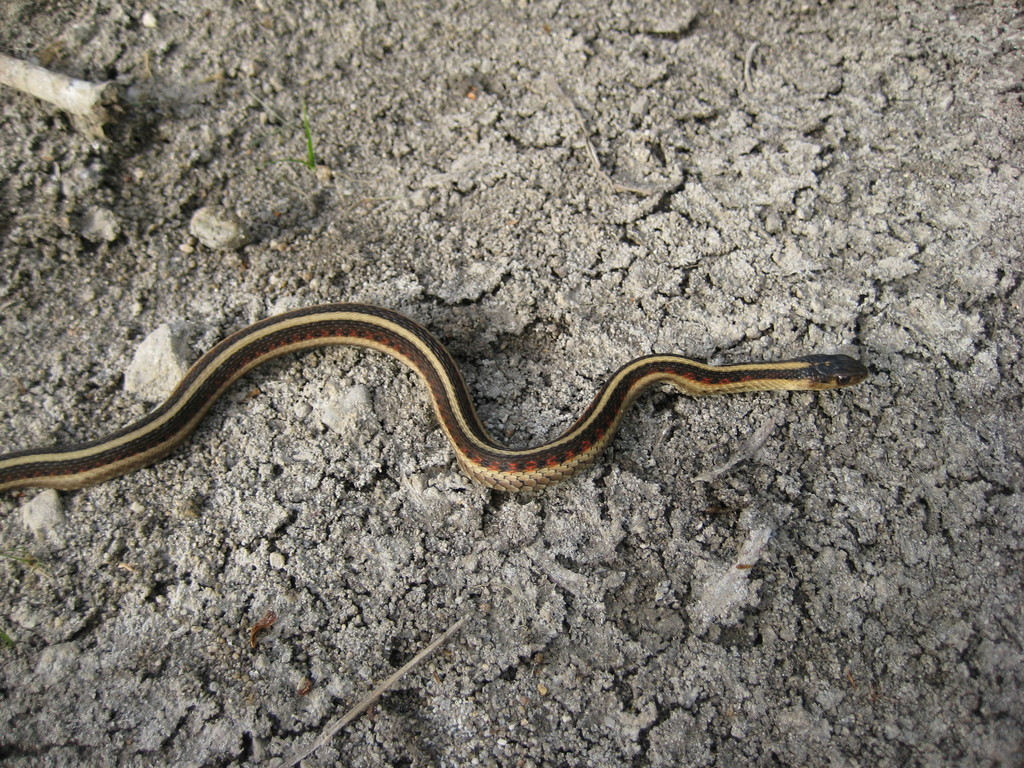
(c) kclarksdnhmorg, some rights reserved (CC BY) · licence
Family: Colubridae · Class: Reptilia · Order: Squamata
Thamnophis sirtalis (Common Gartersnake) is a California animal in the Colubridae family.
The common gartersnake is a medium-sized, semi-aquatic snake native to North America with the widest distribution of any snake species on the continent. Adults typically measure 46 to 137 cm (18 to 54 inches) in total length, with females generally larger than males. The species exhibits considerable variation in coloration and pattern, but most individuals display three longitudinal stripes running along the body - a dorsal stripe down the center of the back and two lateral stripes along the sides. Base coloration ranges from black to brown, olive, or gray, while stripes may be yellow, white, blue, or greenish. Some populations show checkered patterns or lack distinct stripes entirely. The head is typically darker than the body with a distinct neck constriction. Common gartersnakes occur throughout most of North America, from southern Canada to Central America. In California, the species is represented by several subspecies distributed across diverse regions. The San Francisco gartersnake (T. s. tetrataenia) is restricted to San Francisco Peninsula counties, while other subspecies occupy various habitats from coastal areas to the Central Valley and mountain regions. The species demonstrates extensive adaptability to different elevations, from sea level to over 2,400 meters (8,000 feet) in mountainous areas. This highly adaptable species occupies diverse habitats including grasslands, forests, wetlands, agricultural areas, and suburban environments. Common gartersnakes show strong associations with water sources such as streams, ponds, marshes, and irrigation ditches, though they can survive in relatively dry habitats. They utilize various microhabitats for thermoregulation, including rocky outcrops, fallen logs, and dense vegetation. During winter, individuals hibernate in communal dens, often in rock crevices, abandoned burrows, or human-made structures. Common gartersnakes are opportunistic predators with a diet consisting primarily of earthworms, amphibians, fish, and small mammals. Juveniles focus heavily on earthworms and small amphibians, while adults can consume larger prey including frogs, toads, and small rodents. The species is ovoviviparous, giving birth to live young rather than laying eggs. Mating occurs in spring following emergence from hibernation, with females producing litters of 10 to 40 young after a gestation period of approximately 90 to 100 days. Neonates measure 15 to 23 cm (6 to 9 inches) at birth and reach sexual maturity in 2 to 3 years. Most common gartersnake populations maintain stable conservation status, with NatureServe ranking the species as G5 (globally secure). However, certain subspecies face significant threats. The San Francisco gartersnake was listed as federally endangered on March 11, 1967, due to habitat loss from urban development. Primary threats to various populations include habitat destruction, water pollution, road mortality, and climate change effects on aquatic ecosystems. Agricultural practices and urban development continue to fragment suitable habitat, particularly in California's Central Valley and coastal regions.
Classification
Class: Reptilia · Order: Squamata · Family: Colubridae
Frequently asked questions
How is Thamnophis sirtalis classified?
Thamnophis sirtalis belongs to class Reptilia, order Squamata, family Colubridae.
What family does Thamnophis sirtalis belong to?
Thamnophis sirtalis is in the Colubridae family.
What is Thamnophis sirtalis?
The common gartersnake is a medium-sized, semi-aquatic snake native to North America with the widest distribution of any snake species on the continent.
Is Thamnophis sirtalis found in California?
Yes. Thamnophis sirtalis is recorded in California in The California Species Project's catalogue.
Related species
Other California species in the same genus, family, or bioregion.
Data from The California Species Project — 14,000+ California species with verified data from CNPS, CDFW, USFWS, and more.