Tharsalea gorgon
Gorgon Copper
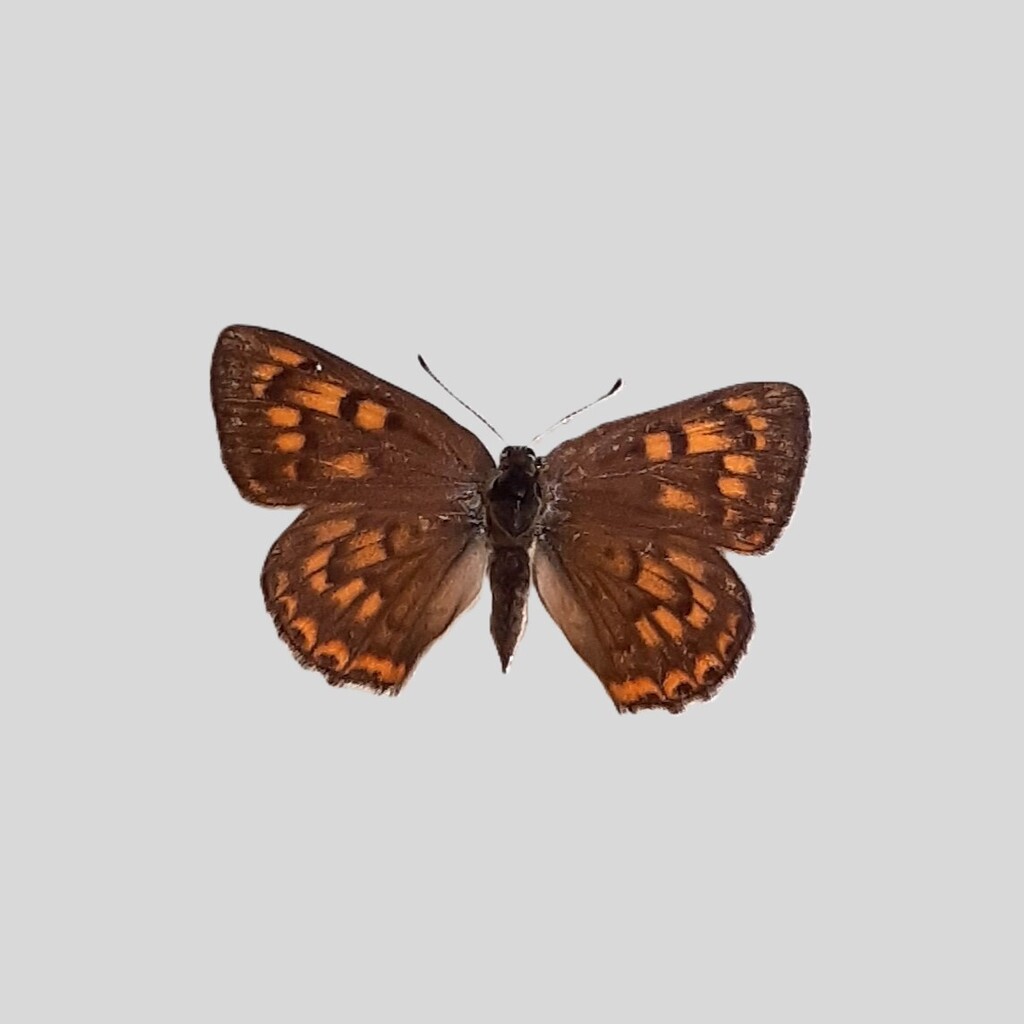
(c) Jim Dreier, some rights reserved (CC BY) · licence
Family: Lycaenidae · Class: Insecta · Order: Lepidoptera
Tharsalea gorgon (Gorgon Copper) is a California animal in the Lycaenidae family.
The Gorgon copper is a small butterfly in the family Lycaenidae, with males displaying bright orange-copper dorsal wing surfaces bordered by dark margins. The wingspan ranges from 22 to 28 mm (0.87 to 1.1 inches). Males exhibit iridescent copper coloration on the forewings and hindwings, while females are typically duller with more brown tones and orange spotting. The undersides of both sexes are pale gray to white with small black spots and orange marginal markings on the hindwings. Adults possess clubbed antennae typical of butterflies and relatively short, rounded wings characteristic of copper butterflies. The Gorgon copper ranges from southern Oregon through California to Baja California, following the distribution of suitable host plants and habitat. In California, the species occurs primarily in the Coast Ranges, Sierra Nevada foothills, and southern California mountains. Populations are documented from Siskiyou and Modoc counties in the north to San Diego and Imperial counties in the south. The species also extends into western Nevada and northwestern Baja California, Mexico. This butterfly inhabits open areas with sparse vegetation, including chaparral, oak woodlands, grasslands, and desert margins. The species is found from near sea level to elevations of approximately 2,400 meters (7,900 feet). Adults prefer areas with scattered shrubs and open ground, often near washes or rocky outcrops where host plants are abundant. The butterfly requires proximity to plants in the buckwheat family, particularly Eriogonum species, which serve as larval food sources. Gorgon copper adults are active from March through October, with peak flight periods varying by elevation and latitude. In coastal areas, adults may be present from early spring through late summer, while mountain populations typically have shorter flight periods from late spring to early fall. Males engage in territorial behavior, perching on elevated spots and pursuing passing females or other males. Mating occurs after courtship flights, with females depositing single eggs on or near host plants. Larvae feed exclusively on plants in the buckwheat family, including various Eriogonum species such as wild buckwheat and sulfur flower. The caterpillars are tended by ants, which provide protection in exchange for honeydew secretions. Pupation occurs in the soil or leaf litter near the base of host plants. The Gorgon copper is not currently listed under federal or California endangered species legislation. However, local populations may face pressure from habitat loss due to urban development, agricultural conversion, and fire suppression that alters natural vegetation patterns. Climate change may affect the species through altered precipitation patterns and increased temperatures, potentially shifting suitable habitat to higher elevations. The butterfly's dependence on specific host plants in the buckwheat family makes it vulnerable to habitat modifications that reduce Eriogonum populations. Conservation efforts focus on maintaining natural fire regimes and protecting areas with diverse native plant communities that support both host plants and nectar sources.
Classification
Class: Insecta · Order: Lepidoptera · Family: Lycaenidae
Frequently asked questions
How is Tharsalea gorgon classified?
Tharsalea gorgon belongs to class Insecta, order Lepidoptera, family Lycaenidae.
What family does Tharsalea gorgon belong to?
Tharsalea gorgon is in the Lycaenidae family.
What is Tharsalea gorgon?
The Gorgon copper is a small butterfly in the family Lycaenidae, with males displaying bright orange-copper dorsal wing surfaces bordered by dark margins.
Is Tharsalea gorgon found in California?
Yes. Tharsalea gorgon is recorded in California in The California Species Project's catalogue.
Related species
Other California species in the same genus, family, or bioregion.
Data from The California Species Project — 14,000+ California species with verified data from CNPS, CDFW, USFWS, and more.