Tharsalea mariposa
Mariposa Copper
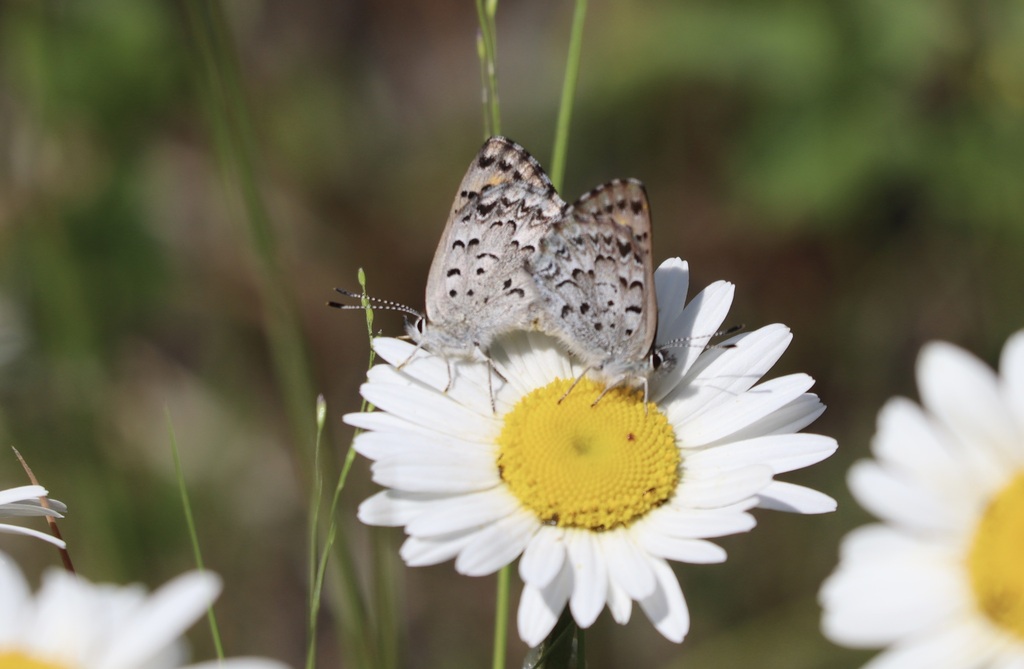
no rights reserved · CC0
Family: Lycaenidae · Class: Insecta · Order: Lepidoptera
Tharsalea mariposa (Mariposa Copper) is a California animal in the Lycaenidae family.
The Mariposa Copper is a small butterfly in the family Lycaenidae, measuring approximately 25-30 mm (1.0-1.2 inches) in wingspan. Males display bright copper-orange forewings with dark borders and scattered black spots, while the hindwings are grayish-brown with an orange submarginal band. Females are typically duller with more extensive dark markings and reduced copper coloration. The ventral surfaces of both sexes are pale gray to white with black spots and an orange band along the hindwing margin. The species can be distinguished from related coppers by its specific wing pattern and association with heath family host plants. The Mariposa Copper occurs from southern Alaska south along the Rocky Mountains to Wyoming, with western populations in Washington, central Oregon, and northeastern California. In California, the species is restricted to the northeastern region, primarily in the Cascade Range and northern Sierra Nevada. The distribution follows mountainous terrain where suitable host plants and habitat conditions occur at appropriate elevations. This species inhabits montane and subalpine environments, typically occurring at elevations between 1,200-3,000 meters (4,000-10,000 feet). Mariposa Coppers are found in open areas within coniferous forests, including meadows, clearings, forest edges, and areas with scattered shrub cover. The habitat is characterized by the presence of heath family plants, particularly dwarf bilberry, which serves as the primary larval host. These environments often experience cool temperatures and significant seasonal snow cover. In California, Mariposa Copper larvae feed exclusively on Vaccinium arbuscula (dwarf bilberry), while populations elsewhere utilize other Ericaceae species including other Vaccinium species and occasionally Arctostaphylos. Adults are active during summer months, typically flying from July through August, depending on elevation and local climate conditions. Males establish territories near host plants and engage in perching behavior to locate females. Females lay eggs singly on or near host plant leaves. The species completes one generation per year, with larvae overwintering and pupating the following spring. The Mariposa Copper is not currently listed under federal or California endangered species legislation. However, like many montane butterflies, the species faces potential threats from climate change, which may shift suitable habitat to higher elevations and reduce available range. Forest management practices, including logging and fire suppression, can alter habitat conditions by changing forest structure and understory plant communities. The species' dependence on specific host plants and montane habitats makes it potentially vulnerable to environmental changes. Population monitoring and habitat conservation in the Cascade Range and Sierra Nevada are important for maintaining stable populations. The species' relatively restricted California range and specific habitat requirements warrant continued attention to ensure long-term persistence in the state.
Classification
Class: Insecta · Order: Lepidoptera · Family: Lycaenidae
Frequently asked questions
How is Tharsalea mariposa classified?
Tharsalea mariposa belongs to class Insecta, order Lepidoptera, family Lycaenidae.
What family does Tharsalea mariposa belong to?
Tharsalea mariposa is in the Lycaenidae family.
What is Tharsalea mariposa?
The Mariposa Copper is a small butterfly in the family Lycaenidae, measuring approximately 25-30 mm (1.0-1.2 inches) in wingspan.
Is Tharsalea mariposa found in California?
Yes. Tharsalea mariposa is recorded in California in The California Species Project's catalogue.
Related species
Other California species in the same genus, family, or bioregion.
Data from The California Species Project — 14,000+ California species with verified data from CNPS, CDFW, USFWS, and more.