Thaumatomyia glabra
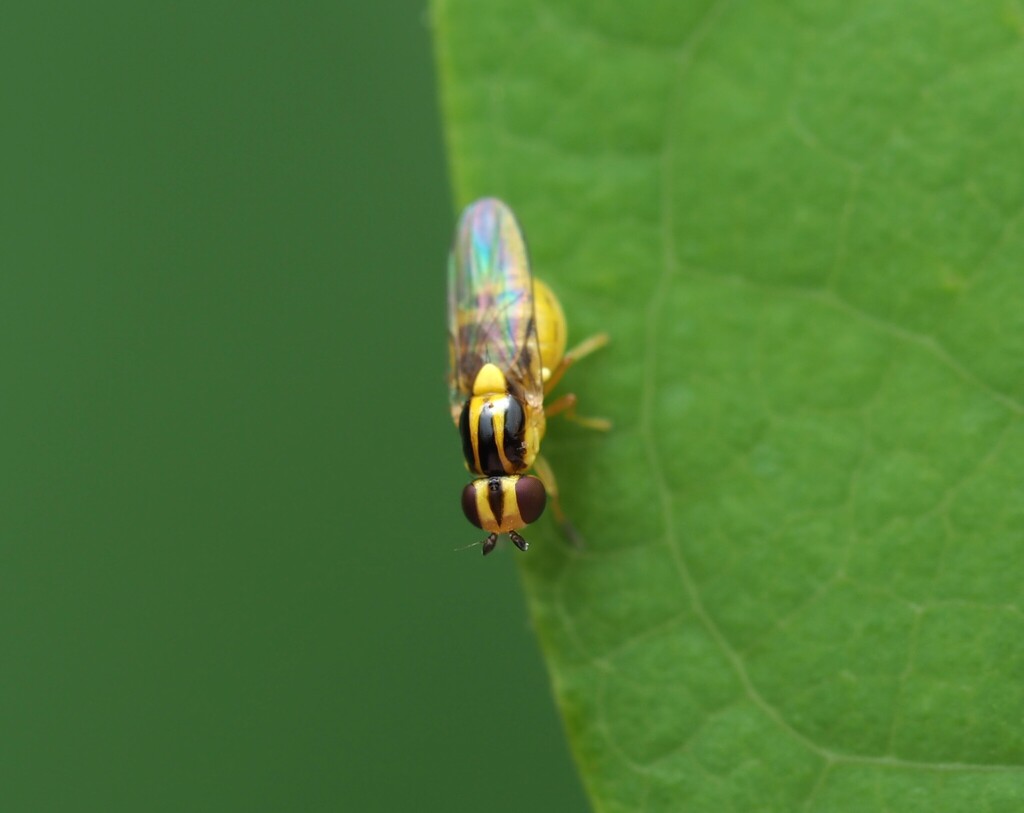
no rights reserved · CC0
Family: Chloropidae · Class: Insecta · Order: Diptera
Thaumatomyia glabra is a California animal in the Chloropidae family.
Thaumatomyia glabra is a small fly in the family Chloropidae, commonly known as frit flies or grass flies. As a member of the order Diptera, this species exhibits the characteristic features of true flies, including a single pair of functional wings and reduced hind wings modified into halteres for balance during flight. Chloropid flies are typically small, measuring 1-4 millimeters in length, with relatively large eyes and short antennae. The genus Thaumatomyia is distinguished by specific wing venation patterns and head capsule morphology, though detailed morphological descriptions for T. glabra specifically are not well documented in available literature. The distribution and range of Thaumatomyia glabra remain poorly documented in scientific literature. While the species appears in USFWS databases, specific geographic information including occurrence in California counties or ecological regions has not been comprehensively recorded. The genus Thaumatomyia includes species found across North America, but detailed range maps and locality records for T. glabra are lacking in current taxonomic resources. Habitat requirements for this species have not been thoroughly studied or documented. Members of the family Chloropidae typically inhabit grasslands, agricultural areas, and other open habitats where they are associated with grasses and other monocotyledonous plants. Many chloropid species are found in disturbed habitats including crop fields, pastures, and urban green spaces. Without specific ecological studies, the precise habitat preferences and elevation range for T. glabra cannot be determined from available sources. The life history and ecological behavior of Thaumatomyia glabra are not well documented in current entomological literature. Chloropid flies generally undergo complete metamorphosis with egg, larval, pupal, and adult stages. Many species in this family have larvae that develop as stem borers, leaf miners, or feed on decomposing organic matter. Adults are often found on flowers or vegetation where they may feed on nectar, pollen, or other plant exudates. Seasonal activity patterns, reproductive biology, and specific host plant relationships for T. glabra have not been adequately studied. The conservation status of Thaumatomyia glabra has not been formally assessed by state or federal agencies. The species does not appear on current endangered or threatened species lists, though this may reflect a lack of sufficient biological data rather than population stability. Many small dipteran species remain understudied, with limited information available about population trends, threats, or conservation needs. The species' inclusion in USFWS databases suggests some level of governmental awareness, but no specific conservation measures or management plans have been identified. Scientific documentation for this species remains extremely limited despite thorough review of available taxonomic and ecological literature. The information presented here represents the extent of publicly accessible data as of December 2025. Additional research is needed to characterize the morphology, distribution, ecology, and conservation status of this species. We welcome contributions of verified scientific data, photographs, or field observations to enhance this species account.
Classification
Class: Insecta · Order: Diptera · Family: Chloropidae
Frequently asked questions
How is Thaumatomyia glabra classified?
Thaumatomyia glabra belongs to class Insecta, order Diptera, family Chloropidae.
What family does Thaumatomyia glabra belong to?
Thaumatomyia glabra is in the Chloropidae family.
What is Thaumatomyia glabra?
Thaumatomyia glabra is a small fly in the family Chloropidae, commonly known as frit flies or grass flies.
Is Thaumatomyia glabra found in California?
Yes. Thaumatomyia glabra is recorded in California in The California Species Project's catalogue.
More California species
This species has no close relatives in our California data — here are other species to explore.
Data from The California Species Project — 14,000+ California species with verified data from CNPS, CDFW, USFWS, and more.