Theba pisana
White Italian Snail
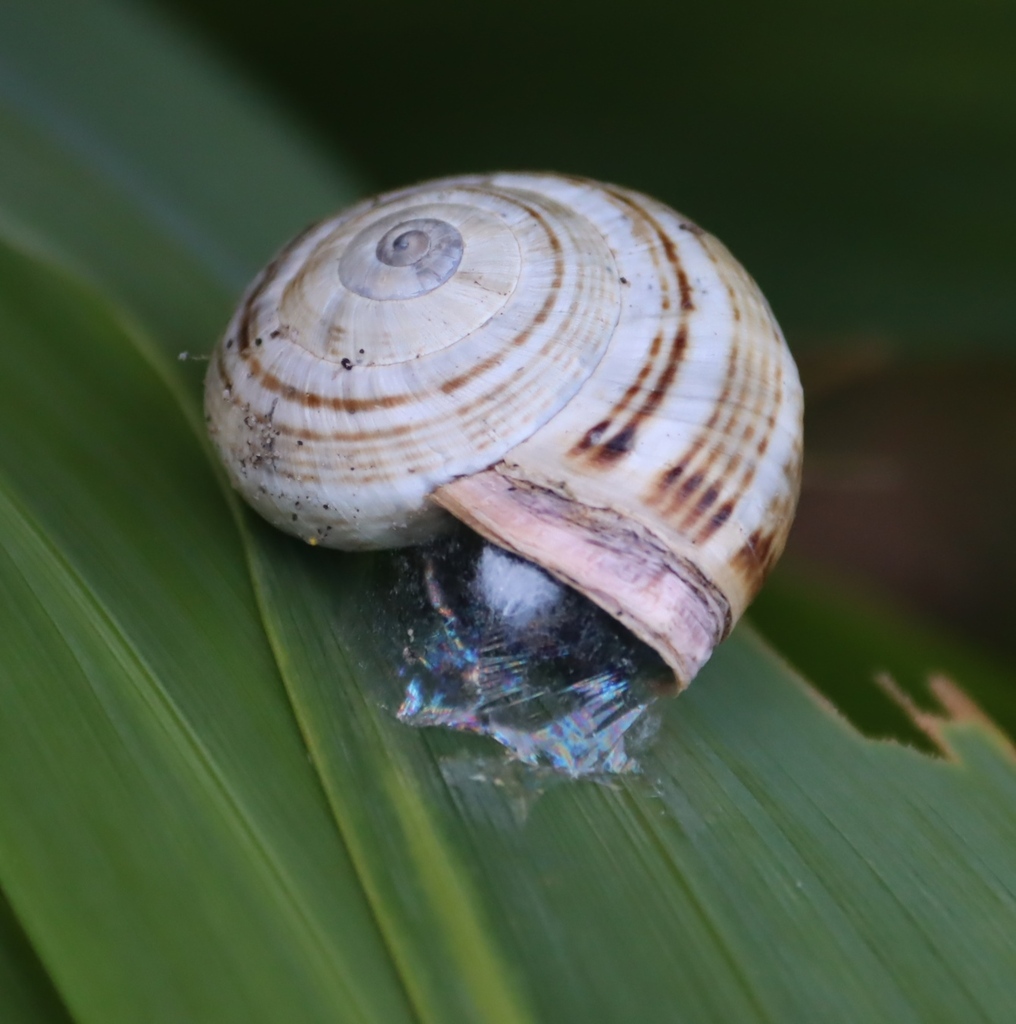
(c) Tony Rebelo, some rights reserved (CC BY-SA) · licence
Family: Helicidae · Class: Gastropoda · Order: Stylommatophora
Theba pisana (White Italian Snail) is a California animal in the Helicidae family.
The white Italian snail is a small terrestrial gastropod mollusk in the family Helicidae. The shell typically measures 12 to 20 mm (0.5 to 0.8 inches) in diameter and displays a distinctive white to cream-colored appearance with variable brown banding patterns. The shell is globular to conical in shape with 5 to 6 whorls, and the aperture is circular with a reflected lip. The soft body is typically pale gray to yellowish, with two pairs of tentacles characteristic of stylommatophoran snails. Native to the Mediterranean region, Theba pisana has been introduced to multiple continents and is now established in various locations worldwide. In California, this species has been documented in coastal and inland areas, particularly in urban and suburban environments. The species has spread throughout much of the state's Mediterranean climate zones, from sea level to moderate elevations. The white Italian snail inhabits a wide range of environments but shows a strong preference for disturbed habitats. Common locations include gardens, parks, agricultural areas, and urban landscapes with ornamental vegetation. The species thrives in areas with regular irrigation or moisture sources and is frequently found on walls, fences, vegetation, and other vertical surfaces. It tolerates a broad range of temperature and humidity conditions, contributing to its successful establishment in California's diverse climatic zones. This species is primarily herbivorous, feeding on a variety of plant materials including fresh vegetation, decaying organic matter, and algae. Theba pisana is most active during cooler, humid conditions, typically at night or during overcast weather. During hot or dry periods, individuals aestivate by sealing their shell opening with a mucus membrane called an epiphragm. The species is hermaphroditic, with individuals capable of both egg production and sperm transfer during mating. Reproduction typically occurs during favorable moisture conditions, with eggs laid in soil or under debris. The species can produce multiple generations per year under suitable conditions. Theba pisana is not listed under federal or state endangered species legislation. According to NatureServe, the species has a global conservation rank of G5, indicating it is secure worldwide (NatureServe 2009). Rather than being a conservation concern, this introduced species is generally considered an agricultural and garden pest in California. The species can cause damage to crops, ornamental plants, and garden vegetation, particularly during population outbreaks. Management efforts typically focus on control rather than conservation, as the species' rapid reproduction and broad habitat tolerance allow it to establish dense populations. The white Italian snail's ability to survive in urban environments and its tolerance of disturbance make it well-suited to California's modified landscapes, where it continues to expand its range through human-mediated dispersal.
Classification
Class: Gastropoda · Order: Stylommatophora · Family: Helicidae
Frequently asked questions
How is Theba pisana classified?
Theba pisana belongs to class Gastropoda, order Stylommatophora, family Helicidae.
What family does Theba pisana belong to?
Theba pisana is in the Helicidae family.
What is Theba pisana?
The white Italian snail is a small terrestrial gastropod mollusk in the family Helicidae.
Is Theba pisana found in California?
Yes. Theba pisana is recorded in California in The California Species Project's catalogue.
Related species
Other California species in the same genus, family, or bioregion.
Data from The California Species Project — 14,000+ California species with verified data from CNPS, CDFW, USFWS, and more.