Thecabius populimonilis
Bead-like Cottonwood Gall aphid
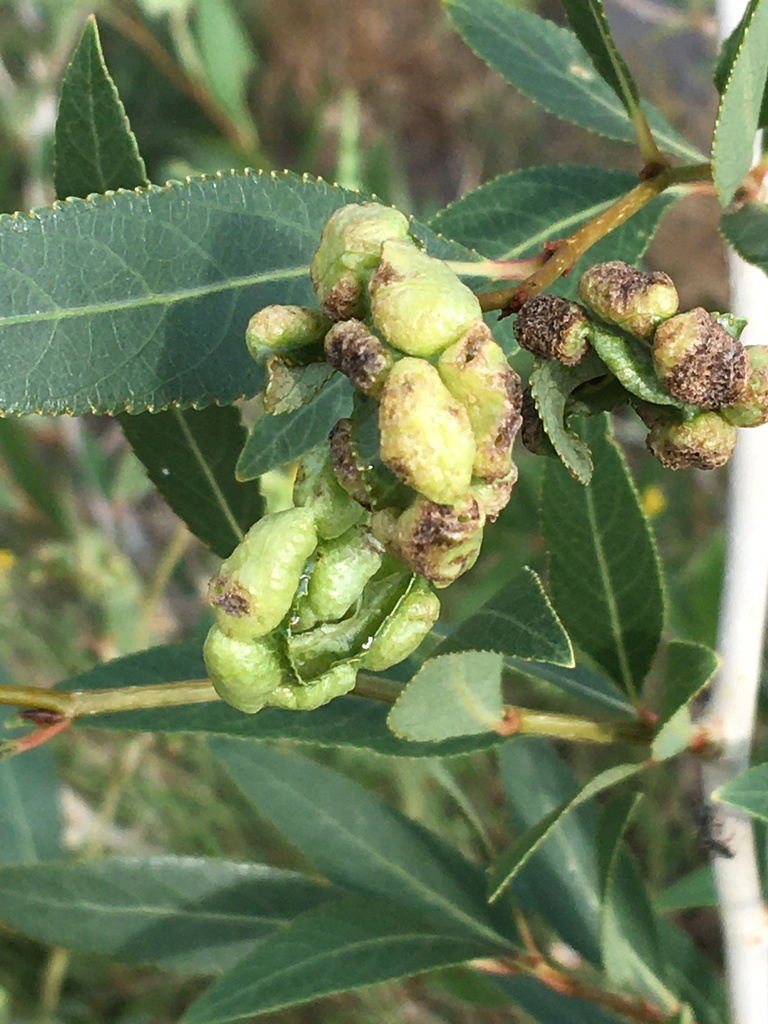
no rights reserved · CC0
Family: Aphididae · Class: Insecta · Order: Hemiptera
Thecabius populimonilis (Bead-like Cottonwood Gall aphid) is a California animal in the Aphididae family.
The Bead-like Cottonwood Gall aphid is a small, soft-bodied insect belonging to the subfamily Eriosomatinae, which includes woolly aphids and gall-making aphids. Adults are typically pale green to yellowish in color and measure approximately 1-2 mm in length. This species is characterized by its ability to induce distinctive bead-like galls on the leaves and stems of its host plants, which gives the species its common name. Thecabius populimonilis occurs throughout western North America, with documented populations in California, Oregon, Washington, and extending into western Canada. According to BugGuide observations, the species has been recorded on various cottonwood species across its range. In California, populations have been documented in both the Central Valley and mountainous regions where suitable host plants occur. The species demonstrates a strong association with trees in the genus Populus, particularly black cottonwood (Populus trichocarpa) and balsam poplar (Populus balsamifera). Based on BugGuide records, the aphids create characteristic galls along leaf edges and on stems of these host trees. These cottonwood species typically grow in riparian zones, stream corridors, and moist soils at elevations ranging from sea level to approximately 2,000 meters. The aphids require the specific biochemical environment provided by Populus species to complete their complex life cycle. Like many gall-forming aphids, T. populimonilis exhibits a complex life cycle involving alternation between primary and secondary host plants. The species overwinters as eggs on cottonwood bark, with nymphs hatching in spring to establish colonies within the developing galls. The galls provide protection and concentrated nutrients for the developing aphids. Multiple generations may occur during the growing season, with winged forms dispersing to establish new colonies. The timing of reproduction coincides with the active growing season of the host trees, typically from late spring through early fall. Currently, Thecabius populimonilis does not appear on federal or state endangered species lists, and no specific conservation status has been assigned to this species as of December 2025. However, like many riparian-associated insects, the species may face localized threats from habitat modification, water diversions, and changes to riparian forest composition. The removal or alteration of cottonwood galleries along waterways could impact local populations. Climate change may also affect the species through changes in precipitation patterns that influence host tree distribution and phenology. The species' dependence on specific Populus hosts makes it potentially vulnerable to factors affecting cottonwood forest health, including invasive plant species, altered flood regimes, and urban development in riparian corridors. Detailed ecological studies of this species remain limited, and much of the available information comes from taxonomic references and observational records. Additional research on population dynamics, host plant relationships, and responses to environmental changes would enhance understanding of this specialized gall-forming aphid.
Classification
Class: Insecta · Order: Hemiptera · Family: Aphididae
Frequently asked questions
How is Thecabius populimonilis classified?
Thecabius populimonilis belongs to class Insecta, order Hemiptera, family Aphididae.
What family does Thecabius populimonilis belong to?
Thecabius populimonilis is in the Aphididae family.
What is Thecabius populimonilis?
The Bead-like Cottonwood Gall aphid is a small, soft-bodied insect belonging to the subfamily Eriosomatinae, which includes woolly aphids and gall-making aphids.
Is Thecabius populimonilis found in California?
Yes. Thecabius populimonilis is recorded in California in The California Species Project's catalogue.
Related species
Other California species in the same genus, family, or bioregion.
Data from The California Species Project — 14,000+ California species with verified data from CNPS, CDFW, USFWS, and more.