Thereva comata
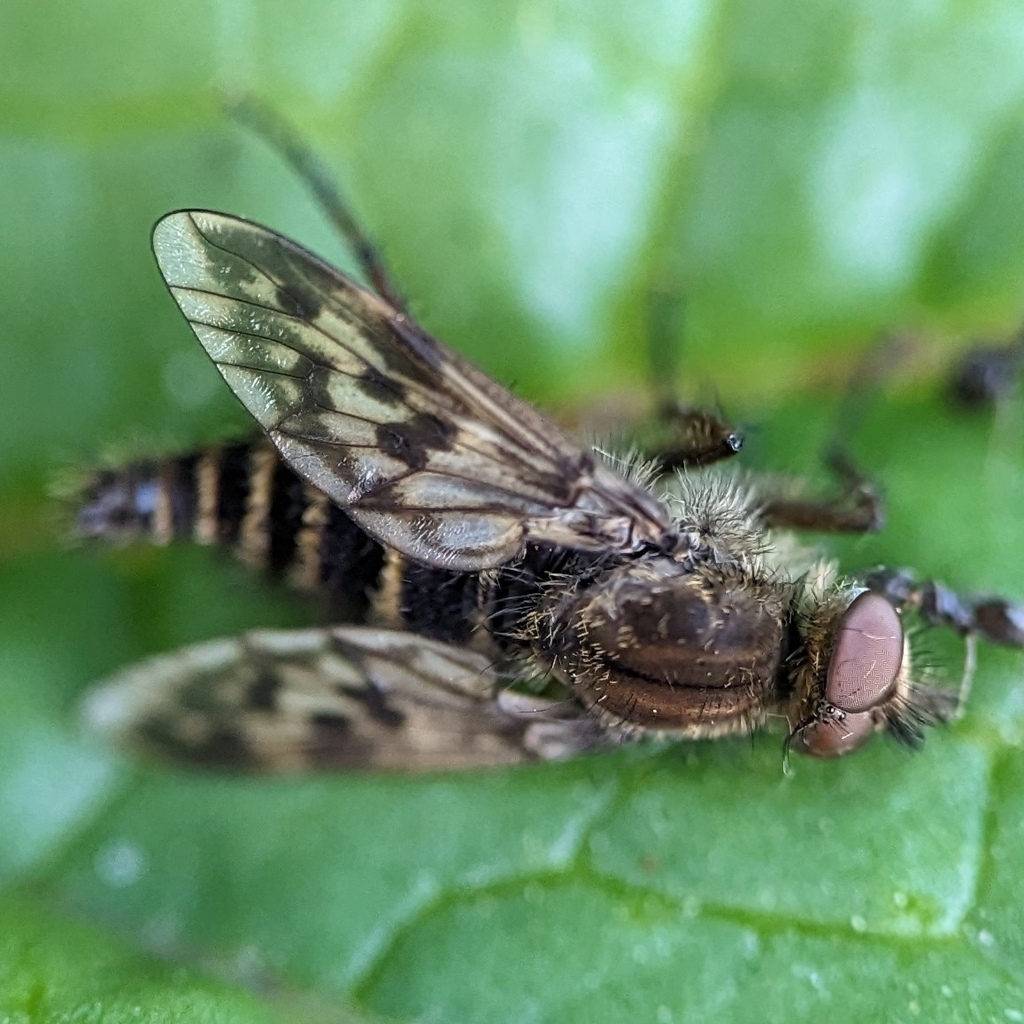
no rights reserved · CC0
Family: Therevidae · Class: Insecta · Order: Diptera
Thereva comata is a California animal in the Therevidae family.
Thereva comata is a species of stiletto fly in the family Therevidae, belonging to the order Diptera. As with other members of this family, T. comata is characterized by a robust, bristly body and predatory lifestyle. Stiletto flies are distinguished by their prominent bristles, large compound eyes, and well-developed proboscis adapted for piercing prey. Adults typically measure 8-15 mm in length, though specific morphometric data for T. comata has not been well documented in the available literature. The distribution and range of Thereva comata remain poorly documented in scientific literature. The genus Thereva is widely distributed across North America, with various species occupying diverse habitats from arid regions to temperate woodlands. However, specific locality records and range maps for T. comata are not readily available in current taxonomic databases or field guides. Habitat preferences for this species have not been thoroughly studied or documented. Other Thereva species typically inhabit areas with sandy or loose soil substrates, which facilitate their larval development. Many stiletto flies are associated with open areas including grasslands, scrublands, and forest edges where prey insects are abundant. The larvae are predatory and live in soil or leaf litter, feeding on other insect larvae and soft-bodied invertebrates. Adult Thereva species are active predators that hunt other flying insects, including flies, small beetles, and other soft-bodied arthropods. They are strong fliers and often observed perching on vegetation or bare ground while hunting. Mating typically occurs during warm months, with females depositing eggs in suitable soil substrates. The complete life cycle from egg to adult generally requires one year, though specific timing and developmental parameters for T. comata remain undocumented. No federal or state conservation listing status has been assigned to Thereva comata, and its conservation status remains unknown. The species appears in various taxonomic checklists and databases but lacks detailed biological studies or population assessments. Many dipteran species, particularly those in specialized families like Therevidae, suffer from taxonomic uncertainty and limited field research. The paucity of ecological information for T. comata reflects broader knowledge gaps in North American stiletto fly biology and distribution patterns. Scientific documentation for this species remains extremely limited despite searches of major entomological databases and literature. The information presented here synthesizes available taxonomic references and general knowledge of Therevidae biology. Detailed studies of T. comata's distribution, habitat requirements, life history, and ecological role are needed to develop a comprehensive understanding of this species. We welcome contributions of verified scientific data, photographs, or field observations to enhance this species account.
Classification
Class: Insecta · Order: Diptera · Family: Therevidae
Frequently asked questions
How is Thereva comata classified?
Thereva comata belongs to class Insecta, order Diptera, family Therevidae.
What family does Thereva comata belong to?
Thereva comata is in the Therevidae family.
What is Thereva comata?
Thereva comata is a species of stiletto fly in the family Therevidae, belonging to the order Diptera.
Is Thereva comata found in California?
Yes. Thereva comata is recorded in California in The California Species Project's catalogue.
More California species
This species has no close relatives in our California data — here are other species to explore.
Data from The California Species Project — 14,000+ California species with verified data from CNPS, CDFW, USFWS, and more.