Thinopinus pictus
Pictured Rove Beetle
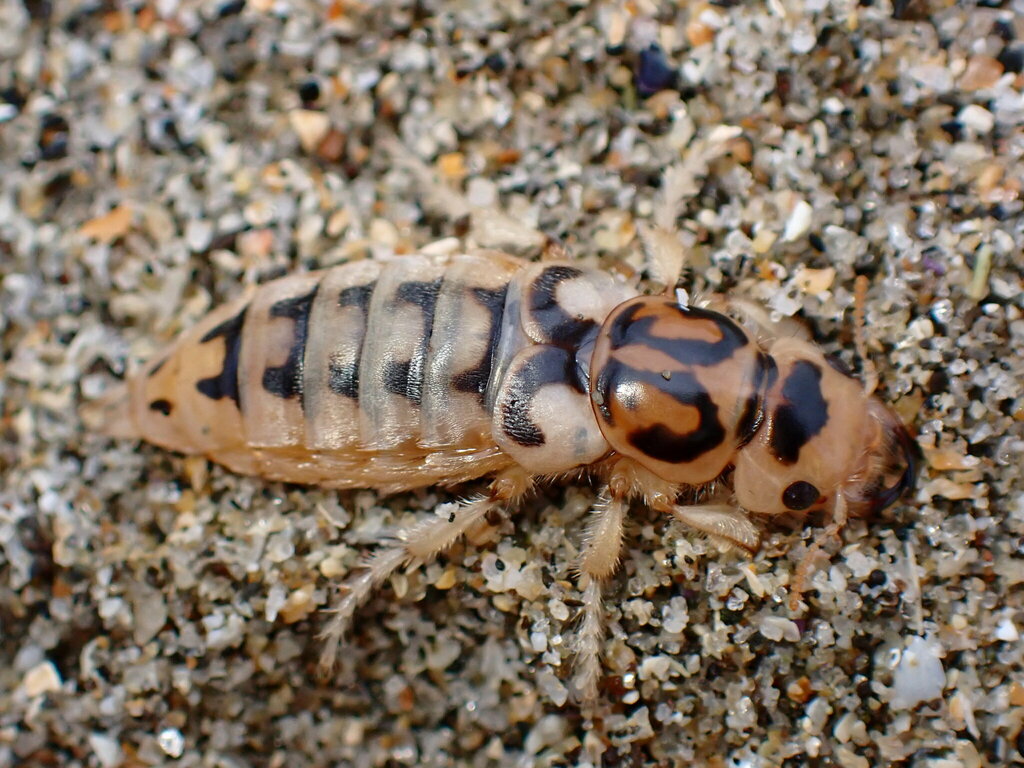
(c) Cricket Raspet, some rights reserved (CC BY) · licence
Family: Staphylinidae · Class: Insecta · Order: Coleoptera
Thinopinus pictus (Pictured Rove Beetle) is a California animal in the Staphylinidae family.
The Pictured Rove Beetle (Thinopinus pictus) is a distinctive intertidal species found along the Pacific coast. This robust beetle measures approximately 8-12 mm in length and displays characteristic coloration with a dark brown to black body marked by pale yellowish bands across the elytra, giving it the "pictured" appearance that inspired its common name. The species belongs to the subfamily Staphylininae and is distinguished from other coastal rove beetles by its relatively large size and distinctive banding pattern. This species is endemic to the Pacific coast of North America, with its range extending from central California to southern Oregon. The beetle is most commonly encountered along sandy beaches and rocky intertidal zones of the central and northern California coast, including documented populations at locations such as Pescadero Beach in San Mateo County. Thinopinus pictus occupies a highly specialized habitat within the intertidal zone of sandy beaches and rocky shores. According to ecological studies, the species demonstrates strong fidelity to the interface between terrestrial and marine environments (Craig 1970). The beetles are typically found beneath wrack lines, under kelp deposits, and among beach debris where they can access both terrestrial prey and marine organic matter. They inhabit areas that experience regular tidal inundation but retreat to higher zones during high tides. The Pictured Rove Beetle exhibits predatory behavior, feeding primarily on small invertebrates including fly larvae, amphipods, and other arthropods found in beach wrack and decaying organic matter. Adults are most active during spring through fall months, with peak activity observed from February through October. The species demonstrates specialized physiological adaptations to its harsh intertidal environment, including tolerance for salt spray and periodic submersion. Reproductive behavior involves females depositing eggs in moist sand or organic debris above the high tide line, where larvae develop while feeding on decomposing materials and small prey. The conservation status of Thinopinus pictus has not been formally assessed by federal or state agencies, and it currently holds no special listing status. However, like many coastal specialist species, it faces potential threats from habitat loss due to coastal development, beach grooming activities, and human recreational impacts that disturb beach wrack accumulations essential to its survival. Climate change and sea level rise may also affect suitable habitat availability. The species' restricted habitat requirements and limited dispersal capabilities make it potentially vulnerable to environmental changes, though specific population data and trends have not been comprehensively documented. The beetle serves as an important component of beach ecosystem food webs, contributing to the decomposition of marine organic matter and serving as prey for shorebirds and other coastal predators.
Classification
Class: Insecta · Order: Coleoptera · Family: Staphylinidae
Frequently asked questions
How is Thinopinus pictus classified?
Thinopinus pictus belongs to class Insecta, order Coleoptera, family Staphylinidae.
What family does Thinopinus pictus belong to?
Thinopinus pictus is in the Staphylinidae family.
What is Thinopinus pictus?
The Pictured Rove Beetle (Thinopinus pictus) is a distinctive intertidal species found along the Pacific coast.
Is Thinopinus pictus found in California?
Yes. Thinopinus pictus is recorded in California in The California Species Project's catalogue.
Related species
Other California species in the same genus, family, or bioregion.
Data from The California Species Project — 14,000+ California species with verified data from CNPS, CDFW, USFWS, and more.