Thomomys mazama glacialis
Roy Prairie pocket gopher
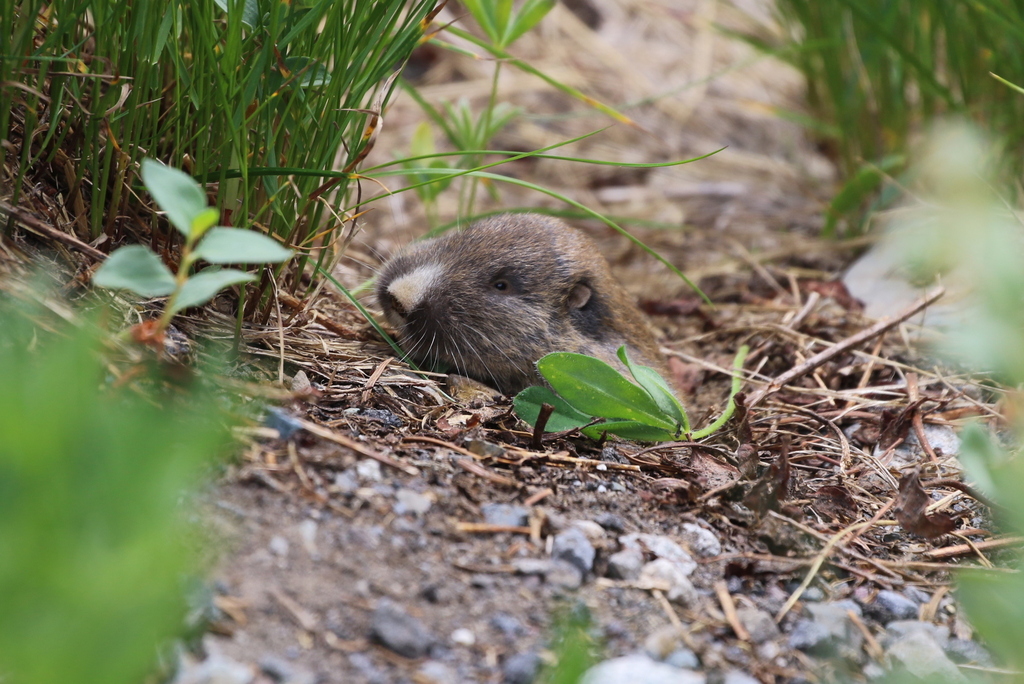
no rights reserved · CC0
Family: Geomyidae · Class: Mammalia · Order: Rodentia
Conservation status: Threatened
Thomomys mazama glacialis (Roy Prairie pocket gopher) is a California animal in the Geomyidae family.
The Roy Prairie pocket gopher is a small, fossorial rodent and one of four subspecies of Mazama pocket gopher found only in the south Puget Sound region of Washington. Adults typically measure 160 to 200 mm (6.3 to 7.9 inches) in total length, with short, powerful legs adapted for underground life. Like other pocket gophers, they possess small eyes and ears, strong front incisors, and specialized lips that can close behind their front teeth to prevent dirt and debris from entering the mouth during excavation (USFWS 2022). The Roy Prairie pocket gopher has the most restricted distribution of the four listed Mazama pocket gopher subspecies, occurring only in Pierce County, Washington. Historically, this subspecies was found in prairie habitats around the Roy Prairie area, but current populations are extremely limited. The subspecies is geographically isolated from the other three subspecies, which occur in Thurston County (USFWS 2022). This subspecies inhabits native prairie ecosystems characterized by deep, well-drained soils that support their extensive burrow systems. Roy Prairie pocket gophers require areas with minimal tree cover and herbaceous vegetation. The original prairie habitat has been severely fragmented and converted to agricultural land, urban development, and other land uses. The remaining suitable habitat occurs in small, isolated patches, making population connectivity extremely difficult. Roy Prairie pocket gophers are highly specialized for subterranean life, spending most of their time in elaborate tunnel systems that can extend several meters underground. They are herbivorous, feeding primarily on roots, bulbs, and other underground plant parts, which they encounter while excavating their burrows. Their burrowing activity creates characteristic mounds of excavated soil on the surface. Reproduction typically occurs in spring, with females producing small litters of 2 to 4 young after a gestation period of approximately 18 to 19 days. The species is largely solitary except during the breeding season. The Roy Prairie pocket gopher was listed as threatened under the Endangered Species Act in April 2014, along with the three other Mazama pocket gopher subspecies (USFWS 2014). The primary threats include habitat loss and fragmentation due to agricultural conversion, urban development, and invasion by non-native plant species that alter prairie ecosystems. The extremely small population size and limited distribution make this subspecies particularly vulnerable to local extinction from random events or environmental changes. Several areas identified in the proposed critical habitat designation were exempted, including Department of Defense lands in Pierce County (USFWS 2022). Recovery efforts focus on habitat restoration, population monitoring, and protection of remaining prairie fragments. The Recovery Plan for Four Subspecies of Mazama Pocket Gopher, finalized in 2022, provides a comprehensive strategy for conservation and recovery of this and the related subspecies.
Classification
Class: Mammalia · Order: Rodentia · Family: Geomyidae
Conservation status
Threatened
Frequently asked questions
How is Thomomys mazama glacialis classified?
Thomomys mazama glacialis belongs to class Mammalia, order Rodentia, family Geomyidae.
What family does Thomomys mazama glacialis belong to?
Thomomys mazama glacialis is in the Geomyidae family.
Is Thomomys mazama glacialis protected or of conservation concern?
Thomomys mazama glacialis carries the following status: Threatened.
What is Thomomys mazama glacialis?
The Roy Prairie pocket gopher is a small, fossorial rodent and one of four subspecies of Mazama pocket gopher found only in the south Puget Sound region of Washington.
Is Thomomys mazama glacialis found in California?
Yes. Thomomys mazama glacialis is recorded in California in The California Species Project's catalogue.
Related species
Other California species in the same genus, family, or bioregion.
Data from The California Species Project — 14,000+ California species with verified data from CNPS, CDFW, USFWS, and more.