Thomomys mazama pugetensis
Olympia pocket gopher
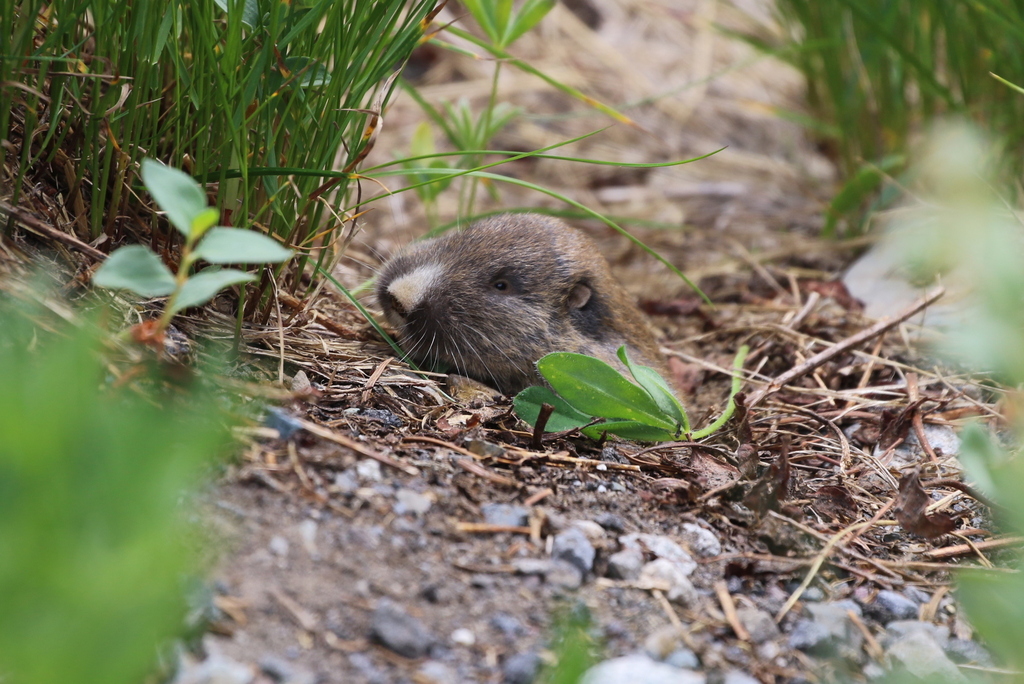
no rights reserved · CC0
Family: Geomyidae · Class: Mammalia · Order: Rodentia
Conservation status: Threatened
Thomomys mazama pugetensis (Olympia pocket gopher) is a California animal in the Geomyidae family.
The Olympia pocket gopher is a small mammal measuring 8 to 9 inches (20.3 to 22.9 cm) from nose to tail. This subspecies has the typical pocket gopher morphology with short, strong legs adapted for digging, and small ears and eyes suited to subterranean life. Their lips can close behind their front incisors to prevent dirt and debris from entering their mouths while tunneling (USFWS). The body is compact and cylindrical, facilitating movement through underground burrows. The Olympia pocket gopher occurs exclusively in Thurston County, Washington, in the south Puget Sound region. According to the U.S. Fish and Wildlife Service, this subspecies is found east of the Black River and south of Interstate 5, occupying one designated Service Area within approximately 99,890 acres (40,424 hectares) of suitable habitat. The range represents a severely restricted distribution compared to historical occurrence patterns. This subspecies inhabits open meadows, prairies, and grassland habitats of the glacial outwash plain, requiring porous, well-drained soils that support their extensive burrowing activities. The Olympia pocket gopher can occupy various grassland types, including pastures and agricultural lands, provided soil conditions remain suitable for tunnel construction. Soil characteristics are critical, as these animals spend most of their lives underground in complex burrow systems. Olympia pocket gophers are fossorial mammals that live primarily underground, creating elaborate tunnel networks for foraging, nesting, and protection. They are herbivorous, feeding on roots, bulbs, and other underground plant parts accessed through their burrow systems. The species exhibits limited dispersal capabilities, with an estimated maximum dispersal distance of 656 feet (200 meters), which contributes to population isolation and genetic differentiation between colonies. Their burrow systems provide important ecosystem services, aerating soil and creating habitat for other species including salamanders, western toads, frogs, lizards, small mammals, and invertebrates. The U.S. Fish and Wildlife Service listed the Olympia pocket gopher as threatened under the Endangered Species Act in April 2014, along with three other Mazama pocket gopher subspecies. Primary threats include habitat fragmentation, degradation, and loss due to urban development and agricultural conversion. Small and isolated populations face additional risks from reduced genetic diversity and stochastic events. Critical habitat was designated in April 2014, encompassing areas essential for the subspecies' conservation and recovery. Recovery efforts focus on habitat protection and restoration within the designated Service Area. The subspecies benefits from habitat conservation plans implemented by local jurisdictions and private landowners to balance development needs with species protection. Population monitoring and research continue to inform adaptive management strategies. The restricted range and specific soil requirements make this subspecies particularly vulnerable to continued habitat loss and fragmentation in the rapidly developing Puget Sound region.
Classification
Class: Mammalia · Order: Rodentia · Family: Geomyidae
Conservation status
Threatened
Frequently asked questions
How is Thomomys mazama pugetensis classified?
Thomomys mazama pugetensis belongs to class Mammalia, order Rodentia, family Geomyidae.
What family does Thomomys mazama pugetensis belong to?
Thomomys mazama pugetensis is in the Geomyidae family.
Is Thomomys mazama pugetensis protected or of conservation concern?
Thomomys mazama pugetensis carries the following status: Threatened.
What is Thomomys mazama pugetensis?
The Olympia pocket gopher is a small mammal measuring 8 to 9 inches (20.3 to 22.9 cm) from nose to tail.
Is Thomomys mazama pugetensis found in California?
Yes. Thomomys mazama pugetensis is recorded in California in The California Species Project's catalogue.
Related species
Other California species in the same genus, family, or bioregion.
Data from The California Species Project — 14,000+ California species with verified data from CNPS, CDFW, USFWS, and more.