Thomomys mazama yelmensis
Yelm pocket gopher
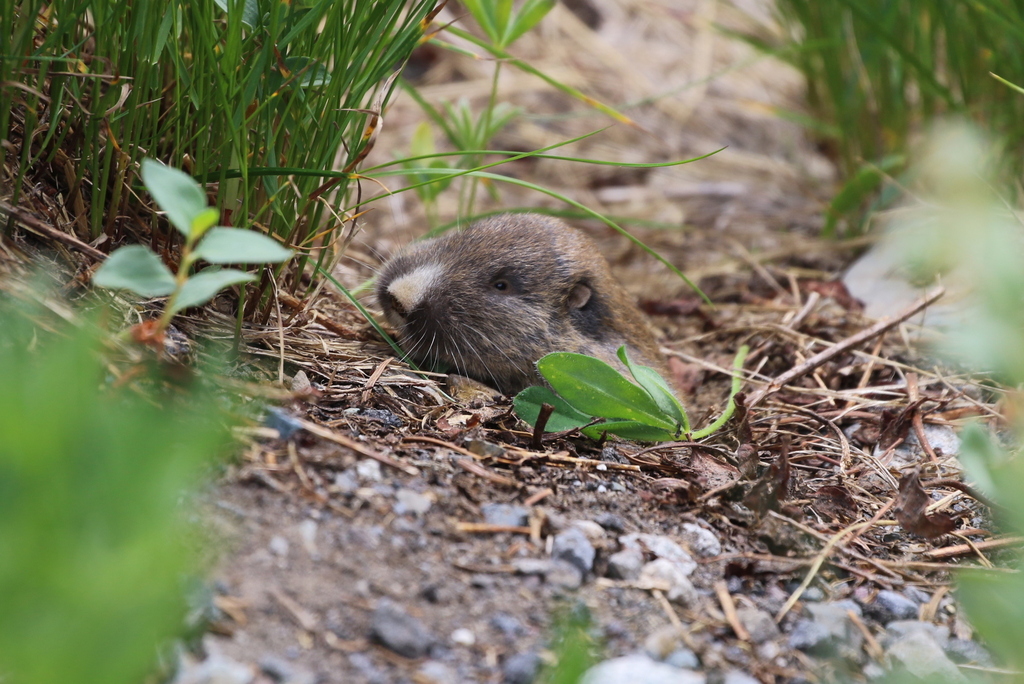
no rights reserved · CC0
Family: Geomyidae · Class: Mammalia · Order: Rodentia
Conservation status: Threatened
Thomomys mazama yelmensis (Yelm pocket gopher) is a California animal in the Geomyidae family.
The Yelm pocket gopher is a small, fossorial mammal and one of four federally threatened subspecies of Mazama pocket gopher found in south Puget Sound, Washington. Like other pocket gophers, this species possesses distinctive adaptations for subterranean life, including short, strong legs, small ears and eyes, and lips that can close behind the front incisors to prevent dirt and debris from entering the mouth during excavation activities. The Yelm pocket gopher historically occurred on prairies in the area of Grand Mound, Vail, and Rochester in Thurston County, Washington (Dalquest and Scheffer 1944). Surveys conducted in 1993-1994 found no gophers near the towns of Vail or Rochester, though more recent surveys have documented populations in areas with suitable habitat. Current populations are known to exist in scattered locations throughout Thurston County, including areas near Steilacoom Road, Marvin Road, and Mullen Road intersections. This subspecies inhabits native prairie ecosystems characterized by specific soil types including Everett, Nisqually, Norma, Spanaway, and Spanaway-Nisqually complex soils. These well-drained, deep soils are essential for the species' burrowing lifestyle and foraging activities. The subspecies requires native prairie vegetation and is closely associated with the remnant Puget Sound prairie ecosystem, one of the most endangered habitat types in the Pacific Northwest. Yelm pocket gophers are solitary, subterranean mammals that spend most of their lives in extensive burrow systems. They are herbivorous, feeding primarily on roots, bulbs, and other underground plant parts, though they may occasionally consume above-ground vegetation. The species creates characteristic mounds of excavated soil at the surface, which serve as indicators of their presence. Reproduction typically occurs once per year, with females producing litters of 2-4 young following a gestation period of approximately 18-19 days. The U.S. Fish and Wildlife Service listed the Yelm pocket gopher as threatened under the Endangered Species Act in April 2014. The subspecies faces numerous threats including habitat fragmentation, degradation, and loss due to development and certain restoration actions. Additional threats include predation by domestic and feral dogs and cats, pest control methods such as trapping and poisoning, and small population effects including genetic isolation. The loss of natural ecosystem maintenance processes, particularly natural wildfire cycles that historically maintained prairie habitats, has rendered this subspecies conservation-reliant, requiring active, ongoing management to maintain suitable habitat characteristics necessary for population growth and stability. Recovery efforts focus on habitat protection, enhancement, and restoration of native prairie ecosystems throughout the subspecies' range in Thurston County.
Classification
Class: Mammalia · Order: Rodentia · Family: Geomyidae
Conservation status
Threatened
Frequently asked questions
How is Thomomys mazama yelmensis classified?
Thomomys mazama yelmensis belongs to class Mammalia, order Rodentia, family Geomyidae.
What family does Thomomys mazama yelmensis belong to?
Thomomys mazama yelmensis is in the Geomyidae family.
Is Thomomys mazama yelmensis protected or of conservation concern?
Thomomys mazama yelmensis carries the following status: Threatened.
What is Thomomys mazama yelmensis?
The Yelm pocket gopher is a small, fossorial mammal and one of four federally threatened subspecies of Mazama pocket gopher found in south Puget Sound, Washington.
Is Thomomys mazama yelmensis found in California?
Yes. Thomomys mazama yelmensis is recorded in California in The California Species Project's catalogue.
Related species
Other California species in the same genus, family, or bioregion.
Data from The California Species Project — 14,000+ California species with verified data from CNPS, CDFW, USFWS, and more.