Thomomys talpoides
Northern Pocket Gopher
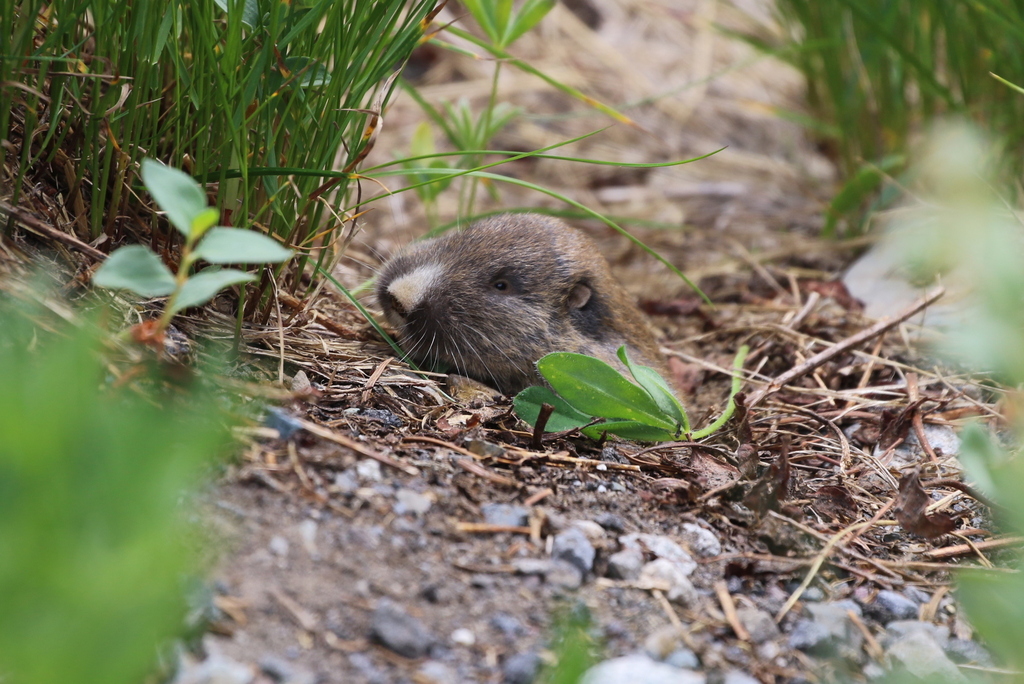
no rights reserved · CC0
Family: Geomyidae · Class: Mammalia · Order: Rodentia
Thomomys talpoides (Northern Pocket Gopher) is a California animal in the Geomyidae family.
The Northern Pocket Gopher is a small, fossorial rodent measuring 150 to 215 mm (5.9 to 8.5 inches) in total length, with adults weighing 40 to 130 grams (1.4 to 4.6 ounces). The body is cylindrical and compact, adapted for subterranean life. The fur is dense and velvety, typically grayish-brown to dark brown dorsally with lighter underparts. The species possesses prominent, ever-growing incisors used for digging, small eyes and ears, and powerful forelimbs with large claws. The tail is sparsely haired and measures 40 to 65 mm (1.6 to 2.6 inches). Sexual dimorphism is present, with males generally larger than females. In California, the Northern Pocket Gopher occurs in the northeastern counties, including portions of Modoc, Lassen, and Siskiyou counties. The species extends northward through Oregon, Washington, Idaho, and into western Canada, with populations also found in Montana, Wyoming, and parts of the northern Great Plains. The California populations represent the southern edge of the species' range and are associated with higher elevation habitats in the Cascade Range and Warner Mountains. Northern Pocket Gophers inhabit areas with deep, well-drained soils that support extensive burrow systems. In California, they occur in montane meadows, grasslands, and forest clearings at elevations ranging from 1,200 to 2,400 meters (3,900 to 7,900 feet). The species prefers soils that are neither too rocky nor too sandy, allowing for efficient tunnel construction. Habitats typically feature herbaceous vegetation including grasses, forbs, and the roots of shrubs and trees. These solitary animals are active year-round, spending most of their lives underground in elaborate tunnel systems that can extend over 150 meters (500 feet) in length. The diet consists primarily of plant roots, bulbs, tubers, and occasionally above-ground vegetation pulled down into burrows. Breeding occurs from spring through early summer, with females producing one to two litters annually. Gestation lasts approximately 19 days, and litter sizes range from three to seven young. Juveniles reach sexual maturity at 2 to 3 months of age. The species exhibits strong territorial behavior, with each individual maintaining an exclusive burrow system. The Northern Pocket Gopher is not federally or state listed in California as of December 2025. The species appears stable throughout most of its range, though localized populations may face pressure from habitat conversion, agricultural practices, and development. In California, the primary threats include conversion of native grasslands and meadows for agriculture and livestock grazing. Climate change may affect high-elevation populations by altering vegetation communities and soil conditions. The species plays an important ecological role as a soil aerator and seed disperser, and serves as prey for various predators including weasels, badgers, snakes, and raptors.
Classification
Class: Mammalia · Order: Rodentia · Family: Geomyidae
Frequently asked questions
How is Thomomys talpoides classified?
Thomomys talpoides belongs to class Mammalia, order Rodentia, family Geomyidae.
What family does Thomomys talpoides belong to?
Thomomys talpoides is in the Geomyidae family.
What is Thomomys talpoides?
The Northern Pocket Gopher is a small, fossorial rodent measuring 150 to 215 mm (5.9 to 8.5 inches) in total length, with adults weighing 40 to 130 grams (1.4 to 4.6 ounces).
Is Thomomys talpoides found in California?
Yes. Thomomys talpoides is recorded in California in The California Species Project's catalogue.
Related species
Other California species in the same genus, family, or bioregion.
Data from The California Species Project — 14,000+ California species with verified data from CNPS, CDFW, USFWS, and more.