Thomomys townsendii
Townsend's Pocket Gopher
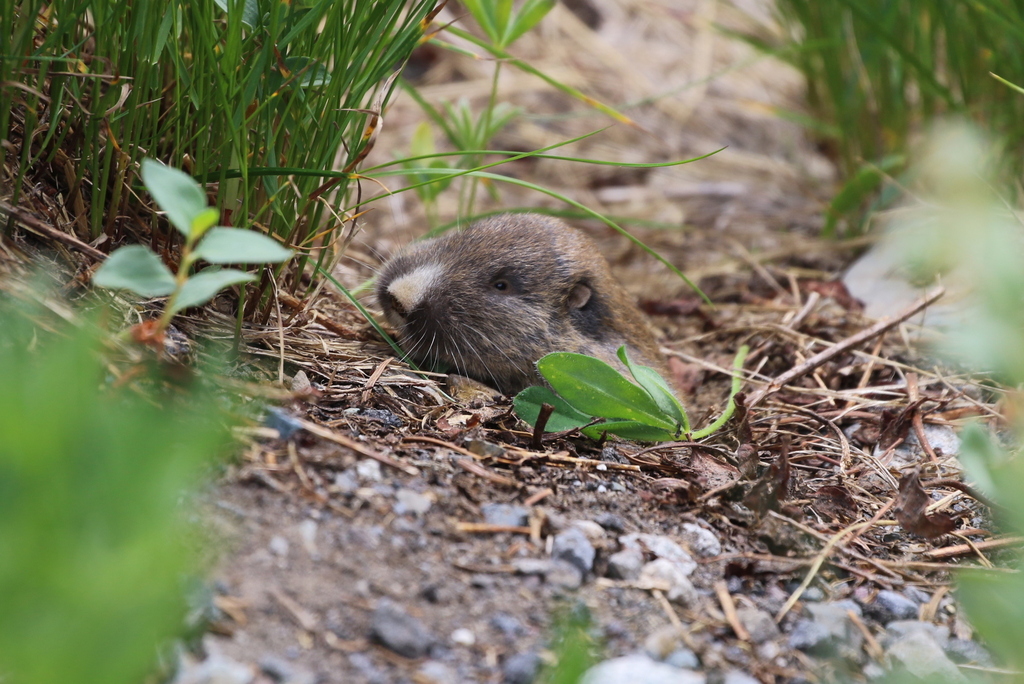
no rights reserved · CC0
Family: Geomyidae · Class: Mammalia · Order: Rodentia
Thomomys townsendii (Townsend's Pocket Gopher) is a California animal in the Geomyidae family.
Townsend's pocket gopher is a medium-sized fossorial rodent endemic to the western United States. Adults measure 160 to 200 mm (6.3 to 7.9 inches) in total length, with females typically larger than males. The species weighs between 40 and 90 grams (1.4 to 3.2 ounces). The pelage is uniformly brownish-gray to buff-colored dorsally, with slightly paler ventral surfaces. Distinguished from other pocket gophers by its relatively large size and distinctive cranial features, including a broad rostrum and well-developed zygomatic arches. The eyes are small and the external ears are reduced, adaptations for subterranean life. Large, curved claws on the forefeet are specialized for digging. Historically, Townsend's pocket gopher ranged from southeastern Oregon through eastern California, Nevada, and into adjacent portions of Idaho and Utah. In California, populations occur primarily in the northeastern counties, including Modoc, Lassen, and Siskiyou counties. The species inhabits areas within the Great Basin biogeographic region, where suitable soil conditions exist for extensive burrow construction. The species occupies deep, well-drained soils in sagebrush steppe, grassland, and meadow habitats at elevations ranging from 1,200 to 2,400 meters (3,900 to 7,900 feet). Townsend's pocket gopher requires friable soils that allow for extensive tunnel construction, typically avoiding rocky or heavily compacted substrates. Preferred habitats include areas with perennial herbaceous vegetation and sufficient soil depth for burrow systems that can extend several meters horizontally and up to one meter in depth. Townsend's pocket gopher is strictly fossorial, spending nearly its entire life underground in elaborate tunnel systems. The species is herbivorous, feeding on roots, bulbs, tubers, and underground plant parts accessed through its burrow network. Above-ground foraging is rare and typically occurs at night near burrow entrances. Breeding occurs from March through August, with females producing one to two litters annually. Gestation lasts approximately 19 days, and litter sizes range from two to eight young, averaging four to five offspring. Young remain in maternal burrows for several weeks before dispersing to establish their own territories. Townsend's pocket gopher is not federally listed but faces population pressures from habitat conversion and agricultural development throughout its range. In California, populations have declined in some areas due to conversion of native grasslands and sagebrush habitats to cultivated agriculture. The species' dependence on specific soil types and native plant communities makes it vulnerable to habitat fragmentation. Urban development and livestock grazing can degrade habitat quality by altering soil structure and plant composition. Some populations persist on public lands managed by the Bureau of Land Management and U.S. Forest Service, where habitat protection measures help maintain suitable conditions for the species' specialized ecological requirements.
Classification
Class: Mammalia · Order: Rodentia · Family: Geomyidae
Frequently asked questions
How is Thomomys townsendii classified?
Thomomys townsendii belongs to class Mammalia, order Rodentia, family Geomyidae.
What family does Thomomys townsendii belong to?
Thomomys townsendii is in the Geomyidae family.
What is Thomomys townsendii?
Townsend's pocket gopher is a medium-sized fossorial rodent endemic to the western United States.
Is Thomomys townsendii found in California?
Yes. Thomomys townsendii is recorded in California in The California Species Project's catalogue.
Related species
Other California species in the same genus, family, or bioregion.
Data from The California Species Project — 14,000+ California species with verified data from CNPS, CDFW, USFWS, and more.