Thyanta custator
Red-shouldered Stink Bug
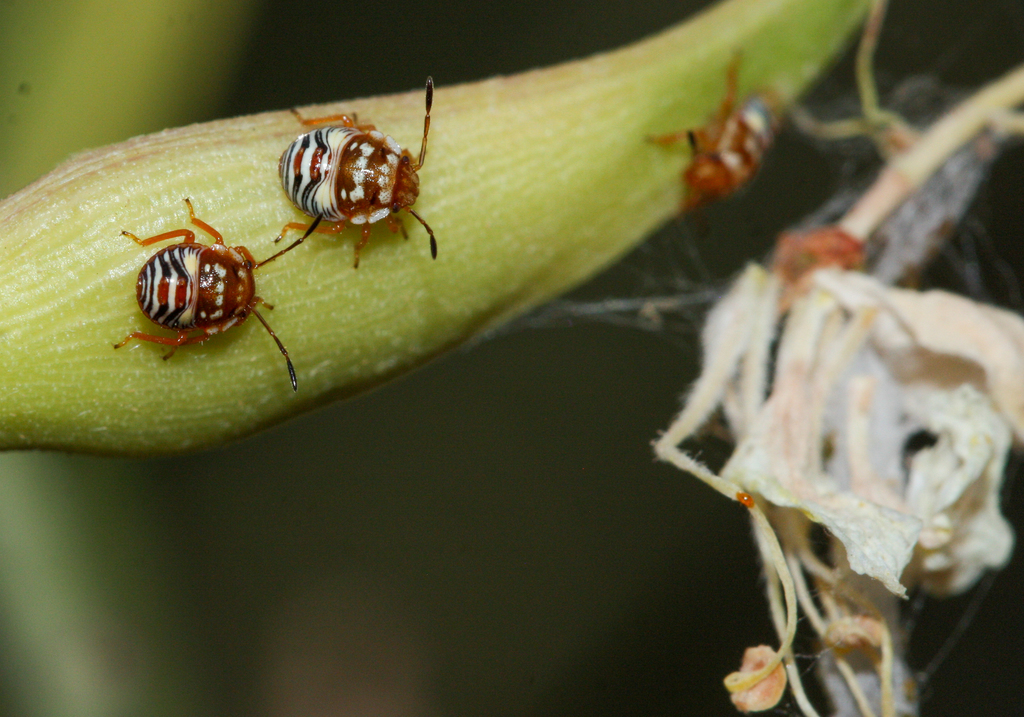
(c) Andrew Meeds, some rights reserved (CC BY) · licence
Family: Pentatomidae · Class: Insecta · Order: Hemiptera
Thyanta custator (Red-shouldered Stink Bug) is a California animal in the Pentatomidae family.
The Red-shouldered Stink Bug (Thyanta custator) is a shield-shaped insect in the family Pentatomidae, characterized by the distinctive reddish or orange coloration on the shoulders of its forewings that gives the species its common name. Adults typically measure 10-15 mm in length and display the broad, pentagonal body shape typical of stink bugs. The body coloration ranges from green to brown, with the prominent red or orange humeral angles on the corium being the key diagnostic feature distinguishing this species from other Thyanta species. Thyanta custator occurs throughout much of North America, with its range extending from Canada south to Mexico. In California, the species is found across diverse regions, from coastal areas to inland valleys and foothills. The subspecies T. c. accerra has been documented in various locations throughout the state (BugGuide). The species appears to have a broad elevational tolerance, occurring from sea level to montane environments. This stink bug inhabits a variety of plant communities and agricultural areas. Adults and nymphs are commonly found on herbaceous plants, shrubs, and trees where they feed on plant juices. The species shows particular association with members of the sunflower family (Asteraceae) and other flowering plants. Thyanta custator demonstrates adaptability to both natural and disturbed habitats, including agricultural fields, gardens, and urban environments. As a phytophagous species, the Red-shouldered Stink Bug feeds by inserting its piercing-sucking mouthparts into plant tissues to extract fluids. Adults are most active during warmer months, with peak abundance typically occurring in late summer and early fall. The species undergoes incomplete metamorphosis, with eggs laid on host plants developing through five nymphal instars before reaching adulthood. Overwintering typically occurs in the adult stage, with individuals seeking shelter under bark, leaf litter, or other protected locations. Like other pentatomids, this species can produce defensive chemicals when disturbed, contributing to its common name as a "stink bug." Currently, Thyanta custator does not hold any special conservation status and is considered relatively common throughout its range. The species' broad habitat tolerance and adaptability to human-modified environments suggest stable populations. However, like many insects, localized populations may face pressure from habitat conversion, pesticide applications, and climate variability. The species serves as prey for various predators including birds, spiders, and predatory insects, while also functioning as a pollinator for some plant species during nectar feeding. Agricultural impacts are generally minimal, though the species may occasionally feed on crop plants. The Red-shouldered Stink Bug represents a typical example of the diverse pentatomid fauna found throughout California's varied ecosystems.
Classification
Class: Insecta · Order: Hemiptera · Family: Pentatomidae
Frequently asked questions
How is Thyanta custator classified?
Thyanta custator belongs to class Insecta, order Hemiptera, family Pentatomidae.
What family does Thyanta custator belong to?
Thyanta custator is in the Pentatomidae family.
What is Thyanta custator?
The Red-shouldered Stink Bug (Thyanta custator) is a shield-shaped insect in the family Pentatomidae, characterized by the distinctive reddish or orange coloration on the shoulders of its forewings that gives the species its common name.
Is Thyanta custator found in California?
Yes. Thyanta custator is recorded in California in The California Species Project's catalogue.
Related species
Other California species in the same genus, family, or bioregion.
Data from The California Species Project — 14,000+ California species with verified data from CNPS, CDFW, USFWS, and more.