Thyridanthrax atratus
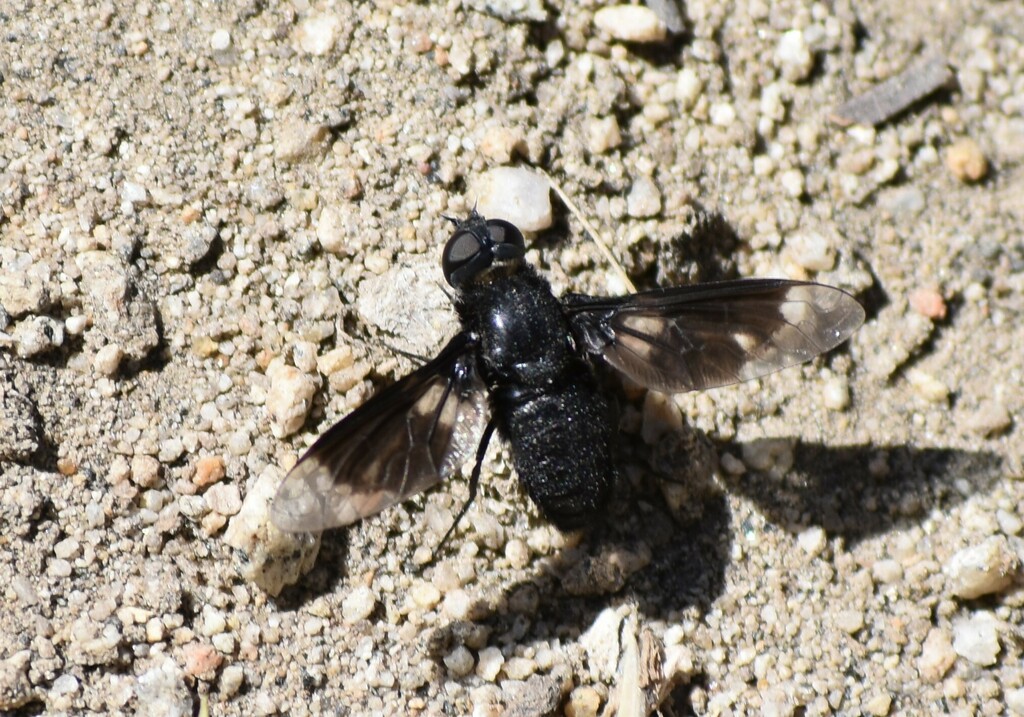
(c) Konshau Duman, some rights reserved (CC BY) · licence
Family: Bombyliidae · Class: Insecta · Order: Diptera
Thyridanthrax atratus is a California animal in the Bombyliidae family.
Thyridanthrax atratus is a bee fly species in the family Bombyliidae, order Diptera. This dipteran belongs to a diverse family of flies commonly known as bee flies due to their often fuzzy appearance and hovering flight behavior that mimics bees and other hymenopterans. The range and distribution of T. atratus within California has not been comprehensively documented in available scientific literature. Like other members of the genus Thyridanthrax, this species likely occurs in arid and semi-arid regions where suitable host organisms are present. The genus Thyridanthrax is known from various locations across western North America, but specific locality records for T. atratus in California remain poorly documented. Habitat requirements for T. atratus have not been well studied, though members of the Bombyliidae family typically inhabit open, sunny areas including desert scrubland, chaparral, grasslands, and disturbed areas. Adult bee flies are commonly found on flowers where they feed on nectar, while larvae are typically parasitoids or predators of other insects. The specific elevation range and microhabitat preferences for this species have not been documented. The ecology and life history of T. atratus remains largely unknown. Adult bombyliids are generally active during warm, sunny periods and are often observed hovering near flowers or potential host sites. Many bee fly larvae develop as parasitoids of other insects, including the larvae of beetles, moths, other flies, or hymenopterans, though the specific host relationships for T. atratus have not been established. Seasonal activity patterns, mating behavior, and reproductive biology for this species require further research. T. atratus is not listed under the federal Endangered Species Act or California's Endangered Species Act. The species lacks formal conservation status designations from state or federal agencies. Population trends and conservation needs cannot be assessed due to limited distributional and ecological data. Like many invertebrate species, T. atratus may face threats from habitat loss, fragmentation, pesticide use, and climate change, though the specific impacts on this species are unknown. Scientific documentation for this species remains extremely limited. The information presented here represents the current state of knowledge based on taxonomic classification and general understanding of bombyliid ecology. Detailed studies of T. atratus distribution, habitat requirements, host relationships, and population status are needed to develop a comprehensive understanding of this species' biology and conservation needs. We welcome contributions of verified scientific data, photographs, or field observations to enhance this species account.
Classification
Class: Insecta · Order: Diptera · Family: Bombyliidae
Frequently asked questions
How is Thyridanthrax atratus classified?
Thyridanthrax atratus belongs to class Insecta, order Diptera, family Bombyliidae.
What family does Thyridanthrax atratus belong to?
Thyridanthrax atratus is in the Bombyliidae family.
What is Thyridanthrax atratus?
Thyridanthrax atratus is a bee fly species in the family Bombyliidae, order Diptera.
Is Thyridanthrax atratus found in California?
Yes. Thyridanthrax atratus is recorded in California in The California Species Project's catalogue.
Related species
Other California species in the same genus, family, or bioregion.
Data from The California Species Project — 14,000+ California species with verified data from CNPS, CDFW, USFWS, and more.