Tibicinoides pallidula
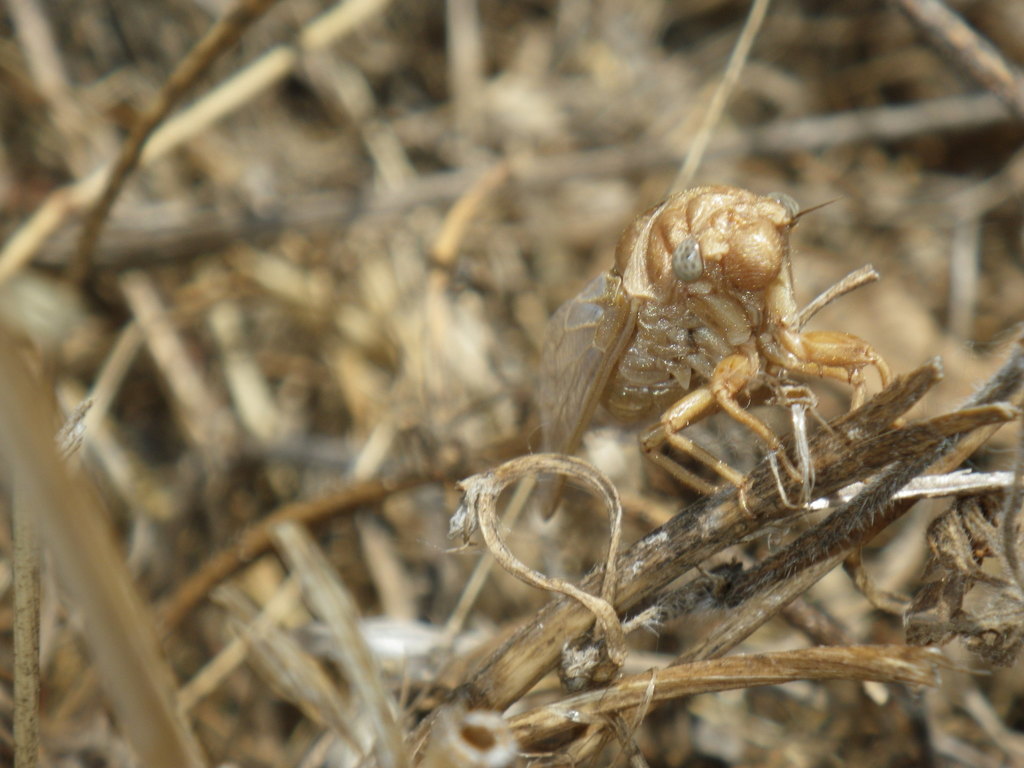
(c) Dominic, some rights reserved (CC BY) · licence
Family: Cicadidae · Class: Insecta · Order: Hemiptera
Tibicinoides pallidula is a California animal in the Cicadidae family.
Tibicinoides pallidula is a small cicada species within the family Cicadidae, first described by Davis in 1917. This species belongs to a genus of North American cicadas that are generally smaller than the more familiar periodical cicadas. The specific morphological characteristics of T. pallidula have not been comprehensively documented in available literature, though like other members of the genus Tibicinoides, it likely measures 15-25 mm in body length with typical cicada features including prominent compound eyes, short antennae, and membranous wings held roof-like over the body when at rest. The species occurs across a limited range in the western United States, documented from Oregon, California, and Nevada (BugGuide 2025). Within California, specific county-level distribution data remains poorly documented. The range overlaps with several closely related species in the genus, including T. simulata, T. rubrovenosa, and T. cupreosparsa, which may complicate field identification and ecological studies. Habitat requirements for T. pallidula have not been well studied. Like other Tibicinoides species, it likely inhabits areas with suitable host trees or shrubs where nymphs can complete their subterranean development. The genus is generally associated with arid and semi-arid environments of the western United States, suggesting T. pallidula may prefer similar conditions. Elevation ranges and specific vegetation associations remain undocumented for this species. The life cycle and ecological behavior of T. pallidula follow the typical cicada pattern but specific details are lacking. Adult cicadas in this genus likely emerge during summer months, with males producing species-specific acoustic signals to attract mates. Females deposit eggs in plant tissues, and the resulting nymphs drop to the ground where they burrow and feed on root systems for multiple years before emerging as adults. The duration of the nymphal stage for T. pallidula has not been determined, though related species in the genus typically have 2-4 year life cycles. Diet consists of plant fluids extracted from roots during the nymphal stage and potentially from stems and branches as adults. T. pallidula appears to have no formal conservation status at federal or state levels. The species is not listed under the Endangered Species Act, nor does it appear on California Department of Fish and Wildlife species of concern lists as of December 2025. However, the lack of comprehensive biological and ecological data makes it difficult to assess population trends or conservation needs. The limited geographic range spanning three western states may make populations vulnerable to habitat loss or environmental changes, but quantitative population data are not available. Scientific documentation for this species remains extremely limited despite its description over a century ago. Research gaps include basic ecological requirements, population size and trends, detailed morphological descriptions, and acoustic characteristics. The information presented here synthesizes available taxonomic records and distribution data from BugGuide and other entomological databases. Additional field studies and taxonomic work are needed to better understand this cicada's biology and conservation status.
Classification
Class: Insecta · Order: Hemiptera · Family: Cicadidae
Frequently asked questions
How is Tibicinoides pallidula classified?
Tibicinoides pallidula belongs to class Insecta, order Hemiptera, family Cicadidae.
What family does Tibicinoides pallidula belong to?
Tibicinoides pallidula is in the Cicadidae family.
What is Tibicinoides pallidula?
Tibicinoides pallidula is a small cicada species within the family Cicadidae, first described by Davis in 1917.
Is Tibicinoides pallidula found in California?
Yes. Tibicinoides pallidula is recorded in California in The California Species Project's catalogue.
Related species
Other California species in the same genus, family, or bioregion.
Data from The California Species Project — 14,000+ California species with verified data from CNPS, CDFW, USFWS, and more.