Tibicinoides vanduzeei
Van Duzee's Cicada
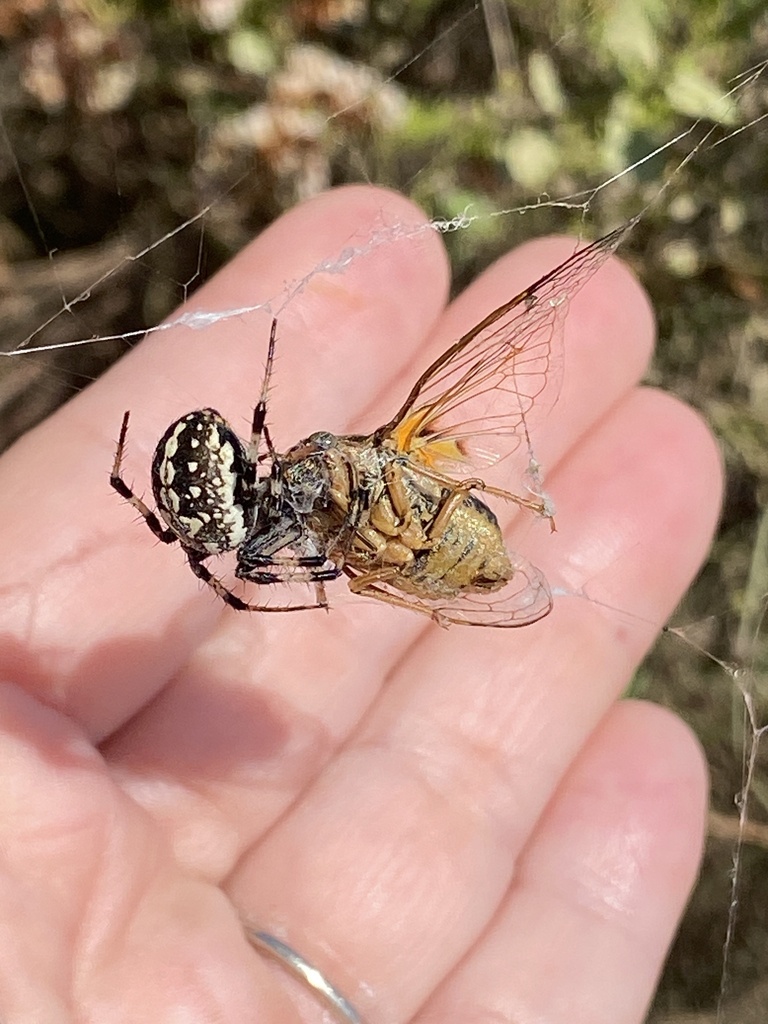
(c) Jennifer Arrow, some rights reserved (CC BY) · licence
Family: Cicadidae · Class: Insecta · Order: Hemiptera
Tibicinoides vanduzeei (Van Duzee's Cicada) is a California animal in the Cicadidae family.
Van Duzee's Cicada is a small cicada species endemic to California, distinguished by its compact size and limited geographic range. Adults are notably small for cicadas, with wings extending only slightly past the abdomen tip and a wingspan of approximately 45 mm (1.8 inches) (BugGuide 2025). The species exhibits the typical cicada body plan with prominent eyes, short antennae, and membranous wings with distinct venation patterns. Marginal wing cells are equal in length and measure only two-thirds or less the length of the ulnar cells, a key diagnostic feature for identification. Historically described as Okanagana vanduzeei by Distant in 1914, this species has undergone significant taxonomic revision. Originally classified within the genus Okanagana, it was recently transferred to the genus Tibicinoides based on morphological and molecular analyses (Cole et al. 2023). The species name honors Edward P. Van Duzee, a prominent early 20th-century hemipterist who contributed extensively to North American cicada taxonomy. Van Duzee's Cicada has an extremely restricted range, currently documented only from Orange County, California (BugGuide 2025). This limited distribution makes it one of the most geographically restricted cicada species in North America. The species appears to be endemic to coastal southern California, though historical records suggest it may have occurred more broadly in the region during the early 1900s. Specific habitat preferences for this species remain poorly documented in the scientific literature. Like other members of the family Cicadidae, Van Duzee's Cicada likely requires specific host plants for nymphal development, as cicada larvae feed on root systems during their multi-year underground development phase. However, documented host plant associations have not been established for this species. Adult Van Duzee's Cicadas emerge during mid- to late summer, with documented records from the latter half of July (BugGuide 2025). This timing is consistent with many western North American cicada species that emerge during the warmest months when conditions are optimal for mating and reproduction. Males likely produce species-specific acoustic signals to attract females, though the acoustic properties of this species have not been scientifically documented. The conservation status of Van Duzee's Cicada has not been formally evaluated by federal or state agencies. However, its extremely limited known range in Orange County suggests potential vulnerability to habitat loss and urbanization pressures. Orange County has experienced extensive development over the past century, which may have reduced available habitat for this species. The lack of recent collection records and limited scientific study indicate that current population status and trends are unknown. Detailed ecological studies of this species are lacking. The above information synthesizes available observations from taxonomic databases and citizen science platforms. Research priorities should include surveys to determine current distribution and abundance, habitat requirements, and host plant associations. We welcome contributions of verified scientific data, photographs, or field observations to enhance understanding of this poorly known California endemic cicada species.
Classification
Class: Insecta · Order: Hemiptera · Family: Cicadidae
Frequently asked questions
How is Tibicinoides vanduzeei classified?
Tibicinoides vanduzeei belongs to class Insecta, order Hemiptera, family Cicadidae.
What family does Tibicinoides vanduzeei belong to?
Tibicinoides vanduzeei is in the Cicadidae family.
What is Tibicinoides vanduzeei?
Van Duzee's Cicada is a small cicada species endemic to California, distinguished by its compact size and limited geographic range.
Is Tibicinoides vanduzeei found in California?
Yes. Tibicinoides vanduzeei is recorded in California in The California Species Project's catalogue.
Related species
Other California species in the same genus, family, or bioregion.
Data from The California Species Project — 14,000+ California species with verified data from CNPS, CDFW, USFWS, and more.