Tinea occidentella
Western Clothes Moth
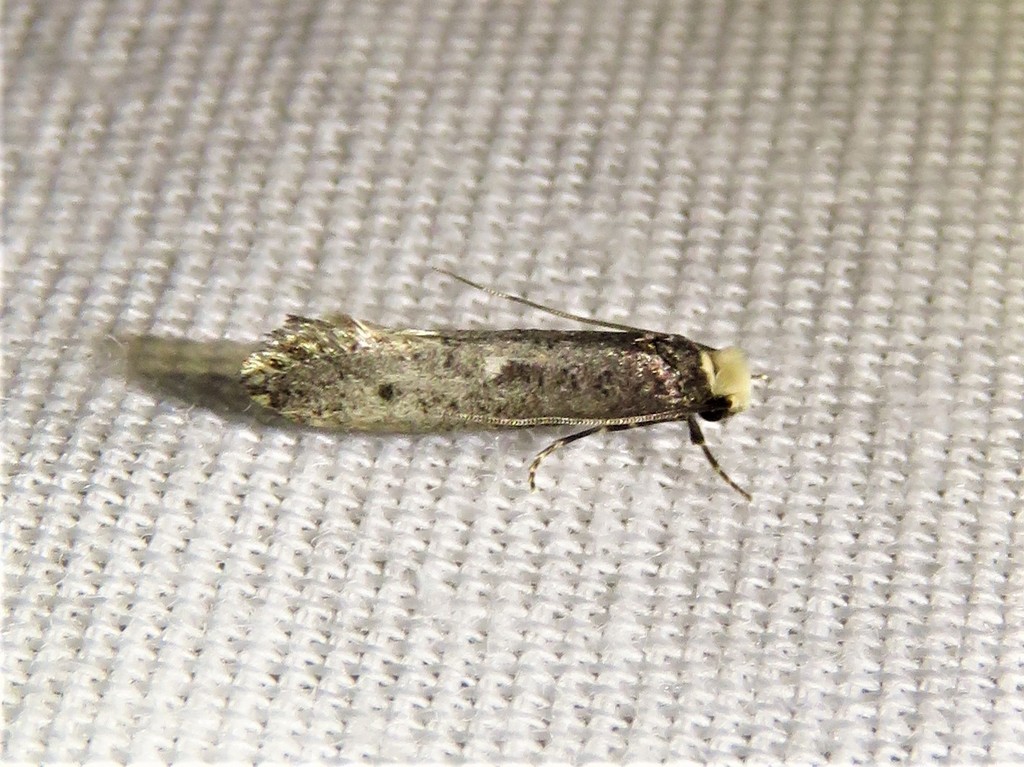
(c) Annika Lindqvist, some rights reserved (CC BY) · licence
Family: Tineidae · Class: Insecta · Order: Lepidoptera
Tinea occidentella (Western Clothes Moth) is a California animal in the Tineidae family.
The Western Clothes Moth (Tinea occidentella) is a small moth in the family Tineidae, characterized by its narrow forewings that typically measure 6-9 mm in length. The forewings are pale golden-brown to buff-colored with a satiny sheen, while the hindwings are lighter, often grayish-white with long fringe scales along the margins. The head bears a tuft of reddish-brown to golden scales, and the antennae are thread-like. Adults hold their wings roof-like over the body when at rest, giving them a distinctive triangular profile. The Western Clothes Moth is native to western North America, with its range extending from British Columbia south through California, Nevada, and into parts of Arizona and New Mexico. In California, the species occurs throughout much of the state, from coastal regions to inland valleys and mountainous areas, though specific distribution patterns within the state are not comprehensively documented. This species inhabits a variety of natural environments where keratin-rich materials are available. Unlike its close relative the common clothes moth, T. occidentella is primarily associated with natural habitats rather than human dwellings. The species is found in areas where animal remains, shed fur, feathers, and other organic debris accumulate, including rodent nests, bird roosts, and areas frequented by mammals. Elevational preferences and specific microhabitat requirements have not been extensively studied. The Western Clothes Moth exhibits typical tineoid moth behavior, with adults being primarily nocturnal and attracted to artificial lights. Males are strong fliers and use pheromones to locate females for mating. Females lay eggs on or near suitable larval food sources. The larvae are the destructive stage, feeding on keratin-containing materials including wool, fur, feathers, and dried animal matter. Unlike fabric-feeding clothes moths, Western Clothes Moth larvae primarily consume natural animal materials in outdoor environments. The larvae construct portable cases or feed within silken galleries. Development time varies with temperature and food availability, with multiple generations possible per year in favorable conditions. Adults typically live 2-4 weeks and do not feed, relying on energy reserves accumulated during the larval stage. The Western Clothes Moth currently holds no federal or state conservation listing status and appears to be relatively stable throughout its range. As a native species adapted to natural ecosystems, it likely plays a role in nutrient cycling by decomposing organic matter. However, comprehensive population surveys and trend data are lacking for this species. The primary conservation concerns, if any, would relate to habitat loss and fragmentation of natural areas, though the species' adaptability to various environments suggests it may be relatively resilient. Unlike introduced clothes moth species that have become household pests, T. occidentella remains primarily associated with natural habitats and does not appear to face significant anthropogenic threats. Research gaps exist regarding its specific ecological requirements, population dynamics, and potential interactions with non-native tineoid moths.
Classification
Class: Insecta · Order: Lepidoptera · Family: Tineidae
Frequently asked questions
How is Tinea occidentella classified?
Tinea occidentella belongs to class Insecta, order Lepidoptera, family Tineidae.
What family does Tinea occidentella belong to?
Tinea occidentella is in the Tineidae family.
What is Tinea occidentella?
The Western Clothes Moth (Tinea occidentella) is a small moth in the family Tineidae, characterized by its narrow forewings that typically measure 6-9 mm in length.
Is Tinea occidentella found in California?
Yes. Tinea occidentella is recorded in California in The California Species Project's catalogue.
Related species
Other California species in the same genus, family, or bioregion.
Data from The California Species Project — 14,000+ California species with verified data from CNPS, CDFW, USFWS, and more.