Tinea pellionella
Case-bearing Clothes Moth
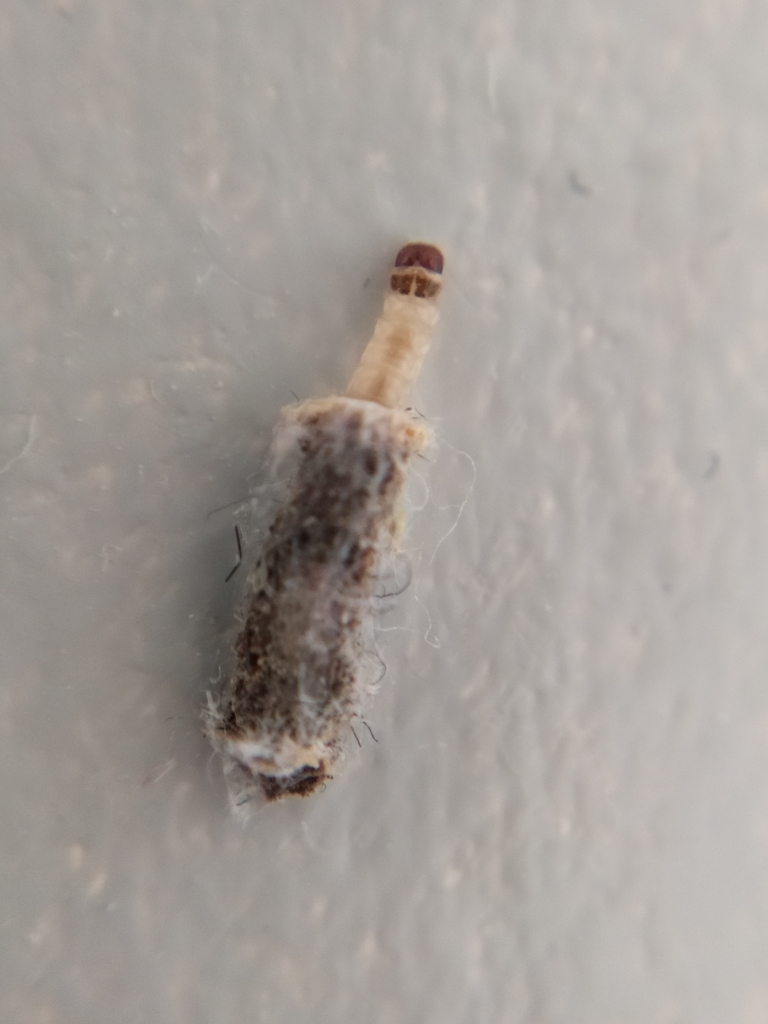
(c) carnifex, some rights reserved (CC BY) · licence
Family: Tineidae · Class: Insecta · Order: Lepidoptera
Tinea pellionella (Case-bearing Clothes Moth) is a California animal in the Tineidae family.
The case-bearing clothes moth is a small cosmopolitan species in the family Tineidae, originally described by Linnaeus in 1758. Adults have a wingspan of 9-16 mm, with forewings that are brownish-gray to dark brown with three distinct dark spots. The hindwings are pale gray to whitish with long fringe scales. Males are typically smaller than females and have more pointed forewings. The species is distinguished from the closely related webbing clothes moth (Tineola bisselliella) by its spotted wing pattern and the larval behavior of constructing portable cases. Tinea pellionella has a worldwide distribution, having spread from its probable Old World origins through human commerce. According to BugGuide, the species is established throughout North America, including California, where it occurs in both urban and rural environments. The moth has been documented across diverse climatic zones from temperate to subtropical regions, adapting to human-modified habitats globally. This species is primarily associated with indoor environments, particularly homes, museums, warehouses, and other structures where natural fibers are stored or displayed. Unlike many native moths, case-bearing clothes moths rarely occur in natural outdoor habitats, instead thriving in the controlled environments of human dwellings. They prefer dark, undisturbed areas such as closets, attics, and storage rooms where relative humidity levels remain moderate. Larvae are the destructive life stage, feeding on keratin-based materials including wool, fur, feathers, silk, and other animal-derived fibers. The caterpillars construct distinctive portable cases from silk and fragments of their host material, which they enlarge as they grow through five instars. According to BugGuide, development time varies with temperature and food quality, typically requiring 2-3 months from egg to adult under favorable conditions. Adults do not feed and live only long enough to mate and lay eggs, usually 2-3 weeks. Females deposit 40-50 eggs directly on suitable host materials. The species exhibits seasonal activity patterns in temperate climates, with peak adult emergence typically occurring during warmer months. However, in heated indoor environments, reproduction can continue year-round. Males are attracted to pheromones released by females and are often observed flying in erratic patterns near infested materials. While not listed under conservation frameworks due to its non-native status and pest designation, Tinea pellionella represents a significant economic concern rather than a conservation priority. The species causes substantial damage to textile collections, clothing, and other fiber-based materials. Control typically involves integrated pest management approaches including pheromone traps, temperature treatments, and preventive measures such as regular cleaning and proper storage of susceptible materials. Climate change may expand the species' range and increase reproductive rates in previously marginal habitats, potentially intensifying its impact as a household and museum pest.
Classification
Class: Insecta · Order: Lepidoptera · Family: Tineidae
Frequently asked questions
How is Tinea pellionella classified?
Tinea pellionella belongs to class Insecta, order Lepidoptera, family Tineidae.
What family does Tinea pellionella belong to?
Tinea pellionella is in the Tineidae family.
What is Tinea pellionella?
The case-bearing clothes moth is a small cosmopolitan species in the family Tineidae, originally described by Linnaeus in 1758.
Is Tinea pellionella found in California?
Yes. Tinea pellionella is recorded in California in The California Species Project's catalogue.
Related species
Other California species in the same genus, family, or bioregion.
Data from The California Species Project — 14,000+ California species with verified data from CNPS, CDFW, USFWS, and more.