Titiotus californicus
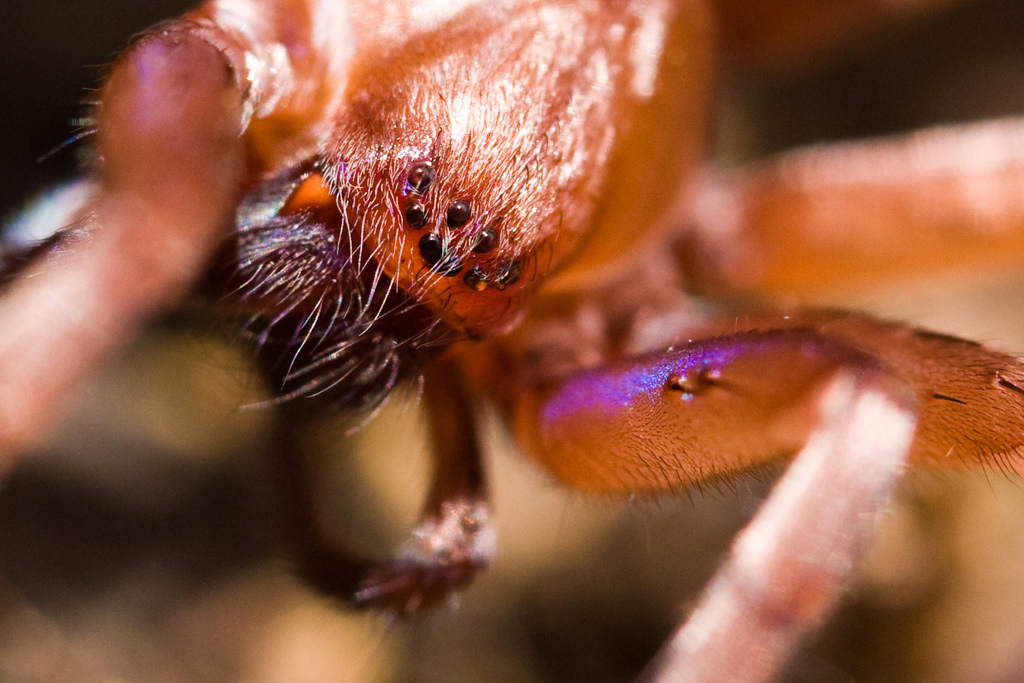
(c) Ken-ichi Ueda, some rights reserved (CC BY) · licence
Family: Zoropsidae · Class: Arachnida · Order: Araneae
Titiotus californicus is a California animal in the Zoropsidae family.
Titiotus californicus is a spider species belonging to the family Zoropsidae, commonly known as false wolf spiders or wandering spiders. This family represents a relatively small group of hunting spiders that superficially resemble wolf spiders but lack the characteristic eye arrangement of true Lycosidae. Members of the genus Titiotus are generally medium-sized spiders with robust builds and relatively long legs adapted for active hunting rather than web construction. The species is endemic to California, where documented occurrences include San Mateo County in the San Francisco Bay Area region (BugGuide 2017). The limited distribution records suggest this species has a restricted range within the state, though comprehensive surveys may reveal additional populations. The type locality and full extent of the species' distribution require further documentation through systematic collecting efforts. Titiotus californicus inhabits terrestrial environments typical of California's coastal and inland regions. Based on collection records from Pacifica in San Mateo County, the species occurs in areas that experience the Mediterranean climate characteristic of central California (BugGuide 2017). Specific microhabitat preferences, elevation ranges, and vegetation associations have not been well documented in the scientific literature. Like other Zoropsidae family members, this species likely occupies ground-level habitats including leaf litter, under rocks, fallen logs, or in burrows. As a member of the Zoropsidae, T. californicus exhibits hunting behavior rather than web-building strategies employed by many other spider families. These spiders are typically nocturnal predators that actively pursue prey including insects and other small arthropods. Zoropsid spiders generally construct silk retreats or temporary shelters but do not build elaborate capture webs. Reproductive behavior, seasonal activity patterns, and specific dietary preferences for this species remain largely undocumented. The timing of mating seasons, egg-laying periods, and developmental stages require investigation through field studies. No federal or state conservation listing status has been assigned to Titiotus californicus, and the species does not appear in current U.S. Fish and Wildlife Service databases of protected species (USFWS 2025). The lack of comprehensive population data, distribution mapping, and ecological studies makes assessment of conservation status difficult. Given the apparently limited distribution records and California's high levels of habitat modification, particularly in coastal regions where this species occurs, population monitoring may be warranted. Urban development, agricultural conversion, and climate change represent potential threats to spider species with restricted ranges in California. Detailed ecological studies of this species are lacking. The above information synthesizes available observations from taxonomic databases and community reports. Scientific documentation would benefit from systematic surveys to determine the species' full distribution, habitat requirements, and population status within California. Additional research is needed to clarify taxonomic relationships within the genus Titiotus and distinguish this species from potentially related taxa.
Classification
Class: Arachnida · Order: Araneae · Family: Zoropsidae
Frequently asked questions
How is Titiotus californicus classified?
Titiotus californicus belongs to class Arachnida, order Araneae, family Zoropsidae.
What family does Titiotus californicus belong to?
Titiotus californicus is in the Zoropsidae family.
What is Titiotus californicus?
Titiotus californicus is a spider species belonging to the family Zoropsidae, commonly known as false wolf spiders or wandering spiders.
Is Titiotus californicus found in California?
Yes. Titiotus californicus is recorded in California in The California Species Project's catalogue.
Related species
Other California species in the same genus, family, or bioregion.
Data from The California Species Project — 14,000+ California species with verified data from CNPS, CDFW, USFWS, and more.