Tolype distincta
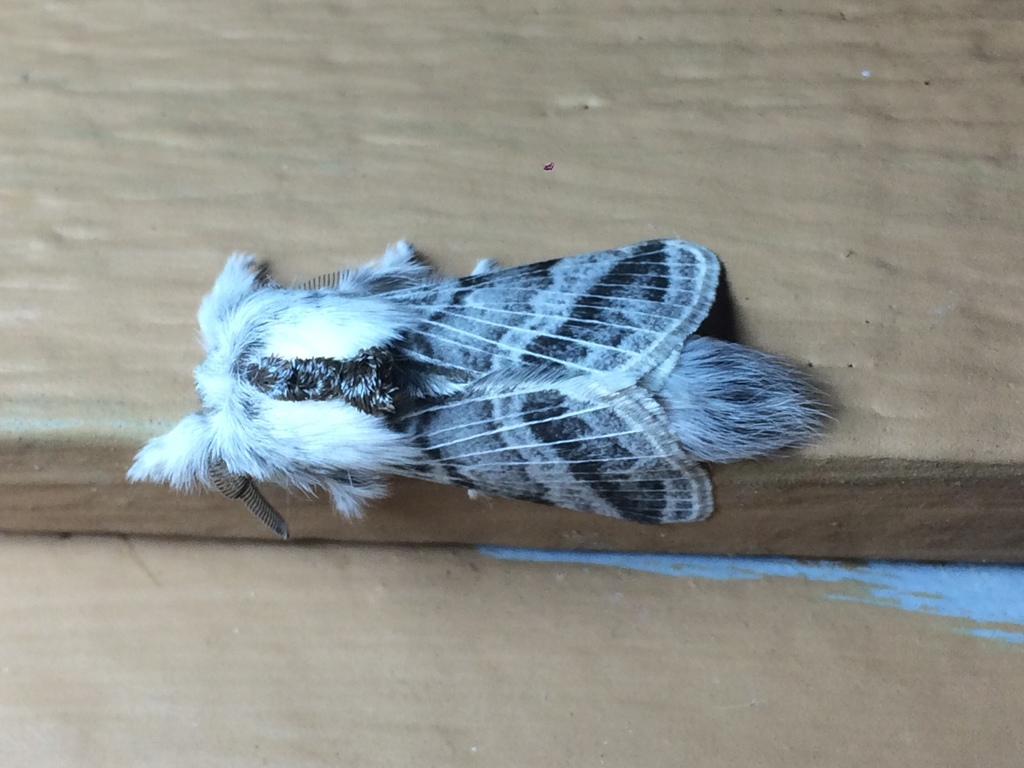
(c) B. Phalan, some rights reserved (CC BY) · licence
Family: Lasiocampidae · Class: Insecta · Order: Lepidoptera
Tolype distincta is a California animal in the Lasiocampidae family.
Tolype distincta is a medium-sized moth in the family Lasiocampidae, commonly known as tent caterpillars and lappet moths. Adults typically measure 25 to 35 mm (1.0 to 1.4 inches) in forewing length. The forewings are brownish-gray with subtle darker banding and a distinctive white or pale yellow discal spot. The hindwings are lighter, ranging from pale gray to cream-colored. Males possess broadly pectinate (feathery) antennae, while females have narrower, less feathered antennae. The body is robust and densely covered with scales that match the wing coloration, providing effective camouflage against tree bark. This species occurs throughout western North America, with documented populations extending from British Columbia south through California, Nevada, Utah, Colorado, and into northern Mexico. In California, Tolype distincta has been recorded from the Sierra Nevada, Cascade Range, and montane areas of the Coast Ranges. The species' distribution closely follows that of its coniferous host plants, typically occurring at elevations between 1,200 and 2,400 meters (4,000 to 8,000 feet). Tolype distincta larvae feed exclusively on members of the Pinaceae family, including various pine species (Pinus), firs (Abies), spruces (Picea), and Douglas-fir (Pseudotsuga menziesii). Adults are associated with coniferous forests, mixed conifer-hardwood forests, and woodland edges where suitable host plants occur. The species shows a preference for mature forest stands with diverse age classes of conifers. Habitat requirements include areas with sufficient canopy cover to provide daytime resting sites for adults and adequate host plant density to support larval development. Adults are nocturnal and typically active from late spring through mid-summer, with peak flight periods occurring from May through July depending on elevation and local climate conditions. Mating occurs shortly after adult emergence, with females laying eggs in clusters on host plant needles or bark crevices. Larvae hatch in late summer and feed on conifer needles, developing through five or six instars before pupating. The species overwinters as pupae in cocoons constructed among leaf litter or in bark crevices. Like other Lasiocampidae, larvae may exhibit gregarious behavior during early instars before becoming more solitary as they mature. Adults do not feed, relying on energy reserves accumulated during the larval stage. Tolype distincta currently lacks formal conservation status designation at federal or state levels. Population trends are not well documented, though the species appears to maintain stable populations throughout much of its range. Potential threats include habitat loss from logging, fire suppression altering natural forest dynamics, and climate change affecting montane forest ecosystems. Forest management practices that maintain diverse age structures and mixed species composition likely benefit this species by preserving suitable habitat conditions and host plant availability.
Classification
Class: Insecta · Order: Lepidoptera · Family: Lasiocampidae
Frequently asked questions
How is Tolype distincta classified?
Tolype distincta belongs to class Insecta, order Lepidoptera, family Lasiocampidae.
What family does Tolype distincta belong to?
Tolype distincta is in the Lasiocampidae family.
What is Tolype distincta?
Tolype distincta is a medium-sized moth in the family Lasiocampidae, commonly known as tent caterpillars and lappet moths.
Is Tolype distincta found in California?
Yes. Tolype distincta is recorded in California in The California Species Project's catalogue.
Related species
Other California species in the same genus, family, or bioregion.
Data from The California Species Project — 14,000+ California species with verified data from CNPS, CDFW, USFWS, and more.