Toxomerus marginatus
Margined Calligrapher
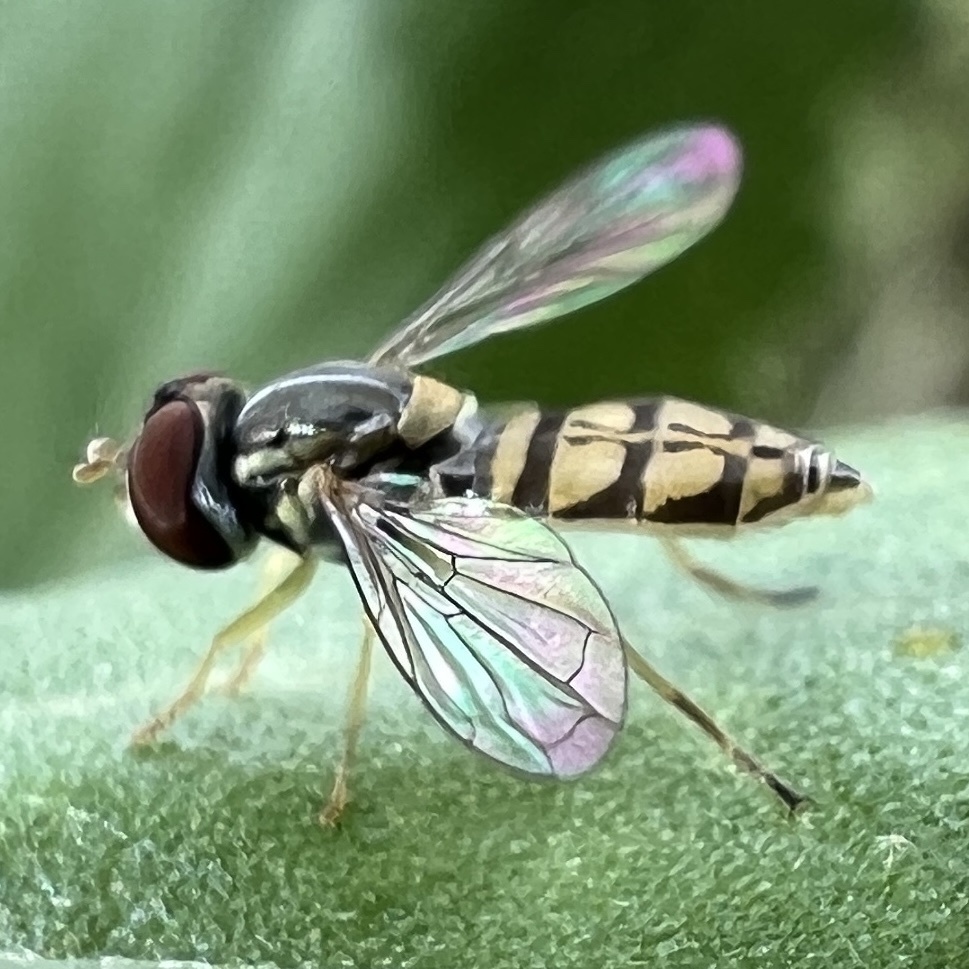
(c) Anne Parker, some rights reserved (CC BY) · licence
Family: Syrphidae · Class: Insecta · Order: Diptera
Toxomerus marginatus (Margined Calligrapher) is a California animal in the Syrphidae family.
The Margined Calligrapher (Toxomerus marginatus) is a small hover fly measuring 5-6 mm in length (BugGuide). This member of the family Syrphidae exhibits the characteristic features of hover flies, with a compact body and the ability to hover in place while feeding. The species was first described by Say in 1823 and belongs to the tribe Toxomerini within the subfamily Syrphinae. Toxomerus marginatus has an extensive range across North America, occurring from Canada south through Central America (BugGuide). The species demonstrates exceptional geographical adaptability, establishing populations across diverse climatic zones from temperate northern regions to tropical areas. Within this broad range, the species maintains stable populations due to its ecological flexibility and wide host preferences. The Margined Calligrapher inhabits remarkably diverse ecosystems, demonstrating exceptional habitat flexibility. Adults occur in forests, fields, meadows, savannas, prairies, marshes, bogs, fens, deserts, stream margins, and alpine areas (BugGuide). The species shows high tolerance for habitat disturbance and can establish populations in modified environments, including agricultural areas and urban settings. This adaptability to both pristine and disturbed habitats contributes significantly to the species' widespread distribution and population stability. Larval Margined Calligraphers function as important biological control agents, preying on aphids, thrips, and small caterpillars (BugGuide). This predatory behavior makes them valuable in agricultural systems where they help control pest populations naturally. Adult hover flies feed on nectar and pollen, visiting various flowering plants. The species has been documented visiting flowers of the federally threatened Navasota false foxglove (Agalinis navasotensis) in Texas, where it serves as a pollinator (USFWS 2023). Adults are also recorded visiting European water-plantain (Alisma plantago-aquatica) along with numerous other syrphid species. The species exhibits typical hover fly behavior, with adults capable of sustained hovering flight while foraging and territorial displays. Toxomerus marginatus is ranked G5 (Globally Secure) by NatureServe, indicating stable populations throughout its range (NatureServe 2022). The species faces no immediate conservation concerns due to its broad ecological tolerance, extensive distribution, and ability to thrive in both natural and modified habitats. The widespread nature of suitable habitats and the species' adaptability to environmental changes suggest populations will remain stable. However, like many beneficial insects, populations may face localized impacts from pesticide use in agricultural areas, though the species' mobility and reproductive capacity typically allow for population recovery. The ecological value of T. marginatus extends beyond its direct biological control services, as adults contribute to pollination networks across their range. The species' presence in diverse ecosystems from marshlands to alpine areas demonstrates the adaptability that has enabled its success across North America. Current population trends appear stable, with no significant threats identified that would warrant conservation attention for this widespread and ecologically important hover fly species.
Classification
Class: Insecta · Order: Diptera · Family: Syrphidae
Frequently asked questions
How is Toxomerus marginatus classified?
Toxomerus marginatus belongs to class Insecta, order Diptera, family Syrphidae.
What family does Toxomerus marginatus belong to?
Toxomerus marginatus is in the Syrphidae family.
What is Toxomerus marginatus?
The Margined Calligrapher (Toxomerus marginatus) is a small hover fly measuring 5-6 mm in length (BugGuide).
Is Toxomerus marginatus found in California?
Yes. Toxomerus marginatus is recorded in California in The California Species Project's catalogue.
Related species
Other California species in the same genus, family, or bioregion.
Data from The California Species Project — 14,000+ California species with verified data from CNPS, CDFW, USFWS, and more.