Toxomerus occidentalis
Western Calligrapher
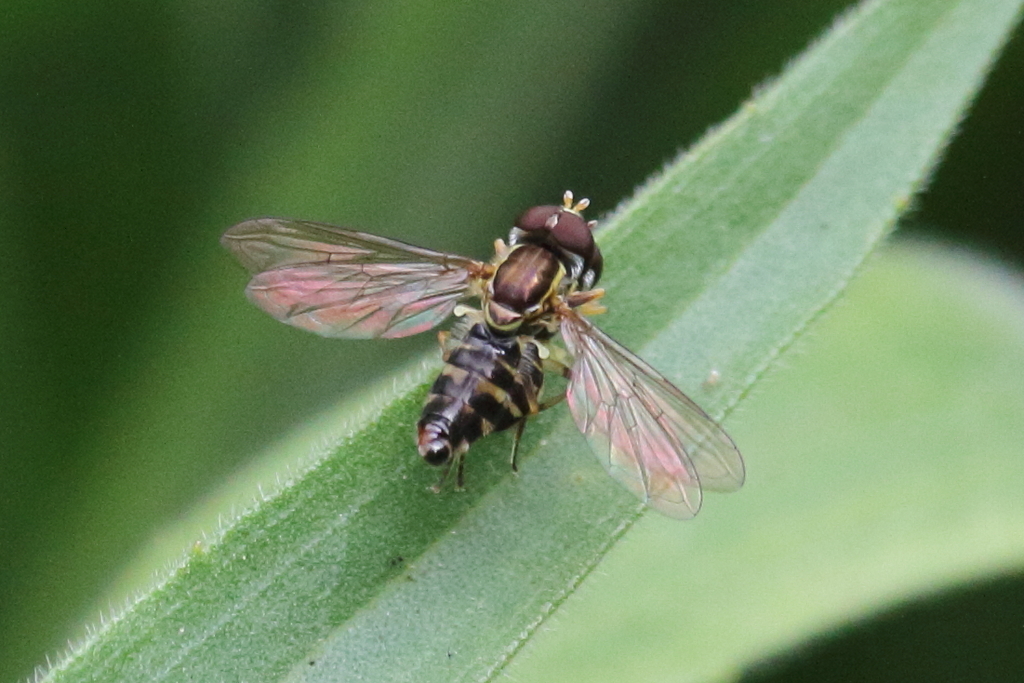
(c) bungelina, some rights reserved (CC BY) · licence
Family: Syrphidae · Class: Insecta · Order: Diptera
Toxomerus occidentalis (Western Calligrapher) is a California animal in the Syrphidae family.
The Western Calligrapher (Toxomerus occidentalis) is a small flower fly in the family Syrphidae, distinguished by its role as a beneficial pollinator throughout western North America. Adults are typically small dipterans with the characteristic hover fly body plan, featuring large compound eyes, short antennae, and a single pair of functional wings. Like other syrphid flies, they exhibit variable coloration patterns that often include yellow and black markings, though specific morphological details for this species require further documentation. Toxomerus occidentalis occurs across a broad range in western North America, extending from British Columbia south through California, Colorado, and Texas. Within California, the species likely occurs in multiple biogeographic regions, though specific county-level distribution records have not been well documented. The species appears to be part of the diverse syrphid fauna that inhabits various elevational zones throughout the western United States. Habitat preferences for the Western Calligrapher have not been thoroughly studied, but like other Toxomerus species, it likely inhabits areas with abundant flowering plants that provide nectar resources for adults. Syrphid flies typically require diverse floral communities that bloom throughout their active season, suggesting this species may occur in meadows, woodland edges, gardens, and other areas supporting native and non-native flowering plants. Specific vegetation associations and microhabitat requirements remain undocumented. Adult Western Calligraphers feed primarily on nectar and pollen from various flowering plants, serving as pollinators in the process. Like other syrphid flies, they are likely active during daylight hours when temperatures are suitable for flight activity. Mating behavior, seasonal flight periods, and reproductive biology have not been well studied for this species. Larvae of Toxomerus species typically develop as predators of soft-bodied insects like aphids, making them beneficial for natural pest control, though larval ecology of T. occidentalis specifically has not been documented. The Western Calligrapher does not appear on federal or state conservation lists, and its conservation status remains unassessed. As with many native pollinating insects, potential threats may include habitat loss, pesticide use, and climate change impacts on flowering plant communities. However, the species' broad geographic range across western North America suggests it may be relatively stable, though population trends and specific conservation needs have not been evaluated. Scientific documentation for this species remains limited. The information presented here is based on available sources including iNaturalist observations and general syrphid fly ecology. If you have additional verified information about this species' biology, distribution, or ecology, please contact us to help improve this species account.
Classification
Class: Insecta · Order: Diptera · Family: Syrphidae
Frequently asked questions
How is Toxomerus occidentalis classified?
Toxomerus occidentalis belongs to class Insecta, order Diptera, family Syrphidae.
What family does Toxomerus occidentalis belong to?
Toxomerus occidentalis is in the Syrphidae family.
What is Toxomerus occidentalis?
The Western Calligrapher (Toxomerus occidentalis) is a small flower fly in the family Syrphidae, distinguished by its role as a beneficial pollinator throughout western North America.
Is Toxomerus occidentalis found in California?
Yes. Toxomerus occidentalis is recorded in California in The California Species Project's catalogue.
Related species
Other California species in the same genus, family, or bioregion.
Data from The California Species Project — 14,000+ California species with verified data from CNPS, CDFW, USFWS, and more.