Toxophora virgata
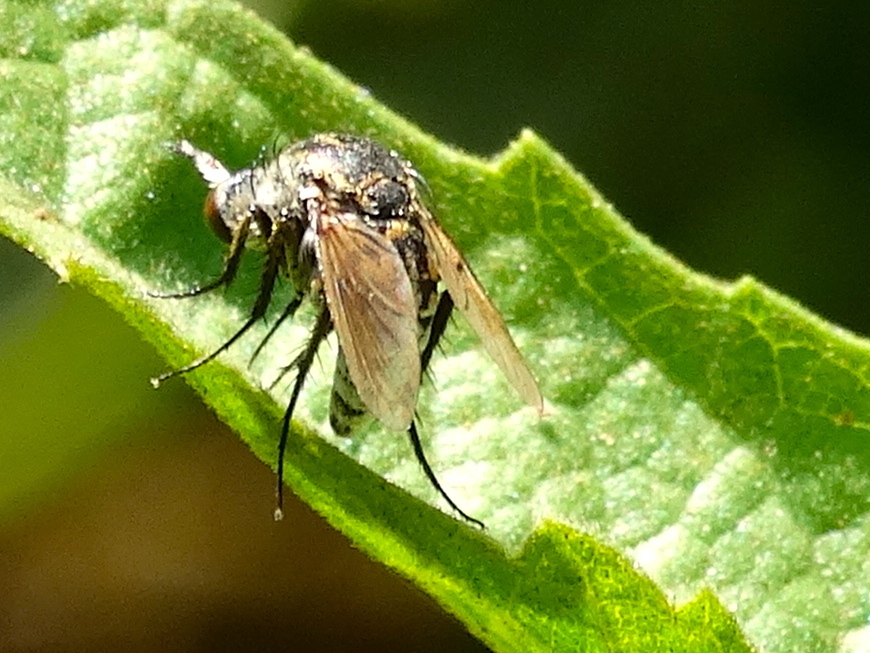
(c) Francisco Farriols Sarabia, some rights reserved (CC BY) · licence
Family: Bombyliidae · Class: Insecta · Order: Diptera
Toxophora virgata is a California animal in the Bombyliidae family.
Toxophora virgata is a species of bee fly in the family Bombyliidae, order Diptera. As a member of the Bombyliidae, this species exhibits the characteristic features of bee flies, including a robust, often hairy body that resembles bees in appearance and behavior. Adult bee flies typically possess a prominent proboscis used for nectar feeding and are distinguished by their hovering flight patterns and ability to feed while remaining airborne. The distribution and range of Toxophora virgata have not been comprehensively documented in readily available scientific literature. According to NatureServe, the species has a global conservation rank of G4, indicating it is apparently secure globally (NatureServe 2025). However, specific geographic distribution data, including presence in California, requires further documentation through taxonomic and ecological surveys. Habitat preferences for Toxophora virgata remain poorly documented in current scientific literature. Members of the genus Toxophora and family Bombyliidae typically inhabit areas with abundant flowering plants, as adults are nectar feeders. Many bombyliid species are associated with open habitats including grasslands, chaparral, desert areas, and woodland edges where host plants and prey species are available. The specific microhabitat requirements and elevation range for T. virgata have not been well established. The ecology and life history of Toxophora virgata follow the general pattern observed in bombyliid flies. Adult bee flies are typically active during warmer months and are important pollinators of various flowering plants. Females likely engage in egg-laying behavior associated with the nests or larvae of other insects, as bombyliid larvae are predominantly parasitoids or hyperparasitoids of other insect species, particularly the larvae of beetles, moths, and other flies. The specific host relationships and seasonal activity patterns for T. virgata require detailed field studies to document. Mating behavior in bombyliids typically involves aerial courtship displays, with males often establishing territories near flowers or suitable egg-laying sites. Development occurs through complete metamorphosis, with larvae developing as parasitoids before pupating and emerging as adults. Specific details regarding the reproductive biology, host species utilization, and developmental timing for T. virgata have not been comprehensively studied. The conservation status of Toxophora virgata appears stable based on its NatureServe ranking of G4 (apparently secure), suggesting the species does not face immediate conservation concerns at the global level. However, the lack of detailed distributional and ecological data limits the ability to assess population trends or identify potential threats. As with many invertebrate species, habitat loss, pesticide use, and climate change may pose potential risks, but specific impacts on T. virgata populations have not been evaluated. Further research is needed to document the species' distribution, ecological requirements, and population status to support informed conservation planning.
Classification
Class: Insecta · Order: Diptera · Family: Bombyliidae
Frequently asked questions
How is Toxophora virgata classified?
Toxophora virgata belongs to class Insecta, order Diptera, family Bombyliidae.
What family does Toxophora virgata belong to?
Toxophora virgata is in the Bombyliidae family.
What is Toxophora virgata?
Toxophora virgata is a species of bee fly in the family Bombyliidae, order Diptera.
Is Toxophora virgata found in California?
Yes. Toxophora virgata is recorded in California in The California Species Project's catalogue.
Related species
Other California species in the same genus, family, or bioregion.
Data from The California Species Project — 14,000+ California species with verified data from CNPS, CDFW, USFWS, and more.