Toxostoma curvirostre oberholseri
Curve-billed Thrasher (Brownsville)
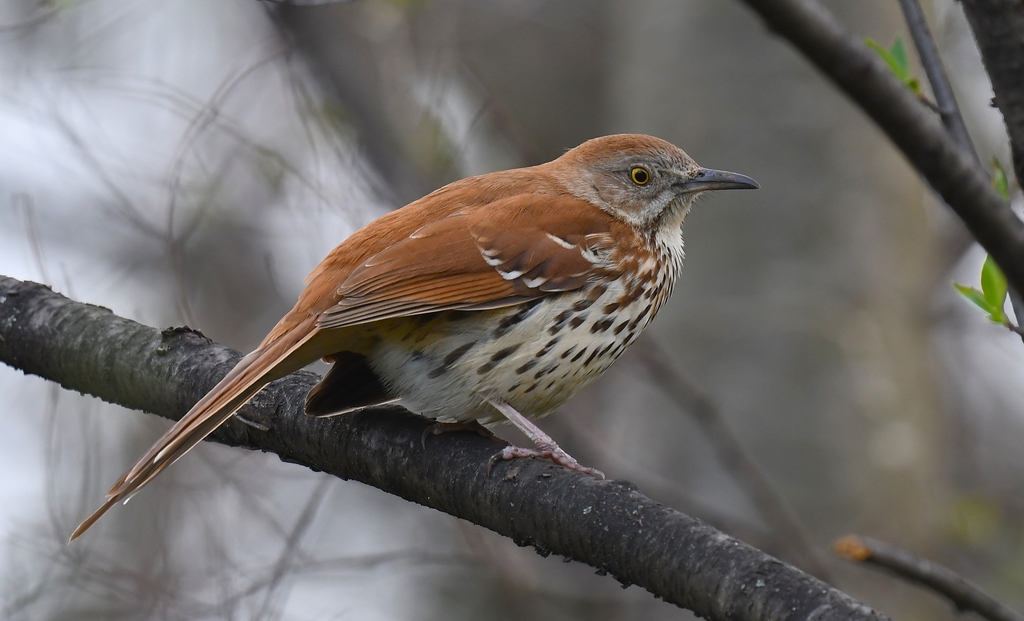
no rights reserved · CC0
Family: Mimidae · Class: Aves · Order: Passeriformes
Toxostoma curvirostre oberholseri (Curve-billed Thrasher (Brownsville)) is a California animal in the Mimidae family.
The Curve-billed Thrasher (Brownsville subspecies) is a medium-sized songbird endemic to extreme south Texas. Adults measure approximately 25-29 centimeters (10-11.5 inches) in length with a wingspan of 33-37 centimeters (13-14.5 inches). This subspecies is distinguished by its prominently curved black bill, grayish-brown upperparts, and pale underparts with distinct dark spotting on the breast and flanks. The eastern subspecies group, which includes oberholseri, displays lighter breast coloration that creates more pronounced contrast with the dark spots compared to western populations. The Brownsville Curve-billed Thrasher has one of the most restricted ranges of any North American thrasher subspecies. It occurs only in the Lower Rio Grande Valley of extreme south Texas, primarily in Cameron and Hidalgo counties. The subspecies is closely associated with the Brownsville area and adjacent regions along the Rio Grande, representing the northeasternmost extent of the species' range. This population is geographically isolated from other Curve-billed Thrasher subspecies by several hundred kilometers. This subspecies inhabits dense South Texas brushland characterized by thorny shrubs and small trees. Preferred vegetation includes mesquite, prickly pear cactus, ebony, retama, and other native brush species typical of the Tamaulipan scrublands. The birds favor areas with scattered tall shrubs or small trees that provide singing perches and nesting sites, while maintaining dense understory cover for foraging and protection. They occur primarily in lowland areas near sea level. Curve-billed Thrashers are primarily ground-foraging birds that use their curved bills to probe soil and leaf litter for invertebrates. Their diet consists mainly of insects, spiders, and other arthropods, supplemented seasonally with berries and small fruits. Males are known for their distinctive loud, double whistle call that serves multiple communication functions and is unique among North American thrashers. Breeding males sing from conspicuous perches with a varied repertoire described as pleasing warbles with abrupt phrasing. The species typically nests in dense thorny shrubs, constructing cup-shaped nests of twigs lined with softer materials. The Brownsville subspecies is designated as a Bird of Conservation Concern by the U.S. Fish and Wildlife Service (USFWS 2021). This conservation status reflects concerns about habitat loss and fragmentation in the rapidly developing Lower Rio Grande Valley region. Urban expansion, agricultural conversion, and infrastructure development have significantly reduced available brushland habitat. The subspecies faces ongoing pressure from human activities in one of Texas's most densely populated and fastest-growing regions. Conservation efforts focus on protecting remaining native brushland through public and private partnerships, including habitat management on National Wildlife Refuges such as Laguna Atascosa. The restricted range makes this population particularly vulnerable to localized threats and environmental changes.
Classification
Class: Aves · Order: Passeriformes · Family: Mimidae
Frequently asked questions
How is Toxostoma curvirostre oberholseri classified?
Toxostoma curvirostre oberholseri belongs to class Aves, order Passeriformes, family Mimidae.
What family does Toxostoma curvirostre oberholseri belong to?
Toxostoma curvirostre oberholseri is in the Mimidae family.
What is Toxostoma curvirostre oberholseri?
The Curve-billed Thrasher (Brownsville subspecies) is a medium-sized songbird endemic to extreme south Texas.
Is Toxostoma curvirostre oberholseri found in California?
Yes. Toxostoma curvirostre oberholseri is recorded in California in The California Species Project's catalogue.
Related species
Other California species in the same genus, family, or bioregion.
Data from The California Species Project — 14,000+ California species with verified data from CNPS, CDFW, USFWS, and more.